
LOOK BACK
Ayumu Fujino is a fourth grader who draws a manga strip for the school newspaper. Her art makes her the star of the class, but one day she's told that Kyomoto, a student who refuses to come to school, would also like to submit a manga for the paper...
(Source: MANGA Plus, edited)
📺Anime Details
📝Editorial Analysis
The silence after the classroom door clicks shut—the one Kyomoto never walks through. Ayumu Fujino sits at her desk, pencil hovering over the final panel of her manga strip, the graphite smudging faintly as her hand trembles—not from weakness, but from the weight of someone else’s unseen presence. That quiet isn’t empty. It’s thick with the hum of unshared paper, unspoken praise, and the slow, aching realization that art isn’t just made—it’s offered, and sometimes, it’s offered into a void that answers back in ways you can’t predict.
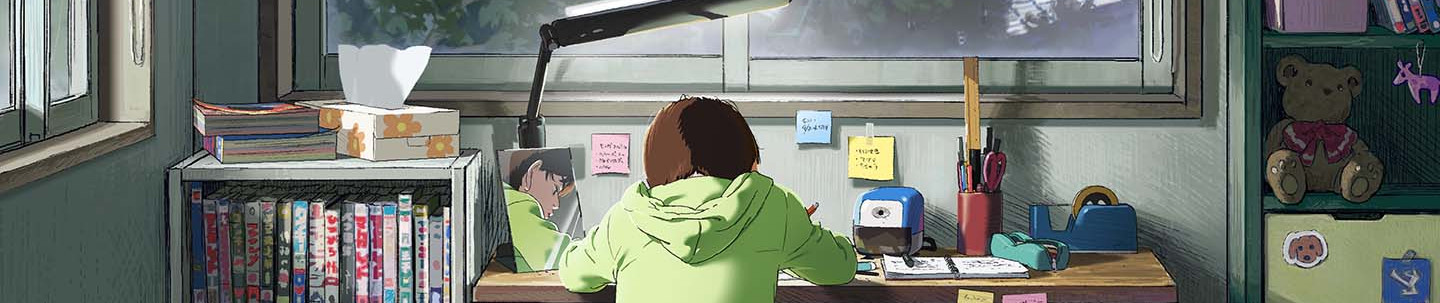
LOOK BACK doesn’t trade in spectacle or cathartic outbursts. Its atmosphere is built on absence: the absence of Kyomoto’s body in class, the absence of explanation, the absence of resolution—even when pages are turned, even when strips are published. You feel the texture of cheap notebook paper, the dry scratch of ink drying too fast, the way sunlight hits an empty chair beside Ayumu’s. It makes you think about how connection often begins not with dialogue, but with recognition—a glance at another’s line work, a pause before erasing your own flawed sketch, the sudden, startling humility of realizing someone else’s quiet is louder than your applause. This isn’t coming-of-age as triumph; it’s coming-of-age as adjustment—to ambiguity, to responsibility without instruction, to the slow, tender erosion of certainty. It’s hikikomori not as pathology, but as philosophy: a deliberate withdrawal that forces others to relearn how to reach across space, time, and silence.
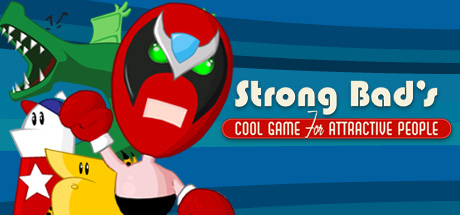
That same emotional DNA flickers in Strong Bad's Cool Game for Attractive People: Season 1, where comedy and parody aren’t just tonal garnish—they’re structural shields against vulnerability. The description calls it “wacky comedic adventures,” and the player review longs for its return not for nostalgia alone, but because its humor holds space for something fragile beneath: the absurdity of trying to be seen, to be taken seriously, while wearing a wrestling mask and typing emails in all caps. Like Ayumu’s manga strip—funny, confident, polished—the game’s surface levity masks a deeper negotiation: How do I express myself when the world only hears the joke? Both use form—manga panels, point-and-click gags—as vessels for unvoiced weight.
Then there’s Disco Elysium - The Final Cut, whose description frames it as a “groundbreaking role playing game” where you “carve your path across a whole city”—but the player review cuts deeper: “Capital has the ability to subsume all critiques into itself. Even those who would critique capital end up reinforcing it instead.” That line resonates like a struck bell with LOOK BACK’s quiet interrogation of systems—school, publishing, even friendship. Ayumu’s strip gains popularity within a rigid structure (the school newspaper), yet Kyomoto’s submission arrives outside that system, destabilizing it not with rebellion, but with refusal. Neither character breaks the rules—they reveal how hollow the rules were all along. Disco Elysium’s detective stumbles through ideology like Ayumu stumbles through praise: both are surrounded by language that claims to explain, yet fails to name what truly hurts.
And yes—even Crash Time 2, with its janky physics and “awful controls,” carries a sliver of this truth. The player review doesn’t just complain—it diagnoses: “no structure,” “janky physics,” “factually BAD controls.” That frustration mirrors the helplessness Ayumu feels when her art—a thing she can control—meets Kyomoto’s silence, a force no amount of skill can steer. Both confront systems that resist intention: a racing game where the car won’t obey, a classroom where presence is assumed but never guaranteed. The emotion isn’t rage—it’s disorientation, the vertigo of trusting your tools, only to find the ground shifting beneath them.
This pairing isn’t for fans of tidy arcs or heroic arcs. It’s for the person who rereads a single manga page three times because the shading on a character’s collar suggests grief they hadn’t named yet. It’s for the player who pauses mid-chase in Crash Time 2, not to restart, but to stare at the glitched horizon—and wonder if the brokenness is the point. It’s for anyone who’s ever drawn something small, sent it out, and waited—not for praise, but for the quiet, seismic shift that happens when someone else finally looks back.
🎮4 Games That Match the Vibe


Match Dimensions Explained
❓Frequently Asked Questions
Why does LOOK BACK remind me so much of Disco Elysium’s tone but with way more humor?
Because both lean hard into Emotional Narrative and Comedy & Parody—but Disco Elysium uses absurd, philosophical banter (like Harry’s internal monologues about capitalism while staring at a dead body) to undercut its melancholy, while LOOK BACK balances that same emotional weight with warmer, character-driven levity. It’s the same dimensional blend you’ll find in Strong Bad’s Cool Game for Attractive People, where absurd comedy (Strong Bad’s email rants) and surprisingly tender moments (the ‘Trogdor’ arc’s quiet sincerity) coexist seamlessly.
Is there an anime or manga adaptation of LOOK BACK?
No official anime or manga adaptation exists—LOOK BACK is original to the game space, unlike titles such as Disco Elysium (which has no anime but *does* have a critically acclaimed narrative structure that fans often compare to visual novels). That said, fans frequently cite Strong Bad’s Cool Game for Attractive People as the closest vibe-wise: both are self-aware, dialogue-rich, emotionally grounded stories told through interactive, episodic chapters—not adaptations, but spiritual cousins in tone and pacing.
How does Crash Time 2 compare to LOOK BACK in terms of emotional storytelling?
Crash Time 2 *tries* to deliver Emotional Narrative and Comedy & Parody—like LOOK BACK—but it falls flat mechanically: janky physics, awful controls, and zero structural support for character depth (one player bluntly called it 'factually BAD controls'). LOOK BACK, by contrast, uses tight scene pacing and intimate dialogue—think quiet hallway conversations or unspoken glances between characters—to land emotional beats, much like how Strong Bad’s Cool Game weaves pathos into absurdity across its 5-episode arc.
What’s the best game like LOOK BACK if I want something bittersweet but not depressing?
Go straight to Strong Bad’s Cool Game for Attractive People—it’s the perfect bittersweet fit: hilarious (Strong Bad’s 'Trogdor' obsession), heartfelt (the finale’s understated farewell between Homestar and The Cheat), and structurally warm, like LOOK BACK’s best moments. Unlike Disco Elysium’s relentless existential dread or Crash Time 2’s tonal whiplash, Strong Bad delivers emotional resonance *through* parody, earning a 68 Metacritic score and fan calls for a remake—proof it lands the balance just right.