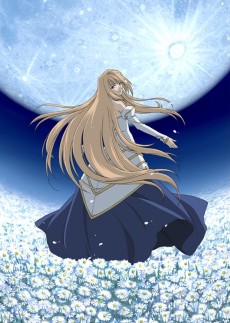
Lunar Legend Tsukihime
📺Anime Details
📝Editorial Analysis
Rain slicks the pavement of Mifune City like spilled ink, and Shiki Tohno stands beneath a flickering streetlamp, his breath shallow, fingers trembling—not from cold, but from the wrongness of memory folding in on itself. A nun’s habit flutters at the edge of frame; a maid’s voice calls out, calm as porcelain—then cuts off mid-sentence. Blood blooms across white fabric, not red at first, but black, thick and slow, like time congealing. That’s the pulse of Lunar Legend Tsukihime: not horror as jump-scare, but as recognition—the gut-lurch when you realize your own past has been edited, your love rewritten, your name borrowed.
This isn’t urban fantasy dressed up in gothic lace. It’s the weight of amnesia that doesn’t erase—it substitutes. Every tender glance from Arcueid or Ciel carries the quiet dread of a lie you’re complicit in believing. The adoption isn’t backstory—it’s architecture: a foundation built on erased consent, on doors sealed with memory manipulation so precise it leaves no scar, only silence where trauma should echo. You don’t feel powerful watching Shiki wield his Mystic Eyes—you feel exposed, because his sight doesn’t grant control; it reveals how fragile perception is, how easily a vampire’s kiss or a nun’s prayer can hollow out your sense of self. The gore isn’t spectacle—it’s punctuation: each arterial spray a period ending a sentence you thought was yours. This is what makes Lunar Legend Tsukihime ache—not with tragedy, but with unmooring.
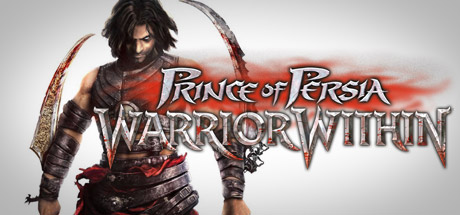
That same unmooring hums through Prince of Persia: Warrior Within. Its description names the core wound: “Hunted by Dahaka, an immortal incarnation of F…”—and though the sentence cuts off, the implication lands like a blade: fate isn’t destiny, it’s surveillance. The player review nails it: “Dahaka chase is still as goated as it was before”—not because it’s thrilling, but because it’s inescapable, a physical manifestation of consequence you can’t outrun, even after a decade. Like Shiki fleeing his own bloodline, the Prince sprints through crumbling temples not to win, but to delay the moment his past catches up—breath ragged, time fraying, every corridor echoing with choices he didn’t know he’d made. Both works make memory feel like terrain you’re falling through, not walking on.
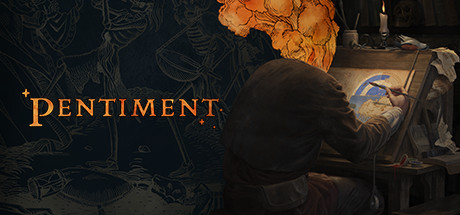
Then there’s Pentiment, scored for Mystery & Detective and Dark Fantasy—a match that surprises until you sit with it. No vampires, no superpowers—but the same suffocating intimacy of truth buried under layers of sanctioned narrative. In Lunar Legend Tsukihime, the nun isn’t just a religious figure; she’s a keeper of forbidden chronology, her vows entangled with erasure. Pentiment’s medieval scriptorium operates on identical logic: history isn’t recorded—it’s curated, and every parchment hides a life overwritten. The detective work isn’t about solving a murder—it’s about tracing the tremor in a scribe’s hand, the hesitation before a saint’s name is inked. That’s the shared heartbeat: the terror of realizing your reality is a palimpsest, and someone else held the quill.
Even Amnesia: Rebirth, tagged Dark Fantasy and Mystery & Detective, resonates—not through romance or vampirism, but through its central, suffocating premise: amnesia as active violation. Its description doesn’t say “you wake up lost”—it implies something darker, something done to you. The player doesn’t recover memory like finding keys; they excavate it, piece by bloody piece, while the world watches, silent and complicit. That’s the air in Lunar Legend Tsukihime’s quietest scenes—the way a maid folds laundry while humming a lullaby that sounds like a binding chant, or how Arcueid’s affection feels less like love and more like reconditioning. Both ask the same question, whispered: What if forgetting wasn’t relief—but the first symptom of being remade?
This pairing won’t comfort the casual viewer. It’s for the one who replays a scene not for the kiss, but for the pause before it—the micro-expression where doubt flickers behind the eyes. For the player who saves before every dialogue choice in Pentiment, not to avoid failure, but to preserve the raw, unedited discomfort of uncertainty. For the person who still feels Dahaka’s footsteps in their ribs years later—not as fear, but as recognition: that some chases aren’t external. They’re the echo of your own erased footsteps, returning.
🎮4 Games That Match the Vibe

Match Dimensions Explained
❓Frequently Asked Questions
Why is Prince of Persia: Warrior Within recommended for Lunar Legend Tsukihime fans?
Because both lean hard into tragic, time-bent Dark Fantasy — Tsukihime’s Shiki Ryougi echoes Warrior Within’s Prince as a brooding, guilt-ridden protagonist hunted by an inescapable force (Dahaka vs. the Crimson Moon’s curse), and that relentless Dahaka chase sequence? It nails the same suffocating dread as when Arcueid corners Shiki in the alleyway under blood-red moonlight.
Is there an anime or visual novel adaptation of Pentiment like Tsukihime?
No — Pentiment is a standalone historical mystery RPG with no anime or VN adaptation. Unlike Tsukihime’s multiple anime, manga, and remake releases (like Melty Blood), Pentiment stays rooted in its 16th-century Bavarian setting, focusing on ink-drawn dialogue trees and murder investigations — think Klaus’ tense confessional scenes, not romantic route branching.
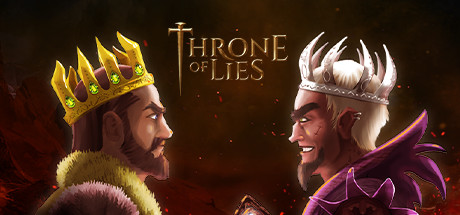
How does Throne of Lies compare to Lunar Legend Tsukihime in terms of atmosphere?
Throne of Lies trades Tsukihime’s intimate, melancholic urban fantasy for cutthroat medieval political intrigue — instead of Shiki’s quiet rooftop soliloquies, you’re navigating backstabbing nobles in a castle where every whispered rumor feels like Arcueid’s ‘I’ll kill you’ but with daggers instead of claws. The Dark Fantasy vibe is there, but it’s grounded in human cruelty, not vampiric tragedy.
What’s the best game like Lunar Legend Tsukihime if I want that slow-burn, psychologically heavy mood?
Amnesia: Rebirth — it’s got that same oppressive, memory-fractured tension as Tsukihime’s ‘Near Side’ routes: you play as Aline, piecing together trauma while exploring decaying ruins, and moments like discovering your own journal entries contradicting each other hit with the same gut-punch as Shiki realizing his black keys aren’t just tools — they’re symptoms.