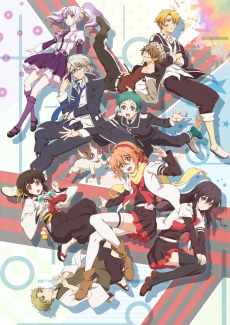
Mikagura School Suite
📺Anime Details
📝Editorial Analysis
The cafeteria at Mikagura School feels like stepping into a sun-drenched dream where gravity is optional—girls in crisp uniforms leap mid-air during lunchtime sparring, a tsundere flicks her braid while deflecting a stray energy blast with a chopstick, and somewhere behind the sliding doors, a hikikomori quietly rewrites the school’s entire battle-ruleset in elegant calligraphy. It’s not chaos—it’s orchestrated warmth, a place where superpowers aren’t weapons but extensions of personality: sharp, tender, awkward, unapologetically yuri, and deeply, deliberately school-club intimate.
What makes Mikagura School Suite vibrate isn’t its Battle Royale tag or Super Power mechanics—it’s how it treats emotional proximity as infrastructure. The boarding school isn’t a backdrop; it’s a living, breathing ecosystem where romance blooms in shared mop duty, where LGBTQ+ themes aren’t signposted—they’re baked into the rhythm of club meetings, hallway glances, and the quiet weight of choosing who sits beside you at the dormitory dinner table. You don’t watch characters become close—you feel them settle into closeness, like ink bleeding softly across rice paper. It’s gentle, yes—but also fierce, because safety here isn’t passive. It’s earned through mutual witness: seeing someone’s hikikomori withdrawal, then watching them step forward—not for victory, but to hand another girl her forgotten bento box. That’s the feeling: belonging as practice, not prize.
That same texture hums in The Sims™ 4, not despite its player review calling it “awful” with “insanely expensive” DLC—but because of the tension between its core promise and its fractured reality. The description says: “Play with life and discover the possibilities. Unleash your imagination and create a world of Sims that’s wholly unique.” That’s Mikagura’s heartbeat—building intimacy through deliberate, granular choice: who shares a dorm room, whose hand you hold during fireworks, how long you linger after club practice. The frustration in the review (“you can barely do a…”) mirrors the anime’s own quiet rebellion: the girls at Mikagura also navigate systems stacked against authenticity—rigid battle rankings, social expectations, even their own powers misfiring—but they keep crafting connection anyway, one imperfect, DLC-less interaction at a time.
Then there’s Thrillville®: Off the Rails™, a game whose description celebrates “20 death-defying rides” and coasters that “leap from one track to another, launch through the air like cannonballs.” On paper, it’s pure kinetic spectacle—but the player review anchors it in something quieter: “Used to play this game on the Wii around 13 years ago. Glad to see the PC port runs smoothly and is still as fun. This game has aged really well!” That nostalgia isn’t for the thrills—it’s for the ritual: building, testing, tweaking, sharing rides with friends who remember exactly which loop made you scream. Just like Mikagura’s School Club structure—where every fight, every festival float, every midnight snack run becomes a shared language—the joy isn’t in the ride’s height, but in who designed it with you, who held your hand when the coaster dropped, who laughed when the track collapsed twice before working. Both treat play as communal scaffolding, where the real magic isn’t in flawless execution—but in the warm, stubborn persistence of doing it together.
This pairing sings for the viewer who watches a character’s tsundere deflection not as trope, but as dialect—a way of saying I’m here, I’m trying, please don’t look away yet. For the player who spends hours arranging a Sim’s bedroom not for aesthetics, but to whisper this space holds her, or who rebuilds the same rollercoaster ten times just to get the curve right with someone else watching. They’re drawn to stories and systems where love isn’t declared—it’s scheduled, rehearsed, built, shared, and sometimes, broken and fixed over bento boxes and blueprints. Not everyone sees the quiet pulse beneath the sparkle—but if you do, you’ll recognize it instantly: that soft, steady, unshakeable hum of people choosing each other, again and again, inside the walls of a world that’s both wildly fantastical—and utterly, tenderly, theirs.
🎮2 Games That Match the Vibe
Match Dimensions Explained
❓Frequently Asked Questions
Why is The Sims 4 listed as similar to Mikagura School Suite when it’s not an anime visual novel?
Great question—it’s because both lean hard into lighthearted romance, school-life simulation, and expressive character interactions. In Mikagura, you bond with girls like Miu, Shizuku, or Yurika through daily choices and club activities; TS4 mirrors that vibe with its relationship-building systems, customizable school-uniform outfits (via Create-a-Sim), and social events like 'Back-to-School' parties—though it swaps narrative focus for open-ended sandbox play.
Is there an anime adaptation of Thrillville: Off the Rails?
Nope—Thrillville: Off the Rails has never been adapted into anime, manga, or any official animated series. It’s purely a theme-park sim where you design wild coasters (like launching riders off a loop-the-loop into a water splash zone) and manage staff—including flirty park attendants who give you bonus tips if your park’s ‘fun’ rating stays high. That playful, upbeat energy is why fans compare it to Mikagura’s cheerful, slice-of-life tone—even without anime roots.
How does Thrillville: Off the Rails compare to The Sims 4 for Mikagura-style vibes?
Thrillville leans into Mikagura’s playful, ensemble-cast charm—think Yurika’s energetic pep rallies or Miu’s impromptu karaoke sessions—but through park management and physics-based stunts instead of dialogue trees. TS4 offers deeper character customization and relationship arcs (like building trust with Shizuku over coffee dates), but requires expensive DLCs to unlock even basic school or romance features—whereas Thrillville delivers its full quirky, cartoony charm out of the box, just like Mikagura’s self-contained joy.
What’s the best game like Mikagura School Suite if I want something uplifting and low-stress?
Go straight to Thrillville: Off the Rails—it’s pure, uncomplicated fun: no grinding, no bugs, no paywalls. You’ll laugh watching guests scream on your custom ‘Mikagura Loop’ coaster (a corkscrew launch followed by a surprise confetti drop), and hiring staff like bubbly ride operators who high-five you after each successful show—exactly the warm, energetic, friendship-first vibe of Mikagura’s clubroom scenes.