
Mirai Nikki OVA
Middle school 2nd year, Amano Yukiteru, is a boy who has problem making friends. He thinks of himself as a bystander and will always write down everything he sees in a cell phone diary.
Tormented by solitude, Yukiteru began to imagine things like a friend called Deus Ex Machina who is apparently the Lord of Time & Space. Seeing Yukiteru's miserable state, Deus gives him a new ability. His diary will now record events that will happen in the near future. Yukiteru is then forced to participate in a game which the winner will become Deus's successor.
A short OVA that was bundled with the limited edition of the eleventh volume of the manga.
📺Anime Details
📝Editorial Analysis
The flicker of Yukiteru’s phone screen in the rain—cold blue light catching the tremor in his fingers as he reads “You will die in 3 minutes and 17 seconds” while standing alone on a wet school rooftop. No music swells. No dramatic wind. Just the hum of distant traffic, the drip of water from his soaked hoodie, and the unbearable weight of knowing exactly how it ends before it begins.
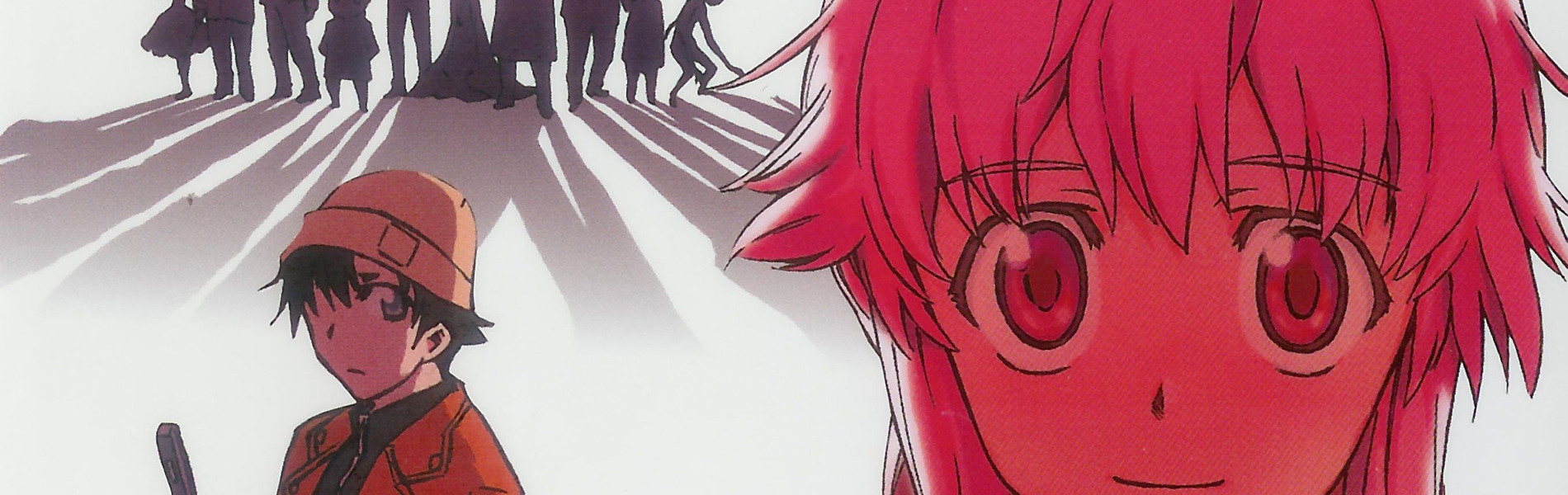
That moment isn’t about spectacle—it’s about isolation made temporal. Mirai Nikki OVA doesn’t thrill with scale; it chills with proximity. Its atmosphere is claustrophobic intimacy: every glance lingers too long, every diary entry feels like breathing someone else’s panic, every “future” prediction lands not as plot device but as psychological shrapnel. You don’t feel like a spectator—you feel like Yukiteru’s second shadow, overhearing his thoughts before he thinks them, watching helplessly as his own mind becomes both weapon and wound. It makes you question memory, agency, even the ethics of witnessing—and leaves you with a low, persistent hum of dread, not fear. Dread that lives in the pause between keystrokes, in the silence after a notification pings, in the way time stops feeling like progression and starts feeling like containment.
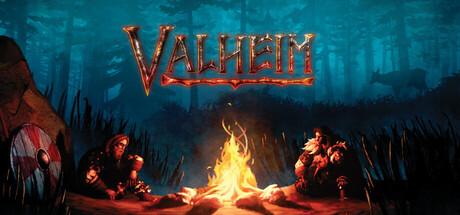
Which is why Valheim resonates so deeply—not because it has gods or death games, but because it replicates that same emotional architecture. Its description calls it “a brutal exploration and survival game… set in a procedurally-generated purgatory.” Purgatory—not hell, not heaven—but in-between, where time stretches thin and meaning must be carved by hand, not granted by design. Like Yukiteru’s diary, Valheim’s world refuses to explain itself. You don’t get tutorials for troll behavior; you get consequences: “a troll destroys your entire house,” just like Yukiteru’s future entries arrive without context, without mercy. The player review nails it: “It’s like Minecraft but instead of punching trees you spend 40 minutes looking for the perfect tree…” That 40-minute search? That’s Yukiteru scanning crowds for signs of surveillance, rewinding mental footage, checking timestamps—hyper-attentive, hyper-vulnerable, hyper-alive in the margins. Both demand obsessive attention to detail not for mastery, but for survival of selfhood. In Valheim, every ruined longhouse is a failed attempt to impose order on chaos; in Mirai Nikki OVA, every rewritten diary entry is a failed attempt to outrun inevitability. Neither offers catharsis—only cycles of rebuilding, rechecking, re-reading.
And yet—the connection isn’t just about pressure. It’s about ritual. Yukiteru’s diary isn’t a tool. It’s a lifeline he clutches like prayer beads. Valheim’s crafting loops—chopping, smelting, building—aren’t busywork. They’re meditative anchors in a world that erases progress without warning. Both turn repetition into resistance. Not against enemies, but against entropy, against the slow dissolution of control. When Yukiteru types “I saw her smile today”—and then watches that smile curdle into something sharp and unrecognizable—that’s the same gut-punch as placing your final roof beam in Valheim… only to watch lightning strike it down at dawn. Not random. Not unfair. Structural.
This pairing speaks directly to the quiet, stubborn souls who find beauty in systems that refuse to comfort them—who don’t play to win, but to witness their own persistence. Not the adrenaline-chaser, but the one who replays a boss fight not to optimize damage, but to study the rhythm of its breath. Not the lore-hunter, but the one who saves before every dialogue choice—not out of fear of failure, but reverence for consequence. They’re the readers who underline sentences not for quotes, but for weight. They recognize dread not as a flaw in design, but as the most honest emotional texture available when time stops being linear and starts feeling like a room you’re locked inside with your own reflection. And they’ll sit with Yukiteru on that rooftop, phone glowing, rain falling—not waiting for rescue, but learning, again, how to hold space for the unbearable before it arrives.
🎮2 Games That Match the Vibe

Match Dimensions Explained
❓Frequently Asked Questions
Why is Valheim often recommended for fans of Mirai Nikki OVA’s tense, high-stakes psychological duels?
It’s not about direct narrative parallels—it’s the shared *feeling* of constant, escalating stakes: just like Yuno stalking Yukiteru through Tokyo’s rain-slicked alleys with a knife and a diary, Valheim forces you to weigh every decision under crushing pressure—lose your gear to a Draug ambush in the Swamp, and you’re back to square one with no save points. That raw, unrelenting tension of survival against both environment and unseen threats? That’s the Mirai Nikki vibe translated into Norse purgatory.
Is there a video game adaptation of Mirai Nikki OVA?
No—there’s never been an official Mirai Nikki OVA video game adaptation. The only licensed games are the 2012 PSP title *Mirai Nikki: Paradox* (a visual novel/dating sim hybrid) and a Japan-only mobile RPG that shut down in 2015. So if you're hunting for Yuno’s diary mechanics or the rooftop confrontations in-game, you’ll need to look elsewhere—like how Valheim’s risk/reward loop mirrors the OVA’s life-or-death diary predictions.
How does Valheim compare to Darkwood for someone who loves Mirai Nikki OVA’s claustrophobic paranoia?
Darkwood nails the oppressive, ever-watchful dread of Yuno’s surveillance—every creak, every shadow feels like it’s *tracking* you—but Valheim swaps that tight horror for open-world consequence: instead of hiding in a boarded-up cabin, you’re choosing whether to risk building a base near a boss altar, knowing a single mistake could erase hours of progress—just like Yukiteru hesitating before writing a prediction he can’t undo. Both punish hesitation, but Valheim makes you *build* your own trap.
What’s the best game like Mirai Nikki OVA if I want that same obsessive, high-anxiety ‘survive the next 24 hours’ energy?
Valheim is your strongest match—it’s got that same breathless, make-or-break urgency: imagine Yukiteru frantically crafting a stone axe at dawn before the Fog starts rolling in, only to get ambushed by a troll right as your health dips below 20%. Player reviews even call it ‘Minecraft but with real consequences’—which lands *exactly* where Mirai Nikki OVA lives: every resource, every shelter, every decision screams *‘one mistake ends everything.’*