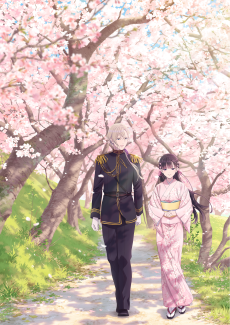
My Happy Marriage
Despite being born into a noble family, Miyo lost her birth mother at a young age and grew up being abused by her stepmother, stepsister, and father.
When she finally receives news that she's to be married off, she finds out that her husband-to-be is Kiyoka, a soldier with a reputation for being cruel and heartless. In fact, he's had numerous previous fiancées who have all fled his household; none lasting even a mere three days.
Resigned to the fact that her family had abandoned her, Miyo knocks on the gate of the Kudou household to find herself greeted by a beautiful man with pale skin. Despite the poor treatment she receives from her husband-to-be during their first meeting, Miyo is unable to return to her old home and spends her time cooking and doing chores. However, as the days pass, Miyo and Kiyoka being to slowly open their hearts to each other...
(Source: KADOKAWA, edited)
📺Anime Details
📝Editorial Analysis
The teacup trembles in Miyo’s hands—not from cold, but from the weight of silence after her stepmother says, “You’ll marry him. You’re lucky he’ll have you.” Her knuckles whiten. Steam curls, thin and fragile, vanishing before it reaches the ceiling. That pause—where breath catches, where dignity is folded small and tucked into a sleeve—is where My Happy Marriage lives.
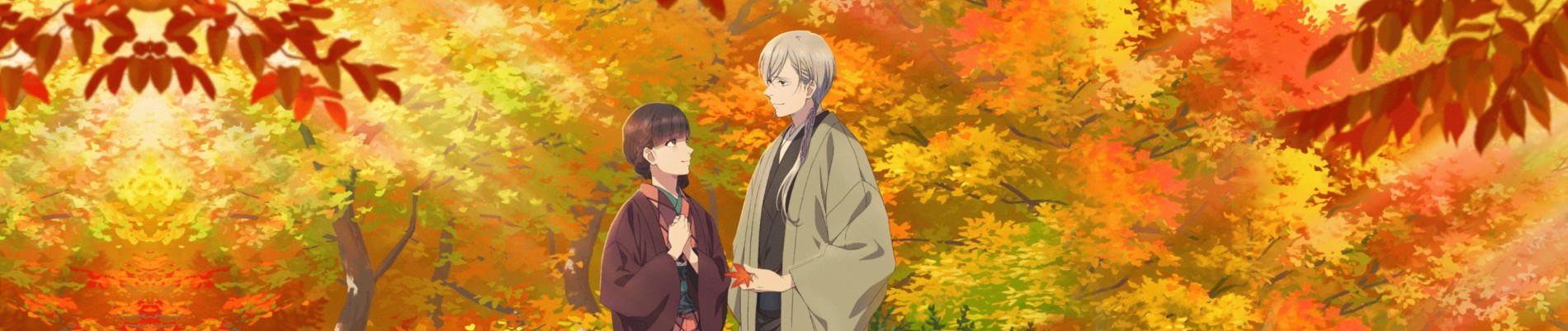
This isn’t a story draped in gothic gloom or softened by wish-fulfillment gloss. It’s quietly devastating, built on the slow accumulation of withheld glances, unspoken apologies, and the physical language of withdrawal: a shoulder pulled inward, a gaze dropped just a fraction too long, the way Miyo’s fingers linger on doorframes like they’re bracing for impact. It makes you feel the thickness of inherited shame—the kind that settles in your molars, not your chest. It makes you think about how love, when it arrives, doesn’t roar—it unfurls: hesitant, conditional, stitched together with shared silence and the deliberate choice to not look away. There’s no grand catharsis in the early episodes—just the radical, trembling act of being seen without flinching, even when what’s seen is exhaustion, fear, or the dull sheen of long-suppressed grief.
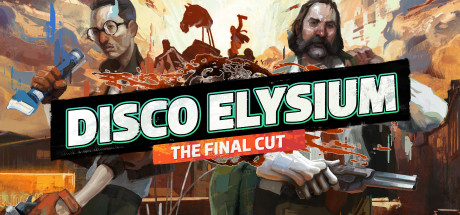
That emotional DNA—this precise calibration of tenderness amid systemic cruelty, this focus on interiority as resistance—resonates sharply with certain games. Take Disco Elysium - The Final Cut, whose description names it a “groundbreaking role playing game” where you’re a detective navigating a fractured city with a unique skill system at your disposal. Not combat, not magic—but skills: Logic, Empathy, Drama, Shivers. Like Miyo learning to read Kiyoka’s stillness not as hostility but as containment, the player in Disco Elysium must parse meaning from subtext, tone, posture—because the world refuses to speak plainly. And that player review? The one quoting “Capital has the ability to subsume all critiques into itself. Even those who would critique capital end up reinforcing it instead.” It’s a cruel irony—and it mirrors Miyo’s reality. Her noble lineage is the system; her marriage is the institution; her survival depends on navigating its logic without being consumed by it. Both My Happy Marriage and Disco Elysium treat oppression not as a villain to defeat, but as atmosphere—as oxygen laced with ash. You don’t overthrow it in a single act. You learn, slowly, how to breathe within it—and sometimes, against all odds, how to exhale something tender.
There’s also resonance in the arranged marriage structure itself—not as trope, but as narrative architecture. Miyo enters Kiyoka’s household knowing she’s been discarded, knowing his reputation precedes her like a curse. She has no leverage, only observation. That mirrors the player’s position in Disco Elysium: arriving in Martinaise disoriented, memory-eroded, armed only with perception and the quiet hum of competing inner voices—each one a potential ally or saboteur, much like Miyo’s own warring instincts: submit, endure, hope, run. The romance isn’t built on grand declarations but on micro-exchanges: a shared glance across a rain-slicked courtyard, a hand offered—not to lift, but to acknowledge the ground beneath both feet. That’s the same intimacy Disco Elysium cultivates: a conversation where the stakes aren’t life or death, but recognition. When Kiyoka finally says, softly, “You don’t have to be afraid of me,” it lands with the same quiet seismic force as a line in Disco Elysium where a character whispers, “I remember you. Not who you were. But that you were here.”
Who would love these pairings? Someone who keeps a notebook full of overheard conversations and half-remembered dreams. Someone who watches a character fold laundry with meticulous care and feels their throat tighten—not because it’s symbolic, but because they know that motion, that attempt to impose order on chaos. Someone who’s ever loved a person while simultaneously mourning the version of themselves they had to bury to survive. Not fans of “strong female leads” as armor-plated archetypes—but readers and players who ache for the vulnerability of sustained attention: the kind that notices how light falls across a bruise, how a voice cracks not from weakness but from finally being allowed to hold a note. They don’t want escape. They want witnessing. And in both My Happy Marriage and Disco Elysium - The Final Cut, they find it—not as spectacle, but as a held breath, a steadied hand, a cup placed gently beside another on a worn wooden table.
🎮1 Games That Match the Vibe
Match Dimensions Explained
❓Frequently Asked Questions
Why is Disco Elysium listed as similar to My Happy Marriage?
Because both dive deep into quiet, emotionally fraught relationships where trauma reshapes intimacy—like when Kiriyama quietly holds Miu’s hand after a panic attack, mirroring how Disco Elysium’s Kim Kitsuragi offers steady, wordless presence amid Harry Du Bois’s self-destructive spiral. The political thriller layer in Disco (e.g., the whaling union standoff in Martinaise) parallels the hidden societal pressures weighing on Miu’s marriage—both use worldbuilding to externalize internal emotional stakes.
Is there a visual novel or game adaptation of My Happy Marriage?
No official game adaptation exists yet—but fans often reach for Disco Elysium: The Final Cut because its branching dialogue, memory-triggered flashbacks (like Harry’s fragmented recollections of his ex), and slow-burn trust-building with NPCs echo the novel’s pacing and emotional texture. It’s not an adaptation, but it captures that same ache of healing through quiet, earned connection.
Disco Elysium vs. My Happy Marriage: which is better for slow-burn emotional healing?
If you want healing rooted in gentle reciprocity—like Miu learning to accept kindness from Kiyoka over tea in the garden—My Happy Marriage delivers that warmth directly. But if you crave healing *through struggle*, like Harry slowly reassembling himself with Kitsuragi’s calm guidance during the ‘Shivers’ scene at the wharf, then Disco Elysium’s raw, messy, deeply human arc hits even harder—it’s slower, heavier, and just as tender beneath the grit.
What if I love My Happy Marriage’s soft romance but hate political plots?
Then Disco Elysium might surprise you—it *feels* political on the surface (capital critique, union tensions), but its heart lives in intimate, character-driven moments: Kitsuragi handing Harry his coat without comment, or the way your choices reshape how deeply Harry trusts others. You can lean into those quiet, romantic-adjacent bonds and skip most of the systemic commentary—just like Miu finds safety in Kiyoka’s steadiness, not the imperial court’s machinations.