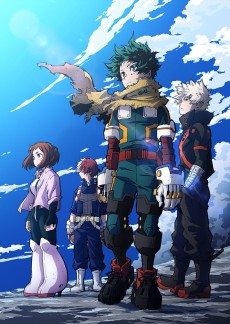
My Hero Academia Season 7
The seventh season of Boku no Hero Academia.
Following an all-out battle with the Paranormal Liberation Front, it is difficult for the people of Japan to continue placing faith in their heroes. To combat the combined power of Tomura Shigaraki and All For One, All Might calls for his ally from the West—the strongest woman on the planet, Star and Stripe.
However, All For One decides to intercept Star and her fleet to get his hands on her overpowered quirk before she can enter Japanese airspace. Although Endeavor, Hawks, and Best Jeanist are headed to the rendezvous point, Star makes a gamble in the present to save her comrades.
(Source: MAL Rewrite)
Note: The season was preceded by a 4-episode special titled 'Boku no Hero Academia: Memories' recapping events from the 6th season along with adding a few minutes of new material each episode.
📺Anime Details
📝Editorial Analysis
The air in Nagoya tastes like burnt insulation and wet concrete—thick, metallic, choking. You feel it before you see it: the tremor in Izuku’s knuckles as he braces against rubble, the way his breath hitches—not from exhaustion, but from the weight of silence after the last explosion. Not the roar of victory, not even the wail of sirens—but the hollow, echoing quiet of a city holding its breath while its heroes stagger back to their feet, bloodied and disbelieving. That silence is Season 7’s heartbeat.

This isn’t just superhero action—it’s grief with momentum. The world of My Hero Academia Season 7 doesn’t recover; it recalibrates under pressure so immense it bends time itself. Faith isn’t restored—it’s re-negotiated, clause by clause, in bloodstained negotiation rooms and shattered broadcast studios. You don’t feel triumphant—you feel responsible, like every decision carries the echo of someone else’s collapse. The urban fantasy isn’t about wonder—it’s about infrastructure failing in real time: subway tunnels flooded with quirk-activated toxins, schools turned into triage zones, heroes’ names scrubbed from public databases overnight. It’s tragedy wearing a tactical vest. War isn’t abstract—it’s the way Momo’s hands shake just slightly when she recalibrates a barrier generator, or how Eri’s eyes dart toward doorways now, not because she fears her power—but because she’s learned what happens when power becomes a weaponized commodity. This season makes you sit with the exhaustion of endurance—the kind that lives in your shoulders, not your script.
That emotional DNA—fragile resilience, collective strain, quiet labor beneath catastrophe—is why Chains lands with such eerie resonance. Not because it’s about bubbles or physics puzzles—but because its player review nails the core rhythm: “link 3 or more of the same color and clear enough till you can proceed and hit the next stage.” That’s Season 7 in algorithmic form: small, deliberate acts of connection—All Might’s call across oceans, Tsu’s whispered coordination over comms, Ochaco anchoring a collapsing overpass—each one a fragile chain holding back total fragmentation. The “relaxing arcade” label is ironic; what feels meditative is actually ritualized survival. You’re not clearing bubbles—you’re clearing space for breath. You’re not matching colors—you’re matching intent, again and again, under escalating pressure. The “increasingly difficult physics-driven” challenge? That’s the world tilting on its axis—gravity shifting not in meters per second squared, but in moral certainty per episode.
And yet—this isn’t solitary. The ensemble cast isn’t window dressing; it’s structural. Every hero, every student, every civilian in the background isn’t filler—they’re nodes in a network that must hold. Which is why the game’s description—“Survival & Crafting”—hits with uncanny precision. Crafting here isn’t about gathering wood or smelting ore. It’s about crafting trust mid-collapse: Uraraka stitching together a makeshift sling from her own uniform, Mashirao improvising a sonic dampener from broken speaker parts, even All For One’s grotesque “crafting” of despair as tactical architecture. Survival isn’t dodging bullets—it’s remembering who to call first when the grid fails. It’s Star and Stripe arriving not as cavalry, but as a single, calibrated variable in a system already buckling—her presence doesn’t fix things. It forces recalibration. Like dropping one new bubble into a precarious chain and watching the entire board reorganize around it.
Who lives in this overlap? Not the casual viewer who wants clean wins and easy catharsis. Not the player chasing dopamine spikes or loot drops. It’s the person who replays the scene where Denki quietly recharges a dying comms unit with his bare hands, not for glory—but because someone has to. It’s the one who saves a screenshot of the evacuation map from Episode 4—not for lore, but because they traced every route with their finger, wondering which path they’d take if the sirens went off now. It’s the reader who underlines lines like “We don’t get to choose the war—we only get to choose how we stand in it,” and then closes the book to go water their plants, wash a dish, send a text—small, stubborn acts of continuity. They don’t want escapism. They want recognition: that resilience isn’t loud, that hope isn’t bright—it’s trembling, tactical, tethered—and that sometimes, the most heroic thing you can do is link three bubbles, breathe, and begin again.
🎮2 Games That Match the Vibe
Match Dimensions Explained
❓Frequently Asked Questions
Why does Chains keep coming up in My Hero Academia Season 7 game lists?
Because Chains’ emotional narrative layer—especially its quiet, character-driven moments of perseverance amid escalating pressure—mirrors the tone of Season 7’s U.A. evacuation arc, where heroes hold the line under crushing odds. Though it’s a match-3 puzzle game (not a fighter or RPG), players consistently note how its ‘survival & crafting’-adjacent tension—like clearing bubbles just fast enough to prevent overflow before the next wave hits—echoes the season’s ticking-clock stakes.
Is there a My Hero Academia Season 7 mobile game adaptation?
No official Season 7 mobile game exists yet—but Chains is the closest thematic fit fans are playing while waiting. Its 62 Metacritic score reflects solid execution of emotional pacing and escalating survival pressure, matching Season 7’s grounded, high-stakes storytelling better than flashier hero-brawler titles that skip the quieter, weighty character beats.
Chains vs. My Hero Ultra Impact: which captures Season 7’s vibe better?
Chains nails the mood—its physics-driven bubble chains and deliberate, almost meditative pacing mirror the season’s tense, breath-holding moments (like Deku’s silent resolve during the rubble collapse), while Ultra Impact leans into flashy, combo-heavy action that fits earlier seasons better. Reviewers even call Chains ‘connect 4 in a nutshell’—a surprisingly apt metaphor for how Season 7 builds tension through small, precise, consequential choices.
What’s the best My Hero Academia Season 7–style game if I want something calm but emotionally heavy?
Chains is your best bet—it’s not loud or combat-focused, but its emotional narrative dimension and survival-driven progression (clearing chains before overflow) creates that same feeling as watching Class 1-A coordinate under duress: quiet intensity, meaningful small actions, and real weight behind every move. Players specifically praise how its ‘increasingly difficult physics-driven’ challenges mirror the season’s mounting exhaustion and moral gravity.