
Non Non Biyori
When Hotaru moves from Tokyo to a tiny town in the rural countryside, she’s in for some serious culture shock: the nearest place that sells comics is 20 minutes away, the nearest video store is ten train stations down the line, and there are only three other girls and one boy in her entire school! Even though everything’s so different, there’s something about the laid-back atmosphere that makes her feel strangely comfortable. While she’ll certainly miss parts of her old life, there’s a whole lifetime of experiences waiting to be enjoyed with her new friends Renge, Komari, Natsumi, and Suguru!
(Source: Sentai Filmworks)
📺Anime Details
📝Editorial Analysis
The cicadas hum—not shrill, not urgent, just there, a warm, drowsy drone vibrating through the air as Hotaru sits cross-legged on the sun-baked wooden floor of her grandmother’s house, tracing the grain of the floorboard with one finger while watching dust motes swirl in a single shaft of afternoon light. She’s not bored. She’s not waiting. She’s present, utterly, quietly, like the old clock on the wall that ticks with unhurried certainty—thunk… thunk… thunk—measuring time not in deadlines or notifications, but in breaths, in shadows lengthening across tatami.
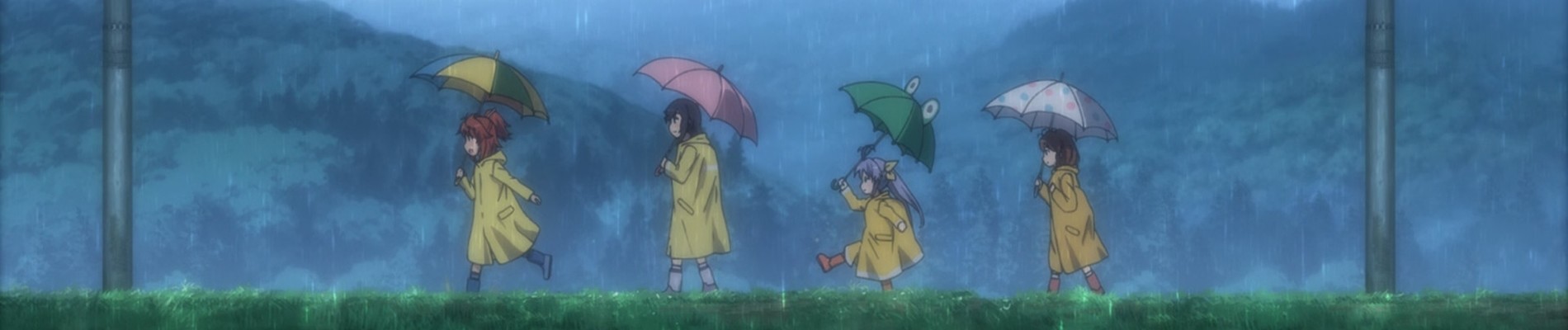
That’s the heart of Non Non Biyori: it doesn’t ask you to do anything. It asks you to uncoil. Its atmosphere isn’t built on plot mechanics or escalating stakes—it’s woven from silence held just long enough for your shoulders to drop, from the weightlessness of a breeze lifting a strand of hair off Hotaru’s forehead as she lies on her back in an empty rice field, staring at clouds that don’t mean anything except cloud. You don’t watch it to escape reality—you watch it to remember how deeply real stillness can feel. It’s healing not because it fixes anything, but because it lets you exhale without realizing you’d been holding your breath. It makes you think about slowness as a kind of fidelity—to place, to season, to the quiet pulse of being alive in a body that doesn’t need to be optimized.
Which is why Prince of Persia—not the acrobatic spectacle of earlier entries, but this reboot—lands with such startling resonance. Its official description names “Healing & Slow Life” and “Melancholic Exploration” as core dimensions—and that’s no marketing flourish. This isn’t a game about conquering kingdoms; it’s about walking barefoot through sun-drenched ruins where every crumbling archway invites pause, where the camera lingers on wind-tossed reeds and the soft shush of sand sliding down stone. A player review notes how it introduces “a new prince, new lands and a brand new story completely separate from the sands…”—and that separation matters. It’s unburdened by legacy, unspooled from urgency. Like Hotaru adjusting to a world where the nearest video store is ten train stations away, this Prince moves through space that refuses acceleration. His exploration feels melancholic not because it’s sad, but because it’s tenderly aware of time passing—of seasons shifting, of memories fading like footprints in dry earth. Both Non Non Biyori and this Prince of Persia treat slowness as sacred architecture: the rhythm of a school bell echoing across empty fields, the slow arc of a lantern swinging over ancient water.
And that same reverence for unhurried presence echoes in how both works handle scale. In Non Non Biyori, the world is small by design—the entire school fits five children; the town’s center is a single intersection with a post office and a tiny shop. There’s no grand threat, no hidden lore vault—just the profound significance of a shared popsicle on a hot day, the weight of a promise made under a gnarled persimmon tree. Prince of Persia mirrors that intimacy: its “new lands” aren’t vast open worlds begging conquest, but curated, breathing spaces where scale serves feeling—not spectacle. You notice the way light catches the edge of a chipped tile, the hush before rain begins—not because the game tells you to, but because the pace allows you to. That’s the DNA: a shared trust in the emotional gravity of the minute, the unremarkable, the ordinary made luminous by attention.
This pairing won’t thrill someone craving escalation or resolution. It’s for the person who replays the opening minutes of Non Non Biyori just to hear the creak of the screen door sliding shut, who saves Prince of Persia mid-walk—not to grind, but to sit with the view from a cliffside ledge as dusk bleeds into violet. It’s for the reader who underlines sentences about light falling through leaves, the player who pauses mid-jump to watch petals drift past the camera. They’re not chasing catharsis—they’re cultivating stillness. They know healing isn’t always loud. Sometimes it’s the sound of a single cicada, pulsing, steady, enough.
🎮5 Games That Match the Vibe




Match Dimensions Explained
❓Frequently Asked Questions
Why is Prince of Persia listed as similar to Non Non Biyori when it’s an action-adventure game?
Great question—it’s all about the *vibe*, not the genre. Prince of Persia (2024) leans hard into ‘Melancholic Exploration’ and ‘Slow Life’: think quiet moments wandering sun-dappled ruins, tending to a wounded companion (Zahra), or pausing to watch dust motes float in shafts of light—very much like Renge staring at clouds or Natsumi napping under the cherry tree. Critics noted its deliberate pacing and healing-focused mechanics (like restoring Zahra’s vitality through calm, ritualistic gestures), echoing Non Non Biyori’s gentle rhythm over plot urgency.
Is there a Non Non Biyori visual novel or game adaptation?
No—there’s never been an official Non Non Biyori visual novel, mobile game, or console title. The franchise stays firmly in anime/manga/light novel territory. That’s why fans seeking that exact cozy, rural summer feeling often pivot to games like Prince of Persia (2024), which—despite its fantasy setting—delivers the same ‘Healing & Slow Life’ emotional texture: long silences, seasonal warmth, and characters who grow through stillness, not spectacle.
How does Prince of Persia compare to Animal Crossing in capturing that Non Non Biyori mood?
Animal Crossing nails the ‘daily ritual’ side (watering flowers, chatting with villagers), but Prince of Persia goes deeper on *melancholic tenderness*—like when you sit beside Zahra on a crumbling balcony, watching twilight fade while her breathing steadies. Animal Crossing is cheerful routine; Prince of Persia is quiet care. Both score high on ‘Slow Life’, but only Prince of Persia layers in that bittersweet, sunlit wistfulness—think Natsumi’s sleepy sighs meets the Prince’s hushed reverence for forgotten places.
What’s the best game like Non Non Biyori if I just want to feel calm and grounded this afternoon?
Go straight to Prince of Persia (2024)—it’s literally rated ‘Healing & Slow Life’ with a critic score of 84. Spend 20 minutes exploring the Sunken Garden: climb slowly, listen to wind chimes, help Zahra rest by lighting incense near shaded benches. No timers, no fail states—just warmth, weightless movement, and that unmistakable Non Non Biyori feeling of time expanding like honey in sunlight.