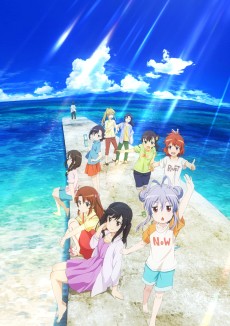
Non Non Biyori Vacation
Even when you're fortunate enough to live in a place as beautiful as the country village of Asahigaoka, you should never turn down the chance to explore someplace else. So, when Suguru wins a free trip to Okinawa just as the summer vacation is coming to an end, the town's entire school… all 5 students and 1 teacher, plus the local candy shop owner… can hardly wait for their 3-day trip to begin! Between kayaking, swimming and meeting new people, there's always something fun happening, but the best part of all is that big city girl Hotaru and her new small-town friends all get to explore the wonders of Japan's famous vacation destination together.
(Source: Sentai Filmworks)
📺Anime Details
📝Editorial Analysis
The salt hangs in the air—not sharp, not briny, but soft, like breath held too long in sun-warmed skin. Renge squats at the water’s edge in Okinawa, bare feet buried in wet sand, tracing a lopsided starfish with her finger while the others splash behind her. No dialogue. Just the low shush of waves folding, the distant giggle of Natsumi wading knee-deep, and the quiet scratch-scratch of Komari’s pencil on notebook paper as she sketches the curve of the bay. That moment—still but never silent, full but never crowded—is Non Non Biyori Vacation.
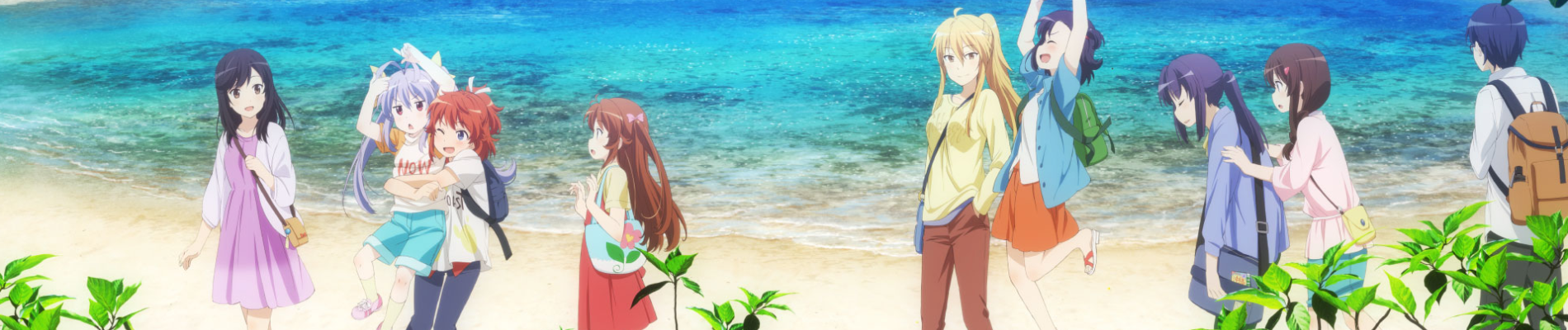
What makes it unique isn’t its rural setting or child cast—it’s how it treats time. Not as something to fill, but as something to breathe into. There’s no urgency, no hidden stakes, no narrative debt to repay. The trip is three days. The school has five students. The candy shop owner comes along because he wants to, not because he has to. This isn’t escapism—it’s presence. It makes you feel the weight of your own shoulders lightening, your jaw unclenching without instruction. It makes you think about how rarely stories let stillness be enough—how rarely they trust that watching a girl adjust her straw hat in the shade of a banyan tree can hold more emotional resonance than a battle cry. It’s healing not as recovery, but as return—return to slowness, to unmediated sensation, to the quiet certainty that nothing needs fixing.
That same resonance hums in Prince of Persia, not in its acrobatics or ancient ruins, but in its dims: “Healing & Slow Life, Adult & Dark Seinen.” Yes—the franchise reboot trades sandstorms for solemnity, but its pacing is deliberate, almost ritualistic: each leap measured, each ledge surveyed, each breath drawn before descent. The player review notes it’s “a new prince, new lands and a brand new story”—and that’s key. Like Non Non Biyori Vacation, it rejects inherited urgency. There’s no legacy to uphold, no past timeline to reconcile—just this man, this world, this pace. You don’t rush through the palace gardens; you linger in their dappled light, just as Renge lingers over the tide pool’s miniature ecosystem. Both ask you to inhabit a body moving with time, not against it.
Then there’s the shared reverence for small acts made sacred by attention. In Non Non Biyori Vacation, drawing isn’t a hobby—it’s Komari’s way of holding the world still. Her pencil doesn’t capture grand vistas; it catches the frayed hem of Natsumi’s shorts, the way sunlight glints off a kayak paddle mid-stroke, the exact curl of steam rising from a cup of iced tea on the hotel balcony. That same devotion appears in games where observation is action—where healing isn’t a menu option but a posture. Prince of Persia’s combat isn’t frantic button-mashing; it’s rhythm, timing, spatial awareness—each parry a kind of listening. The player doesn’t win by overpowering; they win by attuning. Just as Renge doesn’t “solve” the ocean—she watches a crab scuttle sideways and says, “It’s going that way,” and everyone leans in, together, to see.
Who loves this pairing? The person who replays the opening minutes of a game just to hear rain hit bamboo again. The one who pauses anime not to skip, but to re-see: the way light catches dust motes above a tatami mat, the exact shade of turquoise in an Okinawan cove at 3:17 p.m. They’re not waiting for the plot to “start.” They already arrived. They’re the reader who underlines sentences about breeze, the player who walks around the boss arena three times before engaging—not to strategize, but to know the stones, the cracks, the way shadows pool in the corners. They crave stories that treat attention as love, and slowness as courage. Not because life is easy—but because, for three days on a sun-drenched shore, or three hours in a sunlit ruin, it’s enough to simply be here, breathing soft salt air, pencil in hand, heart quietly open.
🎮4 Games That Match the Vibe



Match Dimensions Explained
❓Frequently Asked Questions
Why is Prince of Persia listed as similar to Non Non Biyori Vacation?
It’s not about the action—it’s about the shared 'Healing & Slow Life' dimension and 'Adult & Dark Seinen' tone. Like Renge’s quiet mornings watching clouds from the hilltop or Natsumi’s gentle bike ride through golden rice fields, Prince of Persia features long, contemplative sequences—think the Prince silently tending his garden in the palace courtyard or walking alone through sun-dappled ruins—where time slows and emotion lingers. Critics noted how its reboot leans into melancholy beauty and introspective pacing, mirroring Vacation’s unhurried warmth despite vastly different settings.
Is there an anime or manga adaptation of Prince of Persia?
No—Prince of Persia has never received an official anime or manga adaptation. Unlike Non Non Biyori, which has multiple seasons and a manga, Ubisoft’s reboot stays firmly in the game space (and even its lore is self-contained, with no tie-in novels or animated spin-offs). That said, fans often compare its visual storytelling—like the Prince’s wordless interactions with Elika in the original trilogy—to the subtle, dialogue-light emotional beats in Vacation’s beachside scenes with Shishido-sensei and the girls.
How does Prince of Persia compare to Non Non Biyori Vacation in terms of relaxing gameplay?
Vacation gives you breezy, low-stakes activities—picking wildflowers with Renge, helping Chiaki bake mochi, or napping under the plum tree—while Prince of Persia offers deliberate, rhythmic movement: gliding across crumbling arches, pausing mid-leap to watch dust motes float in sunbeams, or slowly restoring overgrown gardens. Both avoid timers, fail states, or combat pressure in their most serene moments—like when the Prince kneels to heal a blighted grove, echoing Natsumi carefully watering the school’s potted herbs in Vacation’s epilogue.
What if I love Non Non Biyori Vacation’s cozy summer vibe but hate fantasy or action? Is Prince of Persia still worth trying?
Honestly? Probably not for *that* specific craving—it’s got swordplay, ancient curses, and mythic stakes that Vacation deliberately avoids. But if what you truly love is the *feeling* of warm stillness—the way Vacation makes you feel like you’re breathing slower while watching cicadas flicker at dusk—then Prince of Persia’s quieter chapters (like wandering the silent, sunlit Sun Temple gardens or listening to wind chimes in the ruined city) might surprise you. It’s not cozy in the same way, but it’s deeply, intentionally peaceful—and scored 83 for exactly that layered serenity.