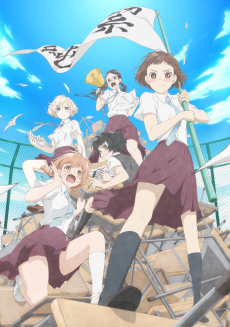
O Maidens in Your Savage Season
The girls in a high school literature club do a little icebreaker to get to know each other: answering the question, "What's one thing you want to do before you die?" One of the girls blurts out, "Sex." Little do they know, the whirlwind unleashed by that word pushes each of these girls, with different backgrounds and personalities, onto their own clumsy, funny, painful, and emotional paths toward adulthood.
📺Anime Details
📝Editorial Analysis
The fluorescent hum of the literature clubroom. A pause so thick you could hear the rustle of notebook pages turning, the faint squeak of a chair leg on linoleum—then that single word, “Sex.” Not whispered, not giggled, but blurted, raw and unguarded, like a stone dropped into still water. Everyone freezes—not in judgment, not in shock, but in the sudden, dizzying awareness that something irreversible has just been named aloud. That’s the heartbeat of O Maidens in Your Savage Season: not the act itself, but the weight of naming desire for the first time, the tremor before the avalanche of self-discovery.
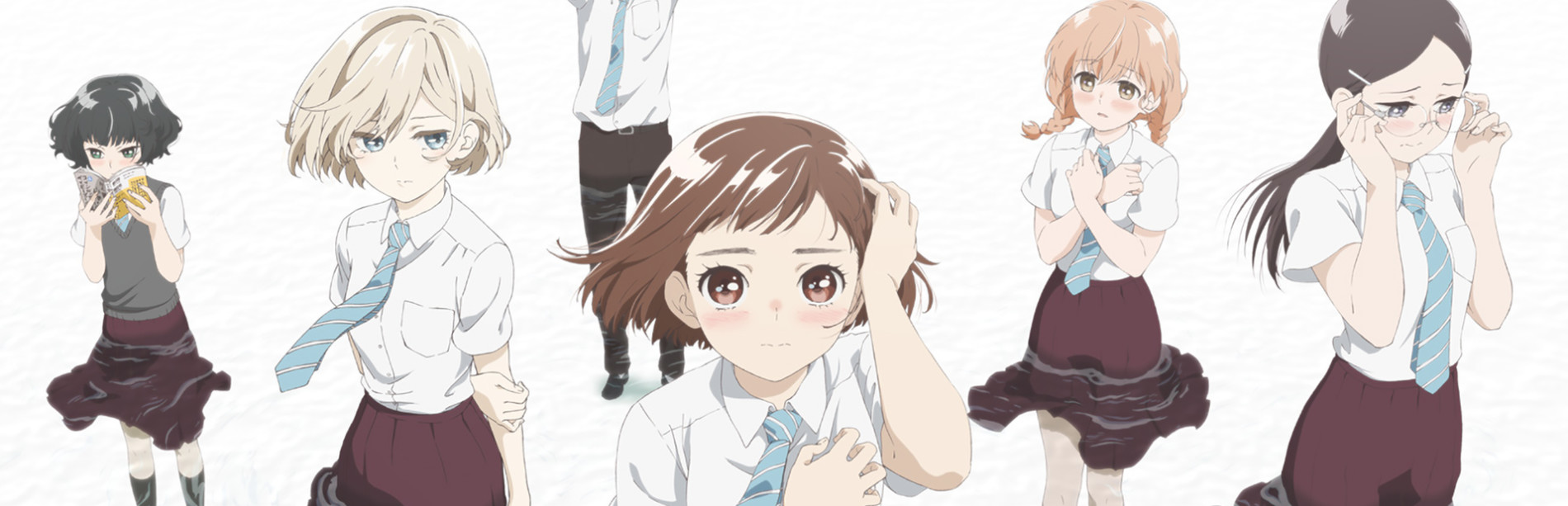
What makes this anime vibrate with such quiet intensity isn’t its school setting or its ensemble cast—it’s the tenderness of embarrassment, the way it treats adolescent confusion as sacred terrain. There’s no mockery, no sensationalism, no easy answers. Just girls fumbling through metaphors in poetry class while their bodies and hearts betray them in real time. You feel the heat rising behind ears during a hallway exchange, the slow burn of a glance held half-a-second too long, the crushing weight of silence after someone says something true and terrifying. It makes you remember what it felt like to be unmoored—not by trauma, but by the simple, staggering fact of becoming. It doesn’t ask “What do you want?” It asks, “What do you dare say out loud—and who will still look at you after you do?”
That emotional resonance echoes sharply in Persona 5 Royal. Its description promises “build relations”—but what it delivers is the same fragile, incremental intimacy as the literature club: late-night confessions under Tokyo streetlights, shared silences that deepen because they’re chosen, not endured. The player review nails it: “The seamless transition between daily life…” — yes, exactly. Like the anime, Persona 5 Royal finds profound meaning in the mundane rhythm of school days, part-time jobs, and café conversations—where romance isn’t grand declarations, but noticing how someone’s voice softens when they talk about their grandmother’s garden, or how they always order the same drink, every time. Both works treat time as a character: patient, cumulative, quietly transformative.
Dragon Age: Origins shares that same reverence for emotional consequence—but through a different lens. Its description centers legacy: “When history tells the story of the Fifth Blight, what will be said about the hero…?” That question mirrors the anime’s core tension: these girls aren’t just figuring out what they want—they’re assembling the first draft of who they’ll tell the world they are. The player review mentions the “pause attack mechanic”—a tactical tool that lets you stop time mid-battle to reassess, reposition, choose. That’s the feeling of O Maidens in Your Savage Season: life constantly hitting pause—not for spectacle, but so each girl can catch her breath, adjust her posture, decide whether to speak, walk away, or reach out. Both demand presence, intention, and the courage to revise your own narrative mid-sentence.
Even Jade Empire™: Special Edition, buried in technical troubleshooting in its review (“Copy and paste ‘steam.dll’…”), carries the same quiet gravity. Its description invites you to “follow the path of the open palm or the closed fist”—a binary that feels startlingly close to the anime’s central question: will you meet desire with openness or defensiveness? With curiosity or fear? The game’s martial-arts philosophy isn’t about combat prowess; it’s about alignment—how your choices shape your spirit. So too, the girls in the literature club aren’t debating sex as an act, but as a threshold: what version of themselves will step across it?
This pairing is for the person who cries during cafeteria scenes. For the one who saves love letters in a shoebox, not because they’re perfect, but because they’re honest. For readers who underline sentences in novels not for wisdom, but for recognition—the sharp, sweet ache of “Yes. That’s it. That’s how it felt.” They don’t want escapism. They want witnessing. They want stories where a blush matters more than a battle, where a hesitant hand reaching for another’s wrist lands with the force of a revelation—and where the most radical thing a teenager can do is name their hunger, then wait, heart pounding, to see if the world still holds them.
🎮6 Games That Match the Vibe




Match Dimensions Explained
❓Frequently Asked Questions
Why does Persona 5 Royal keep coming up in 'O Maidens in Your Savage Season' game recommendations?
Because both dive deep into teenage self-discovery through emotionally charged, slow-burn romance and richly layered social dynamics—like Ann’s quiet vulnerability during the Shibuya train station scene mirroring Miu’s hesitant confessions in O Maidens. Persona 5 Royal’s Confidant system lets you build nuanced, evolving relationships (e.g., Futaba’s arc from isolation to trust) with the same delicate pacing and emotional weight fans love in the anime.
Is there a visual novel or game adaptation of O Maidens in Your Savage Season?
No—there’s no official game adaptation, visual novel, or mobile title based on O Maidens. That’s why fans lean into narrative-rich JRPGs like Dragon Age: Origins, where romance isn’t just optional but world-shaping: Morrigan’s morally ambiguous bond or Alistair’s heartfelt, humor-tinged affection offer that same mature, character-driven intimacy without fan service shortcuts.
How does Jade Empire compare to Persona 5 Royal for someone who loved O Maidens’ romantic tension and cultural specificity?
Jade Empire leans harder into poetic, myth-infused restraint—think Master Li’s guarded mentorship echoing Mr. Sengoku’s quiet influence—while Persona 5 Royal mirrors O Maidens’ modern Japanese setting and sharp dialogue timing (like Ryuji’s bluntness cutting through awkward silences). Both deliver romance as emotional growth, not just confession scenes, but Jade Empire’s ‘Open Palm’ path rewards patience and empathy in ways that feel spiritually aligned with Miu and Anna’s journey.
What’s the best game like O Maidens if I want that bittersweet, late-summer classroom vibe with quiet romantic tension?
Persona 5 Royal nails it—especially the rainy-day rooftop scene with Ann after the first Palace heist, where unspoken feelings hang thick in the air just like Miu staring at Anna’s notebook in homeroom. The daily life rhythm—attending class, choosing dialogue options that shape trust, hearing that melancholic yet hopeful soundtrack—creates the exact same tender, time-limited intimacy fans of O Maidens crave.