
Pretty Boy Detective Club
Mayumi Doujima is a young girl who has been searching for a star that she saw only once ten years ago. She visits the headquarters of the Pretty Boy Detective Club where she meets five boys who are each unique in their own way. Her encounter marks the beginning of an extraordinary search for a lost star. A beautiful and dazzling mystery-adventure story starts now!
(Source: Funimation)
📺Anime Details
📝Editorial Analysis
The first time Mayumi Doujima stands beneath the rain-slicked awning of the Pretty Boy Detective Club’s headquarters—her small hand clutching a faded sketch of a single, impossibly bright star—the air doesn’t crackle with danger or urgency. It stillens. Not in silence, but in that hushed, breath-held pause before a secret begins to unfold—not as a puzzle to be solved, but as a presence to be acknowledged. Her quiet certainty, her ten-year-old memory held like a compass needle pointing to something no map can name—that’s where Pretty Boy Detective Club lives: not in the solving, but in the searching, tender and unrelenting.

What makes this anime vibrate with such singular warmth isn’t its detective trappings or its sci-fi gloss—it’s the weightlessness it grants profound longing. It treats yearning—not for answers, but for recognition, for continuity across time—as sacred ritual. The boys aren’t just clever; they’re attentive, folding their intellects around Mayumi’s fragile, luminous obsession like hands cradling flame. Their crossdressing isn’t spectacle—it’s gentle, deliberate reconfiguration, a refusal to let identity harden into something brittle. The philosophy isn’t lectured; it seeps through the way they listen, how they rearrange chairs to include her, how they treat a childhood memory like archival evidence of emotional truth. It makes you feel held, even while drifting—like floating in warm water under a sky full of stars you can’t yet name.
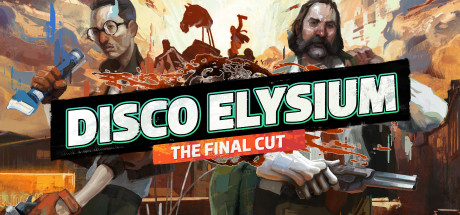
That same emotional resonance hums in Disco Elysium - The Final Cut, not because both involve detectives, but because both locate mystery in the unstable ground of belief itself. The game’s description calls it a “groundbreaking role playing game” where you carve a path across a city with a “unique skill system”—but what feels true is the player review quoting: “Capital has the ability to subsume all critiques into itself. Even those who would critique capital end up reinforcing it instead.” That line isn’t political theory—it’s existential vertigo, the dizziness of realizing your own tools of inquiry might be part of the very structure you’re trying to understand. Just like Mayumi’s search for a star she saw once—was it real? Was it metaphor? Does verifying it matter more than the fact that she remembers it, and it shaped her? Both Pretty Boy Detective Club and Disco Elysium refuse to resolve that tension. They sit with it, quietly, letting the question breathe, trusting the act of attention—of naming, of sketching, of rolling dice against your own doubt—as its own kind of fidelity.
There’s also an unspoken kinship in how both works handle male tenderness without sentimentality. The Pretty Boy Detective Club’s boys don’t shield Mayumi; they mirror her intensity, matching her gravity with their own brand of focused care—whether adjusting a bowtie mid-theory or tracing constellations on a fogged windowpane. Likewise, Disco Elysium’s detective doesn’t “tough it out”—he listens inward, his skills whispering contradictions, his failures often tender, his breakthroughs arriving not with fanfare but with a slow, aching clarity. Neither work mistakes vulnerability for weakness. Both know that holding space—for a girl’s memory, for a city’s rot, for your own splintered mind—is the most radical, exhausting, and beautiful labor of all.
This pairing sings to the person who keeps a notebook not for notes, but for half-remembered lines and stray thoughts they’re afraid to lose. To the one who’s ever stared at the night sky and felt homesick for a light they couldn’t name—not because they want to possess it, but because its mere existence validates their capacity to wonder. It’s for readers who underline passages not for wisdom, but for the texture of the feeling—and players who replay dialogue trees not to win, but to hear again how a character’s voice cracks when they admit, quietly, “I don’t know. But I’m still here.” That’s the shared pulse: the devotion to the unsolved, the gentleness with which both works hold human fragility, and the quiet, unshakeable conviction that some searches—like Mayumi’s star, like the detective’s self—aren’t about arrival. They’re about the light you carry, however faint, while walking.
🎮4 Games That Match the Vibe

Match Dimensions Explained
❓Frequently Asked Questions
Why is Disco Elysium compared to Pretty Boy Detective Club?
Both lean hard into cerebral, dialogue-driven mystery where your brain—not your brawn—solves the case: think PBD Club’s Rintarō’s sharp-tongued deductions during the 'Crimson Rose' masquerade scene, and Disco Elysium’s Harry Du Bois mentally sparring with his own Skill Voices while piecing together the wharf murder. They share that rare blend of stylish eccentricity, layered political subtext (e.g., Disco’s ‘Capital’ monologue vs. PBD Club’s critique of inherited privilege), and a world where every conversation feels like a puzzle piece snapping into place.
Is there a visual novel or game adaptation of Pretty Boy Detective Club?
No—there’s no official visual novel, RPG, or game adaptation of Pretty Boy Detective Club yet. It remains exclusively an anime and light novel series. Fans looking for that same vibe in interactive form often pivot to Disco Elysium, since its branching dialogue trees, character-driven investigation (like interviewing the disillusioned union organizer Cuno), and heavy emphasis on personality-as-mechanic mirror PBD Club’s ensemble-based deduction and tonal playfulness.
Disco Elysium vs. Pretty Boy Detective Club: which has more stylish detective banter?
PBD Club wins on sheer theatrical flair—Rintarō’s deadpan one-liners during the ‘Midnight Tea Party’ scene or Mutsuki’s absurdly precise coffee-pouring interruptions are pure performative charm. But Disco Elysium matches it in depth: Harry’s internal monologues with Logic, Empathy, or Inland Empire feel like watching five detectives argue inside one skull—and when he disarms a hostile witness with a perfectly timed ‘Passive-Aggressive’ check? That’s the same kind of razor-sharp, character-anchored wit, just grittier and more self-aware.
What’s the best game like Pretty Boy Detective Club if I want something smart but not stressful?
Disco Elysium — The Final Cut is ideal if you love PBD Club’s brainy charm but want zero fail-states or time pressure. You can wander Revachol at your own pace, skip combat entirely, and even solve the central murder by being hilariously incompetent (thanks to the ‘Shivers’ skill). Its ‘Mystery & Detective’ + ‘Political Thriller’ dimensions let you dive deep into lore like PBD Club’s hidden society arcs—but with zero consequence for choosing ‘nonsense’ over ‘clue’, just like how Mutsuki might derail an interrogation with pastry talk and still land the truth.