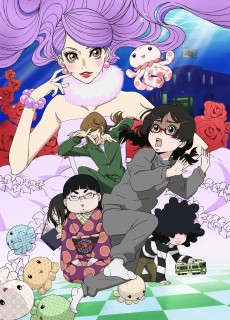
Princess Jellyfish
Plain, timid and obsessed with jellyfish, Tsukimi is a far cry from her idea of a princess. Her tepid life as a jobless illustrator comes complete with roommates who harbor diehard hobbies that solidify their status as hopeless social rejects. These wallflowers run a tight, nun-like ship, but their no-men-allowed-not-no-one-not-no-how bubble is unwittingly burst after Tsukimi brings home a rescued sea jelly and a beauty queen... who's actually a guy.
When the threat of losing their cozy convent inspires this glamour boy to turn the neurotic entourage into a portrait of success, will Tsukimi take her chance to bloom, or will she end up a hot mess?
(Source: Funimation)
📺Anime Details
📝Editorial Analysis
The fluorescent hum of the Amamizukan’s hallway at 3 a.m., Tsukimi crouched on the floor in mismatched socks, sketching jellyfish tentacles in the margin of a discarded magazine while Kuranosuke—still in full makeup and borrowed heels—leans against the doorframe, eating melon soda straight from the can. Her pencil trembles slightly. His laugh is low, unguarded. No one’s watching. No performance. Just warmth pooling in the quiet, sticky air between them. That’s the heart of Princess Jellyfish: not transformation, but recognition—the slow, tender unspooling of self when you’re finally seen by people who don’t ask you to shrink.
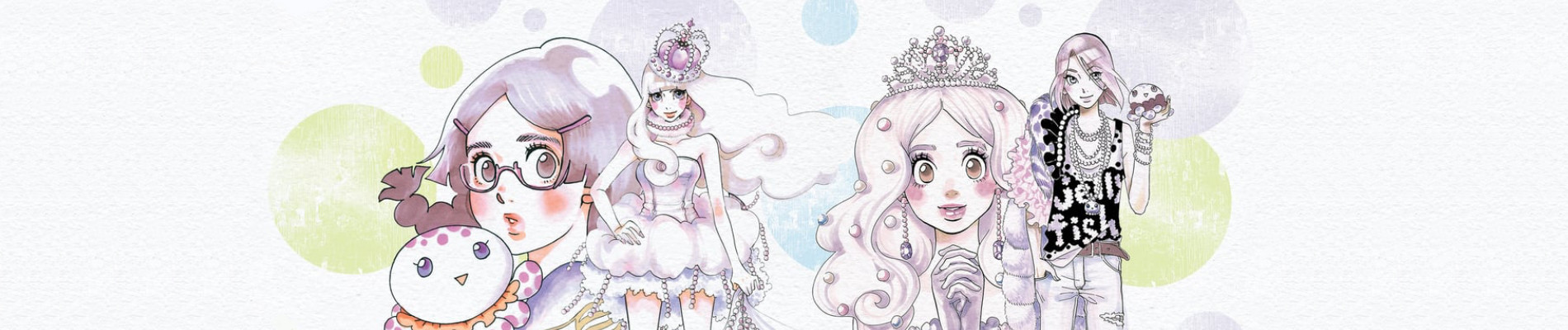
It doesn’t feel like wish-fulfillment. It feels like relief. Not the kind that arrives with fanfare or grand declarations, but the kind that settles in your ribs after holding your breath for years—soft, persistent, almost embarrassing in its simplicity. This is found family as lived-in ritual: shared grocery runs, whispered critiques of eyeliner application, the sacred geometry of folding laundry together in silence. There’s no gloss, no idealized youth—it’s all adult exhaustion, unvarnished hobbies, and the quiet dignity of choosing each other anyway. You don’t leave the Amamizukan feeling inspired to conquer the world. You leave it less afraid of your own softness, your own particular brand of weird, your own stubborn refusal to be smoothed into someone else’s idea of acceptable.
That same emotional DNA flickers in Strong Bad's Cool Game for Attractive People: Season 1, where comedy isn’t just decoration—it’s armor and lifeline. The description promises “Strong Bad’s wacky comedic adventures over 5 full episodes,” and the player review—a nostalgic, almost pleading note about hoping the game returns—captures exactly what binds it to Princess Jellyfish: the way humor becomes a shared language among misfits who’ve built their own logic, their own rules, their own glittering, absurd little kingdom. Like Tsukimi’s jellyfish sketches or Kuranosuke’s impromptu fashion critiques, Strong Bad’s jokes aren’t just punchlines—they’re acts of self-assertion, tiny rebellions against being dismissed. Both are deeply human, even when they’re cartoonishly exaggerated.
Then there’s Disco Elysium - The Final Cut, whose description calls it “a groundbreaking role playing game” where you play “a detective with a unique skill system… and a whole city to carve your path across.” The player review quotes something bleak and structural—about capital subsuming critique—but that’s precisely the tension Princess Jellyfish holds so gently: the characters live inside oppressive systems (real estate developers, beauty standards, workplace precarity), yet their resistance isn’t loud protest—it’s staying put, redecorating the walls, learning to apply false lashes, insisting on the validity of their obsessions. Disco Elysium’s detective unravels himself through dialogue and doubt; Tsukimi unravels herself through ink and jellyfish anatomy. Both are emotional narratives where interiority isn’t background noise—it’s the main event, messy and unresolved and vital.
And yes—even Crash Time 2, with its janky physics and “awful controls,” resonates in its own off-kilter way. The player review calls it “ngl, boys, this one aint it”—a brutally honest, self-aware dismissal that mirrors how the Amamizukan women talk about themselves: “hopeless social rejects,” “wallflowers,” “nun-like.” There’s no irony in their self-labeling—it’s matter-of-fact, almost affectionate. Like the player shrugging at Crash Time 2’s flaws while still naming it, the women of Princess Jellyfish name their own strangeness without shame. The game’s broken mechanics become part of its texture, just as their awkwardness, their crossdressing, their obsessive hobbies—all those things tagged in the data—aren’t quirks to be fixed, but coordinates of identity.
This pairing sings to the person who keeps a half-finished sketchbook under their bed, who knows the exact weight of a favorite hoodie, who’s ever stayed up too late rewatching the same scene because it made them feel seen in a way nothing else did. Not the teen chasing destiny, not the hero leveling up—but the adult who’s learning, slowly, that safety isn’t found in perfection. It’s found in the shared, slightly ridiculous, utterly real act of showing up—as you are, in socks that don’t match, with a jellyfish doodle on your wrist, laughing at a joke only your chosen family understands. That’s the quiet, radiant thing both Princess Jellyfish and these games hold: the courage to be unpolished, and the deep, tender joy of finding others who love you right there.
🎮4 Games That Match the Vibe

Match Dimensions Explained
❓Frequently Asked Questions
Why does Strong Bad's Cool Game for Attractive People show up in 'Games Like Princess Jellyfish' lists?
It’s all about that offbeat, character-driven charm—like when Tsukimi bonds with her jellyfish while Strong Bad bumbles through absurd dating sim parodies in Episode 2 ('The King of Town'). Both lean hard into quirky emotional storytelling wrapped in sharp, self-aware comedy, and reviewers even call out its 'Emotional Narrative & Comedy & Parody' overlap—the same two dimensions Princess Jellyfish nails.
Is there a Princess Jellyfish video game adaptation?
No official Princess Jellyfish game exists—but fans often reach for Strong Bad's Cool Game for Attractive People because of its similarly warm, eccentric ensemble (think Strong Bad’s chaotic rapport mirroring Kuranosuke’s gender-bending kindness) and episodic, slice-of-life pacing. The match list confirms it shares the exact same core dimensions: Emotional Narrative + Comedy & Parody.
How does Disco Elysium compare to Princess Jellyfish as a 'character-driven story'?
They’re tonal opposites—Disco Elysium drowns you in existential dread and systemic critique (like that brutal 'Capital' monologue in the review), while Princess Jellyfish thrives on gentle found-family warmth. But both share 'Emotional Narrative & Comedy & Parody' as core dimensions, and Disco Elysium’s detective can literally talk himself into absurdity—kinda like how Tsukimi’s jellyfish obsession becomes a tender, hilarious anchor amid emotional chaos.
What’s the best 'Princess Jellyfish'-like game if I want something cozy but weirdly profound?
Go straight to Strong Bad's Cool Game for Attractive People—especially Episode 1 ('Homestar Ruiner'), where goofy slapstick (Strong Bad wrestling a sentient toaster) somehow lands real emotional beats about identity and connection. It’s got the same 69 Metacritic score and identical 'Comedy & Parody + Emotional Narrative' DNA as Princess Jellyfish, and fans literally beg for its return because it *feels* like hanging out at Amamizukan—just with more lucha libre.