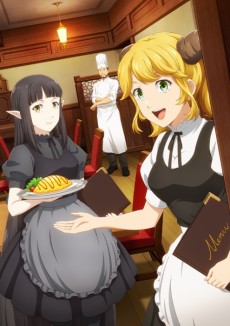
Restaurant to Another World 2
The second season of Isekai Shokudou.
The restaurant is opening up again with new characters and new dishes.
There is a certain restaurant in the first basement level of a multi-tenant building in one corner of a shopping street near the office district. The historical restaurant, marked by a sign with a picture of a cat, is called "Western Cuisine Nekoya." This restaurant looks completely normal through the week, but on Saturdays, it opens in secret exclusively to some very unique guests. During these hours, doors in various areas of a parallel world open to allow customers of many different races and cultures into the restaurant.
(Source: Crunchyroll)
📺Anime Details
📝Editorial Analysis
The steam rises—not from a boiling cauldron of magic, but from a copper pot of miso-kombu dashi, simmering low and slow on the back burner of Restaurant to Another World 2, just as the first Saturday bell chimes at six p.m. The sign with the cat flickers—softly, like a held breath—and the door opens not to fanfare, but to the quiet rustle of an elf’s silk sleeve brushing the frame, the faint scent of pine resin clinging to her hair, and the gentle clink of a dragon’s scaled knuckle tapping the counter as she orders roasted root vegetables with thyme butter. No spells flare. No battles loom. Just warmth, precision, and the unspoken covenant between chef and guest: you are safe here, you are seen, and this meal is made only for you.
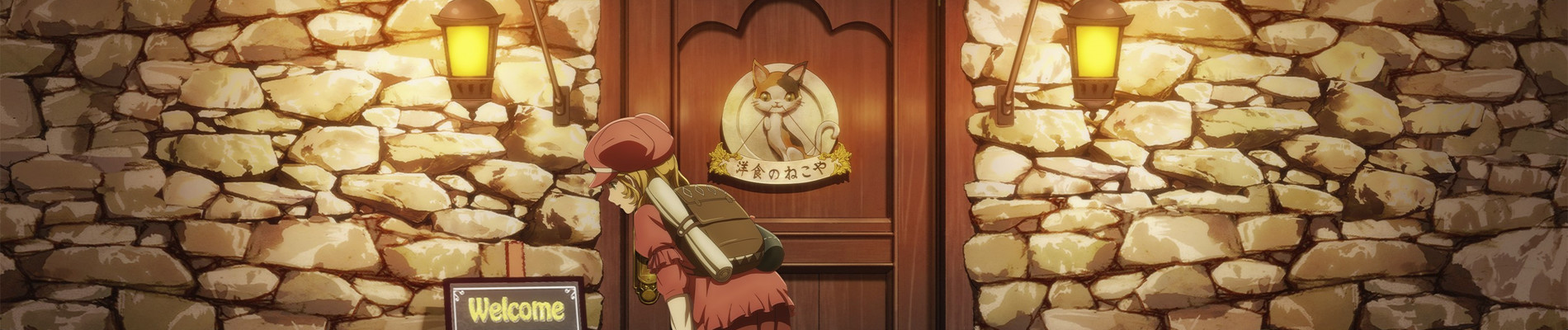
That’s the feeling—quiet reverence. Not grandeur, not urgency, but the deep, grounding hush of ritual done with care: peeling potatoes with a paring knife that sings against the skin, folding dough for käsekrainer with patient thumbs, wiping the same counter three times before service begins. It’s melancholic exploration turned inward—not of ruins or forgotten kingdoms, but of memory, longing, and the small, sacred geometry of nourishment. You don’t watch Restaurant to Another World 2 to escape life—you watch it to remember how life tastes when it’s tended to: rich, layered, slightly imperfect, and deeply kind. There’s no rush to resolve; the fantasy isn’t in the dragons or fairies—it’s in the sustained stillness, the way time bends gently around Nekoya’s threshold, holding space for both hunger and healing.
Which is why Prince of Persia—the 2024 reboot—lands with such startling resonance. Its description names Healing & Slow Life and Melancholic Exploration as core dimensions—and yes, those aren’t marketing buzzwords. They’re the very air the game breathes: a prince moving through sun-bleached ruins not to conquer, but to relearn—to trace faded frescoes with his fingertips, pause mid-leap to watch dust motes swirl in a shaft of light, feel grief settle like fine sand in his throat as he walks alone through silent courtyards. A player review calls it “a new prince, new lands and a brand new story completely separate from the sands…”—and that separation matters. Like Restaurant to Another World 2, it refuses nostalgia-as-propulsion. Both choose presence over plot velocity. Both treat silence as texture, not absence. When the prince kneels to pour water into a cracked basin—watching it seep slowly into ancient stone—it mirrors the moment in the anime where the chef places a single, perfect poached egg atop miso-glazed eggplant: no fanfare, no exposition—just attention, offered like a vow.
The emotional DNA isn’t about spectacle—it’s about ritual as resistance. In Restaurant to Another World 2, cooking is devotion. In Prince of Persia, movement is meditation. Neither asks you to win. They ask you to linger, to let your pulse sync with the rhythm of something older than urgency: the stir of a spoon, the arc of a vault, the steam rising from broth at exactly 6:03 p.m., every Saturday.
This pairing speaks directly to the viewer who keeps a thermos of homemade barley tea at their desk—not because they’re nostalgic for childhood, but because the act of brewing it, pouring it, holding the warmth in their palms, is how they re-anchor themselves. It’s for the player who pauses mid-game not to check a map, but to watch rain gather on a virtual windowsill, then slide down in uneven rivulets. These aren’t escapist fantasies—they’re restorative ones. They honor the weight of being human: tired, tender, curious, quietly hungry—not for power or conquest, but for a place where the door opens, the light falls just so, and someone has already set the table.
🎮5 Games That Match the Vibe




Match Dimensions Explained
❓Frequently Asked Questions
Why is Prince of Persia listed as similar to Restaurant to Another World 2?
Because both lean hard into 'Melancholic Exploration' and 'Slow Life' vibes — like when the Prince quietly tends to wounded allies in quiet desert ruins, mirroring Aletta’s calm, healing presence in the restaurant’s back room. The game’s healing mechanics (reviving fallen companions mid-journey) and its focus on atmospheric, reflective traversal feel spiritually aligned with the anime’s gentle pacing and restorative warmth.
Is there a video game adaptation of Restaurant to Another World 2?
No — there’s no official game adaptation yet, just fan mods and doujin projects. But Prince of Persia (2024) is the closest *spiritual* match we’ve got: it captures that same blend of otherworldly travel, quiet character moments, and healing-centered downtime you love from the show — especially scenes where the Prince shares food or stories with NPCs in secluded oases, echoing the restaurant’s cross-dimensional hospitality.
How does Prince of Persia compare to Stardew Valley for Restaurant to Another World 2 fans?
Stardew leans into cheerful, daily routine-building (like cooking for villagers), while Prince of Persia offers melancholic, story-driven exploration with healing as a core mechanic — think tending to injured companions in ancient temples instead of watering crops. If you loved the show’s quieter, more introspective moments (e.g., Isekai Chef’s silent kitchen prep at dusk), Prince of Persia’s dim-lit, emotionally resonant world hits closer than Stardew’s bright, upbeat rhythm.
What’s the best game like Restaurant to Another World 2 if I want that soothing, healing-focused vibe?
Prince of Persia (2024) is your top pick — it scores 85/100 and explicitly tags 'Healing & Slow Life' and 'Melancholic Exploration'. Its healing system isn’t just combat utility; it’s narrative weight — reviving a companion after a fall feels like restoring balance, much like Aletta’s gentle care or the chef’s precise, meditative plating. That hushed, reverent tone? Exactly what you’re after.