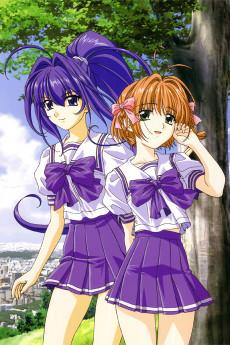
Rumbling Hearts
At first, Takayuki Narumi is befriended by Mitsuki Hayase only because Mitsuki's best friend, Haruka Suzumiya has a crush on him; however since then, Takayuki, his pal Shinji Taira, and Mitsuki have grown to be the best of friends. Then one day, Haruka confesses to Takayuki her love for him. Not wanting to hurt her feelings, Takayuki agrees to go out with her. After a few incidents, their relationship gets intimate, even while Takayuki and Mitsuki begin to realize their feelings for each other. But suddenly, when tragedy strikes, things are never the same for these four friends again.
📺Anime Details
📝Editorial Analysis
The rain in Rumbling Hearts doesn’t fall—it settles. It’s the kind of damp, quiet drizzle that clings to windows after Haruka Suzumiya’s confession, when Takayuki stands frozen on the school rooftop, her voice still vibrating in his chest, Mitsuki Hayase watching from the stairwell doorway—unseen, unspoken, her hand gripping the cold metal railing just a little too tight. That silence isn’t empty. It’s thick with what-ifs, with loyalty curdling into guilt, with the unbearable weight of choosing before you know what you’re losing.
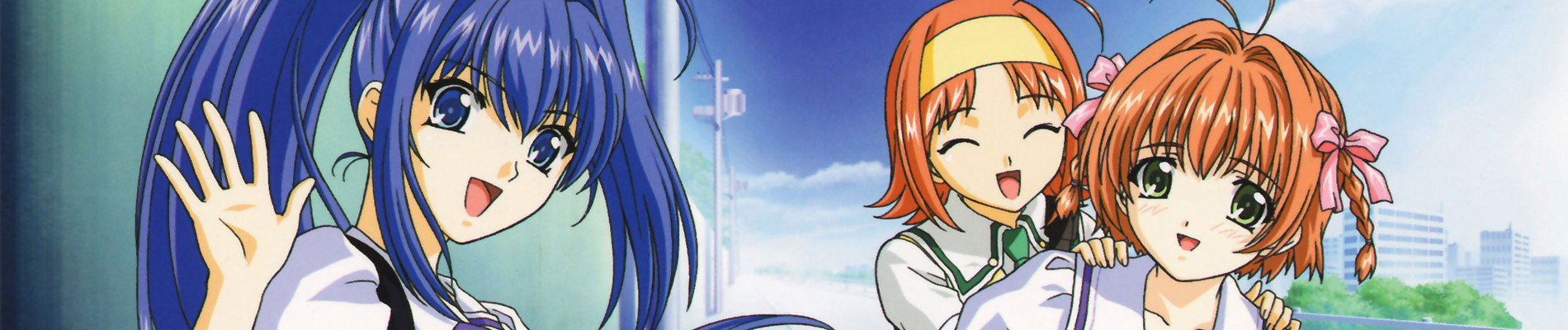
What makes Rumbling Hearts ache so deeply isn’t its tragedy—it’s the ordinariness of its devastation. No grand betrayals, no supernatural curses—just time, miscommunication, and the slow, grinding erosion of self in service of others. You feel the exhaustion in Takayuki’s slumped shoulders during his part-time job at the convenience store, the way Mitsuki’s hikikomori withdrawal isn’t dramatic isolation but quiet erasure—her presence shrinking like ink dissolving in water. This is emotional gravity: not spectacle, but the persistent, low-frequency hum of consequence. It asks you to sit with discomfort—not as catharsis, but as residence. You don’t watch it to escape life. You watch it because it mirrors how love, guilt, and duty fold into each other until you can’t tell where one ends and the other begins.
That same emotional gravity pulses through Jade Empire™: Special Edition, where your martial-arts mastery isn’t measured in combos but in choices that hollow you out. The description calls it “the path of the open palm or the closed fist”—a binary that feels less like philosophy and more like Takayuki choosing between Haruka’s fragile hope and Mitsuki’s silent devotion. A player review mentions needing to copy and paste "steam.dll" just to launch—a perfect metaphor: even accessing this world demands laborious, almost bureaucratic effort, mirroring how Rumbling Hearts forces you to wade through mundane logistics (rehabilitation schedules, work shifts, hospital visits) before any emotional payoff arrives. The feeling isn’t heroic—it’s weary, tender, and stubbornly human.
Dragon Age: Origins resonates for the same reason: its legacy isn’t built on spectacle, but on who you fail to save. The description asks, “What will be said about the hero who turned the tide?”—but the game’s heart lives in the quiet moments between battles: Alistair’s nervous laughter over campfire stew, Morrigan’s guarded glances, the way romance isn’t fireworks but shared exhaustion after a near-fatal ambush. A player notes how the pause attack mechanic helps strategize your tactics—and that’s Rumbling Hearts’ rhythm too: life constantly hitting pause so characters can re-evaluate, hesitate, misstep. Both demand you weigh intimacy against duty, affection against obligation, all while the clock ticks toward irreversible consequences.
Then there’s Persona 5 Royal, whose Tokyo isn’t neon-drenched fantasy—it’s lived-in, breathing, saturated with the weight of daily ritual. The description highlights “building relations” alongside dungeon crawling; the review praises “the seamless transition between daily life…” That’s Rumbling Hearts’ DNA: Mitsuki’s rehabilitation isn’t a plot device—it’s grocery runs, physical therapy appointments, awkward silences over tea. Like Joker balancing school exams with Phantom Thief heists, Takayuki juggles work, friendship, and fractured love—all while time skips forward like a skipped heartbeat. The emotional resonance isn’t in the grand gesture, but in how much you notice the small things: the way Mitsuki’s hair falls over her eyes when she looks down, how Haruka’s laugh softens just a fraction when Takayuki finally holds her hand.
This pairing isn’t for fans of tidy resolutions or wish-fulfillment. It’s for the person who replays a conversation in their head for weeks, who cries not at funerals but at the sight of an unused coffee mug left on a desk, who understands that love triangle isn’t drama—it’s arithmetic with no right answer. It’s for the player who saves before every dialogue choice in Dragon Age, not to win, but to delay the moment they must choose who gets hurt. For the viewer who watches Mitsuki’s amnesia arc not for mystery, but for the quiet horror of realizing how much of yourself you’ve buried to keep others safe. These stories speak to those who know grief isn’t always loud—and that the most devastating regrets are the ones you whisper to yourself, alone, in the rain.
🎮8 Games That Match the Vibe


Match Dimensions Explained
❓Frequently Asked Questions
Why does Rumbling Hearts have such a polarizing ending with Haruka and Mio?
Rumbling Hearts' ending hits hard because it forces you to sit with the emotional fallout of Haruka's accident and Mio's quiet, self-sacrificing love—very much like how Persona 5 Royal makes you live with the weight of Ryuji's loyalty or Ann's vulnerability during key Confidant scenes. That raw, unresolved ache is why fans often compare it to Disco Elysium’s ending: both demand you sit in ambiguity, not resolution—like when Harry’s memories fracture and you’re left questioning whether his bond with Kim or Evrart truly 'fixes' anything.
Is there an anime or visual novel adaptation of Rumbling Hearts?
Yes—Rumbling Hearts was adapted into a 26-episode anime in 2003 (plus an OVA), but it diverges significantly from the original visual novel’s branching paths. If you loved that bittersweet, emotionally layered storytelling, Dragon Age: Origins delivers similar weight through its romance arcs—especially with Morrigan’s morally complex relationship and Alistair’s quiet heartbreak during the Landsmeet, where player choices lock in consequences just as irrevocably as choosing Haruka or Mio.
How does Rumbling Hearts compare to Persona 5 Royal in terms of romance and emotional impact?
Rumbling Hearts is more intimate and grounded—focused on one fragile relationship unraveling in real time—while Persona 5 Royal spreads its emotional depth across multiple Confidants, like Futaba’s healing arc or Makoto’s quiet strength during the Shibuya Jail climax. Both use time pressure as a narrative device (Rumbling Hearts’ 30-day countdown vs. P5R’s school year calendar), but P5R wraps its heartbreak in style and jazz, whereas Rumbling Hearts leaves you with silence—and that’s why fans who loved Haruka’s hospital scenes often cite Persona 5 Royal’s 'Rainy Day' scene with Ann as its closest tonal cousin.
What’s the best game like Rumbling Hearts if I want that melancholy, rain-soaked, late-night-feeling vibe?
Disco Elysium — The Final Cut is your match: think of its drizzly, decaying cityscape, the way Harry’s voice cracks during late-night rambles with Joyce or the crushing intimacy of the 'Calm' skill check when trying to comfort a grieving mother. It doesn’t have dating sim mechanics, but its Romance & Shoujo dimension comes through raw, human connection—just like Rumbling Hearts’ most devastating moments, such as Mio quietly folding Haruka’s clothes while listening to the rain outside her window.