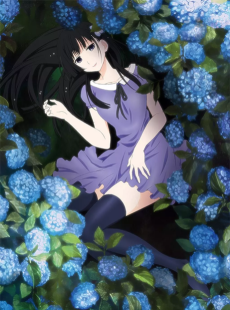
Sankarea: Undying Love
Furuya's not interested in the living, he's got zombies on the brain! When Furuya's cat dies, he decides he's going to try and bring it back to life. In the process, he stumbles across a girl who is involved in an accident and turns into a real zombie! What's Furuya going to do now that the thing he loves the most is right in front of his eyes?
(Source: FUNimation)
📺Anime Details
📝Editorial Analysis
The smell of damp earth and crushed mint hangs in the air as Furuya kneels beside his dead cat, fingers trembling not with grief but with obsession—a quiet, feverish certainty that death isn’t final, just unfinished. He doesn’t weep. He measures pH levels in soil, adjusts fermentation temperatures in a repurposed shed, mutters about necrotic cell reactivation like it’s scripture. That moment—no music swell, no dramatic cutaway—just a boy whispering to a corpse while sunlight slants through dusty windowpanes—is where Sankarea: Undying Love lives: not in gore or titillation, but in the tender, stubborn ache of loving something so completely that reality bends around it.
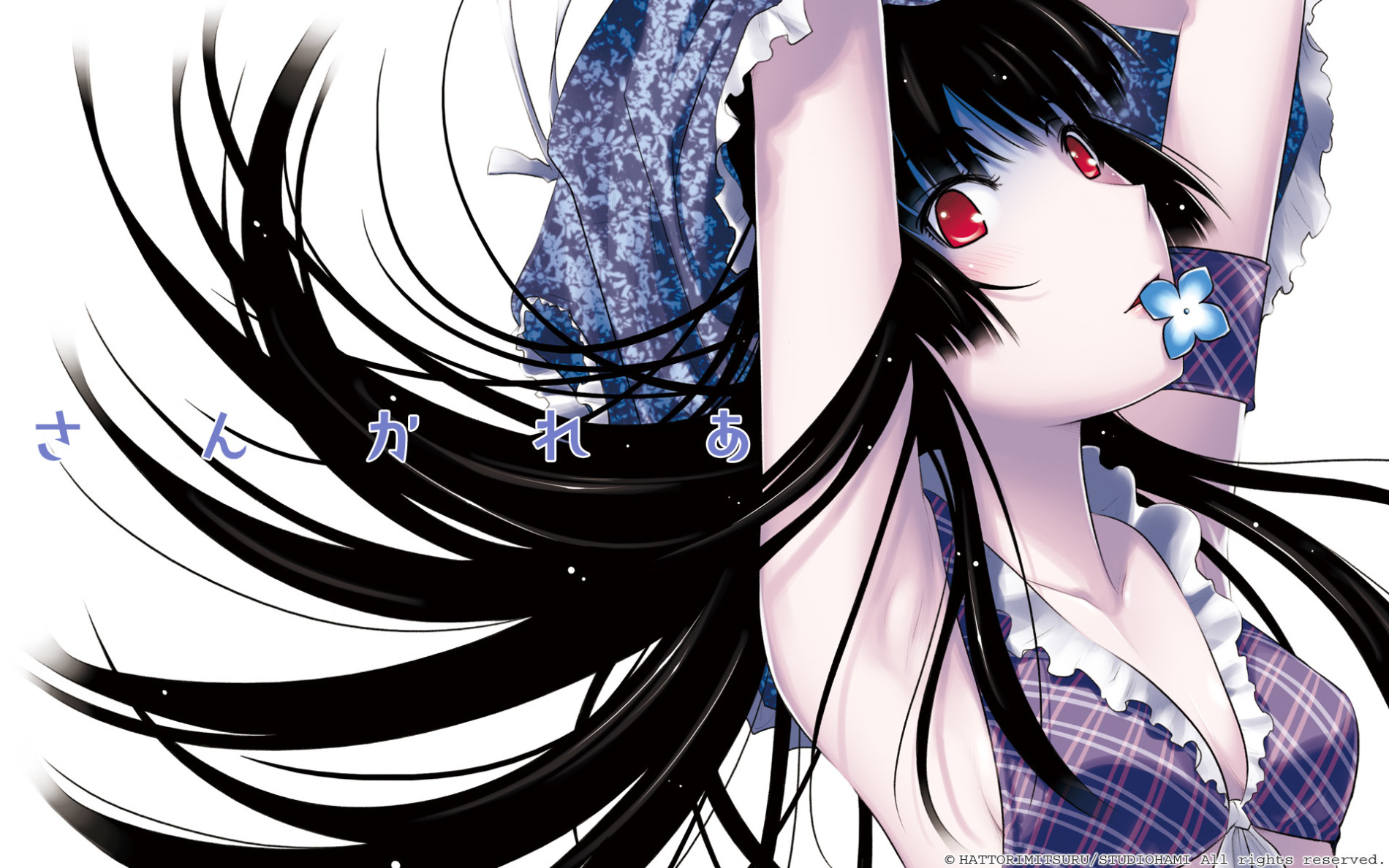
What makes this anime breathe is its refusal to choose between tones—it lets horror and romance share the same breath. A zombie girl shuffles barefoot across dew-wet grass, her skin cool and slightly waxy, yet she blinks slowly, curiously, at fireflies like any other girl her age. The rural setting isn’t backdrop; it’s presence: cicadas hum at dusk, bamboo groves rustle with unseen movement, and silence isn’t empty—it’s thick with unspoken longing. This isn’t zombie-as-metaphor. It’s zombie-as-person, flawed, hungry (for brains, yes, but also for touch, for warmth, for Furuya’s quiet attention). The ecchi moments land not as fanservice but as awkward, vulnerable collisions—her stumbling into him mid-stumble, his hand brushing her wrist and freezing because her pulse doesn’t beat, but her skin still holds heat from the sun. It’s a world where love isn’t triumphant—it’s persistent, even when biology fights back.
That emotional DNA—the slow, deliberate tending of fragile connection amid decay—resonates sharply with Chains. Its description calls it “a relaxing arcade match 3 casual game” built on linking adjacent bubbles, and players note how it “reminds me of connect 4 in nutshell… link 3 or more of the same color and clear enough till you can proceed.” There’s no rush, no fail state that punishes—just gentle physics, rhythmic repetition, the soft pop of alignment. Like Furuya adjusting his reanimation formula one variable at a time, Chains asks you to notice subtle shifts: weight, trajectory, timing—not mastery, but attunement. You don’t conquer the board; you listen to it. And just as Sankarea finds profound intimacy in Furuya watching Rea’s eyelid twitch under moonlight, Chains rewards patience with quiet satisfaction—not victory, but continuance. Both ask you to stay present in small, repeated acts of care.
The emotional core isn’t frantic—it’s healing & slow life, exactly as tagged. That phrase isn’t marketing fluff; it’s the heartbeat beneath both works. Furuya doesn’t resurrect Rea to “fix” her—he does it because he notices her absence like a missing tooth, and his love is less about grand gestures and more about remembering to leave the garden gate unlatched so she can wander in at dawn. Similarly, Chains’ healing rhythm mirrors that daily ritual: no explosion of triumph, just the soft accumulation of linked colors, the gentle clearing of space—not erasing, but making room. One player review captures it plainly: “clear enough till you can proceed”—not win, not dominate, but continue, tenderly, one chain at a time.
This pairing won’t grip someone chasing adrenaline or narrative fireworks. It’s for the person who replays the scene where Rea tries to hold an ice pop and it melts faster than her fingers can grasp it—not because she’s broken, but because her body doesn’t regulate like yours. It’s for the player who pauses mid-game not to strategize, but to watch bubbles drift, suspended, before gravity takes them. They’re drawn to stories and systems where love isn’t loud—it’s measured, repetitive, grounded in the physical world: the weight of a cat’s body in your arms, the cool slick of a bubble against your thumb, the way sunlight catches dust motes above a half-buried jar of fermented herbs. They don’t want to save the world. They want to hold one fragile, breathing, undying thing—and keep holding it, quietly, long after the credits roll or the level clears.
🎮2 Games That Match the Vibe


Match Dimensions Explained
❓Frequently Asked Questions
Why is Chains listed as a game like Sankarea: Undying Love when it's a match-3 puzzle game?
Great question — it’s not about gameplay similarity, but emotional resonance. Chains’ 'Healing & Slow Life' dimension and its quiet, melancholic pacing (like clearing bubbles while reflecting on loss) mirror Sankarea’s tender, bittersweet tone — especially scenes where Rea quietly tends to her garden or Chihiro sits with her in silence. Reviewers even noted how its gentle rhythm evokes the same introspective calm as Sankarea’s quieter moments.
Is there an anime or visual novel adaptation of Chains?
No — Chains is purely a standalone mobile arcade puzzle game with no anime, manga, or visual novel adaptation. Unlike Sankarea (which has both a beloved anime and manga), Chains exists only as that soothing, physics-driven bubble-linking experience — no voice acting, no branching storylines, just clean mechanics and emotional weight baked into its 'Emotional Narrative' design.
Chains vs. Doki Doki Literature Club — which one captures Sankarea’s mix of romance and existential sadness better?
Chains wins for that specific vibe — DDLC leans into meta-horror and psychological twists, while Chains mirrors Sankarea’s grounded, aching tenderness: think Rea’s fragile smile after a small victory, or Chihiro’s quiet determination to care for her despite everything. Its 'Healing & Slow Life' focus and player-reviewed 'introspective calm' align way closer to Sankarea’s gentle tragedy than DDLC’s escalating surrealism.
What’s the best game like Sankarea if I want something calming but emotionally heavy, not scary or fast-paced?
Go straight to Chains — its 84-scored 'Healing & Slow Life' dimension is tailor-made for that mood. You’ll spend time thoughtfully linking bubbles, watching them drift and settle like petals falling in Sankarea’s rooftop garden scenes, all while absorbing its wordless emotional narrative. Players literally describe it as 'connect 4 in a nutshell' — simple, meditative, and deeply resonant without a single jump scare or timer.