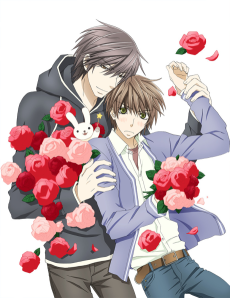
Sekai Ichi Hatsukoi - The World's Greatest First Love Season 2
📺Anime Details
📝Editorial Analysis
The quiet hum of a Tokyo office at 6:47 p.m.—fluorescent lights flickering just enough to catch the steam rising from Ritsu’s half-cooled coffee, his pen hovering over a manuscript margin as he glances sideways at Masamune, who’s pretending not to notice the glance but is noticing, fingers tapping once against his own mug in silent rhythm. No confession. No kiss. Just two adults—tired, competent, tenderly awkward—sharing air thick with unspoken history and the soft, stubborn warmth of choosing each other again, day after day.
That’s the heartbeat of Sekai Ichi Hatsukoi - The World's Greatest First Love Season 2: not grand declarations, but the weight of continuity—the quiet dignity of love that survives deadlines, editorial revisions, and the slow, real-time erosion of youth. It’s warmth, yes—but also patience, resilience, recognition. This isn’t first love as fireworks; it’s first love as infrastructure—built on shared commutes, overlapping deadlines, the way Masamune remembers how Ritsu takes his coffee without being told, and how Ritsu still flinches, just slightly, when Masamune’s hand brushes his wrist during a layout review. The ensemble cast doesn’t orbit romance like satellites—it lives inside it, breathing the same oxygen: coworkers who tease, correct, cover shifts, and hold space for each other’s vulnerabilities without fanfare. There’s no fantasy scaffolding—just Tokyo apartments, publishing house corridors, and the gentle, grounding pressure of adult responsibility holding intimacy steady.
Baldur's Gate 3, with its Romance & Shoujo and JRPG Narrative dimensions, resonates not through fantasy tropes but through its emotional pacing: choices that accumulate like office memos—small, consequential, layered. You don’t win a lover’s heart with one heroic speech; you earn it through repeated, quiet acts—sharing rations in camp, deferring to their judgment in council, remembering how they fold their hands when anxious. Like Ritsu and Masamune, your relationships deepen in the interstitial hours—not cutscenes, but campfire dialogue trees where silence speaks volumes, and affection is measured in shared exhaustion and mutual protection.
Persona 5 Royal mirrors this in its seamless transition between daily life—the exact rhythm Sekai Ichi Hatsukoi lives by. You attend school (or, here, edit manuscripts), build bonds through mundane rituals (coffee runs, proofreading sessions), and watch trust accrue like interest in a joint account. Its stunning soundtrack doesn’t just accompany action—it underscores emotional texture: the wistful piano motif during a late-night train ride home echoes the bittersweet swell beneath Ritsu’s quiet smile when Masamune leaves his favorite pen on Ritsu’s desk. Both works treat time as material—not a countdown, but a medium to shape tenderness slowly, deliberately.
And The Legend of Heroes: Trails through Daybreak II, tagged with Time & Memory, lands with uncanny precision. Its narrative dimension isn’t about nostalgia as escape—it’s about how memory anchors identity in motion. Like the anime’s Time Skip, Daybreak II’s structure forces characters—and players—to reckon with who they were versus who they’ve become in relationship to others. A line delivered years later carries the weight of every unspoken thing before it—just as Ritsu’s laugh in Season 2 holds the echo of every argument, every compromise, every morning they chose to show up. No amnesia, no reset buttons—just layered time, thick with consequence and care.
This pairing sings for the person who cries at a perfectly timed sigh in a staff meeting, who saves game files named “Chapter 12 – After the Rain,” who keeps a notebook of small kindnesses exchanged across months. Not teenagers chasing destiny—but adults building love like architecture: precise, collaborative, weathered, and deeply, quietly alive.
🎮7 Games That Match the Vibe



Match Dimensions Explained
❓Frequently Asked Questions
Why does Persona 5 Royal keep showing up in 'Games Like Sekai Ichi Hatsukoi Season 2' lists?
Because its romance routes—especially with Ann Takamaki and Makoto Niijima—mirror S.I.H.'s slow-burn, emotionally grounded love stories, complete with meaningful date scenes (like the Shibuya shopping trip or karaoke night) and narrative weight on personal growth. The game’s ‘Confidant’ system works like S.I.H.’s relationship-building: choices matter, trust builds gradually, and emotional payoff feels earned—not rushed.
Is there a Sekai Ichi Hatsukoi visual novel adaptation for PC or Switch?
No official S.I.H. visual novel exists—it’s an anime/manga franchise only. But fans seeking that exact vibe turn to games like Trails of Cold Steel III, where you build deep bonds with characters like Emma Millstein through heartfelt dialogue choices, classroom interactions, and quiet after-school moments that echo Ritsu and Masamune’s tender, workplace-adjacent tension.
How does Baldur’s Gate 3 compare to Persona 5 Royal for romantic storytelling?
BG3 leans into player-driven, consequence-heavy romance (like Astarion’s morally grey arc or Shadowheart’s faith-and-doubt journey), while P5R offers tightly scripted, character-specific emotional arcs—think Ann’s confidence arc mirroring Ritsu’s self-worth struggles. Both nail shoujo-adjacent emotional intimacy, but P5R’s daily life rhythm (school → part-time job → dates) feels closer to S.I.H.’s slice-of-life pacing.
What’s the best game like Sekai Ichi Hatsukoi Season 2 if I want soft, low-stakes office romance vibes?
Trails of Cold Steel III—it’s got that gentle, respectful buildup between Rean and Emma, complete with shared paperwork sessions, tea breaks in the faculty lounge, and quiet walks home after school that mirror Ritsu and Masamune’s early chapters. No dungeons or demons here—just layered dialogue, consistent tone, and slow, believable emotional progression.