
SERVAMP
Mahiru Shirota dislikes difficult things, preferring to live a simple life. But after rescuing a cat he names Kuro, life takes a turn for the complex. Kuro turns out to be a servamp—a servant vampire, named Sleepy Ash and the two form a contract. Kissing his simple life goodbye, Mahiru is pulled into the world of vampires, the seven deadly Servamps, and war. Life couldn’t be more complicated!
(Source: Crunchyroll)
📺Anime Details
📝Editorial Analysis
The first time Mahiru presses his lips to Kuro’s forehead—not knowing it’s a contract, not knowing it’s blood-magic, not knowing anything except that this stray cat is shivering in the rain and he can’t walk away—that moment hangs like humidity before thunder. His fingers are cold. Kuro’s fur is soaked. The streetlight flickers yellow over wet pavement. There’s no grand incantation, no gothic cathedral or crimson moon—just a boy choosing softness in a world that already feels too sharp around the edges.

What makes SERVAMP ache like this isn’t its vampire lore or its seven deadly Servamps—it’s how deeply it roots tenderness in chaos. This isn’t supernatural power as spectacle; it’s power as burden, as inheritance, as something you stumble into while trying to do the quietest, kindest thing possible. Mahiru doesn’t want legacy—he wants lunch with his brother. He doesn’t crave strength—he wants to hold on. That tension—between the mundane weight of daily life and the vertigo of ancient, hungry forces—is what gives SERVAMP its emotional gravity. It makes you think about how love becomes armor when you have no training, no lineage, no plan—just instinct and a promise whispered into fur.
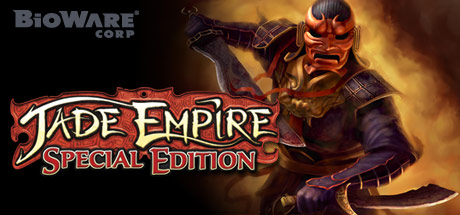
That same quiet intensity lives in Jade Empire™: Special Edition, where myth isn’t distant legend but lived rhythm—breath, stance, choice. Its “Mythology & Folklore” dimension mirrors SERVAMP’s urban fantasy not through aesthetics, but through moral texture: both treat power as something inherited and chosen, where lineage (a servamp’s bloodline, a master’s school) matters less than how you kneel—or refuse to kneel—for someone else. A player review notes the game’s launch hurdles (“Copy and paste ‘steam.dll’…”), echoing Mahiru’s own stumbling entry into a world demanding impossible technical fluency—yet both persist, not because they’re ready, but because someone needs them to be there. The “Romance & Shoujo” tag isn’t about tropes; it’s about intimacy as resistance—Kuro curling into Mahiru’s coat, the protagonist of Jade Empire choosing mercy over mastery, each act a tiny rebellion against deterministic fate.
Then there’s Dragon Age: Origins, where the Fifth Blight isn’t just war—it’s erosion. The player review says, “the story is great and its pause attack mechanic is amazing… help a lot to strategist your tactic…”—that pause, that breath between action and consequence, is pure SERVAMP. Mahiru doesn’t fight like a hero; he fights like someone recalculating mid-swing—because every strike risks Kuro’s autonomy, every alliance threatens his brother’s safety. Like the Grey Warden, Mahiru carries a curse that is his calling, and every decision ripples across bonds he never asked to forge. “Dark Fantasy” here isn’t gore or gloom—it’s the weight of care in a broken system, where saving one person might unravel three others. Both let you feel the exhaustion of responsibility without letting you outsource it to destiny.
Who loves this pairing? Not just fans of vampires or martial arts. It’s the person who rewatched the scene where Mahiru cooks rice after a battle—not for symbolism, but because they recognized that exact kind of healing: steam rising, chopsticks resting beside the bowl, the silence after shouting. It’s the player who paused Dragon Age mid-battle not to optimize damage, but to check if their companion’s health bar was steady. It’s the one who didn’t skip the quiet dialogue options in Jade Empire, even when XP was low—because they knew some truths aren’t earned in combat, but in stillness. They don’t seek power to dominate—they seek it to witness, to protect, to stay. And when the world gets complicated, they reach—not for a weapon—but for the nearest warm, breathing thing, and hold on. That is the heartbeat both SERVAMP and these games share: fragile, insistent, unwilling to let go.
🎮7 Games That Match the Vibe


Match Dimensions Explained
❓Frequently Asked Questions
Why is Jade Empire recommended for SERVAMP fans despite being an older RPG?
Because both lean hard into shoujo-adjacent romance and mythic worldbuilding—like SERVAMP’s vampire contracts and emotional rivalries, Jade Empire lets you build deep bonds with characters like Dawn Star or Sagacious Zu while choosing between philosophical martial paths (Open Palm/Closed Fist) that echo the moral weight of SERVAMP’s master-servant dynamics. Plus, its lush, stylized Eastern fantasy aesthetic feels like stepping into a SERVAMP anime still frame.
Is there a Dragon Age: Origins anime adaptation like SERVAMP?
No—Dragon Age: Origins has never been adapted into an anime, unlike SERVAMP which got a full 2016 TV series. But fans who love SERVAMP’s brooding vampires and slow-burn party chemistry often say DAO’s companion arcs (especially Morrigan’s morally grey tension or Alistair’s witty vulnerability) hit that same ‘found family in peril’ vibe—just with darkspawn instead of cursed cats.
How does Dragon Age: Origins compare to SERVAMP in terms of romantic depth?
SERVAMP’s romance is subtle and subtext-heavy (think Kuro’s quiet devotion or Saki’s hesitant trust), while DAO gives you explicit, branching romance paths—with voice acting, meaningful dialogue choices, and consequences (e.g., breaking up with Leliana mid-game changes her entire questline). Both prioritize emotional intimacy over fan service, but DAO lets you *choose* your bond; SERVAMP makes it feel fated.
What’s the best game like SERVAMP if I want that moody, atmospheric vampire-hunter vibe with tactical combat?
Dragon Age: Origins—it’s the closest match for that brooding, candlelit tavern energy and turn-based strategy that *feels* like directing a SERVAMP fight scene: pause mid-battle to position Wynne’s ice blast just as Loghain charges (like watching Mikado time his sword strike), then watch your party’s banter unfold in cutscenes that mirror SERVAMP’s mix of angst and dry humor.