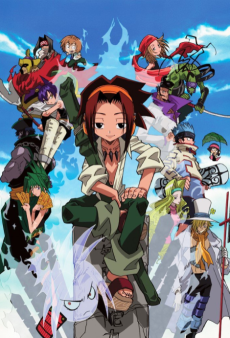
Shaman King
Shamans possess mysterious powers that allow them to commune with gods, spirits, and even the dead…and Manta Oyamada's about to learn all about them, because his class just welcomed a new transfer student: Yoh Asakura, a boy from way off in Izumo…and a shaman in training!
(Source: Kodansha USA)
📺Anime Details
📝Editorial Analysis
The scent of rain on hot asphalt, the low hum of cicadas thickening just before dusk, and the quiet shush of Yoh Asakura’s wooden sandals on temple steps—not running, not fighting, just walking, his hands in his pockets, eyes half-lidded, while a wind spirit coils lazily around his wrist like smoke given breath. That’s the heartbeat of Shaman King: not the roar of battle, but the hush between breaths—where spirits linger in doorways, where ancestors whisper through rustling leaves, where power isn’t seized but received, patiently, respectfully.
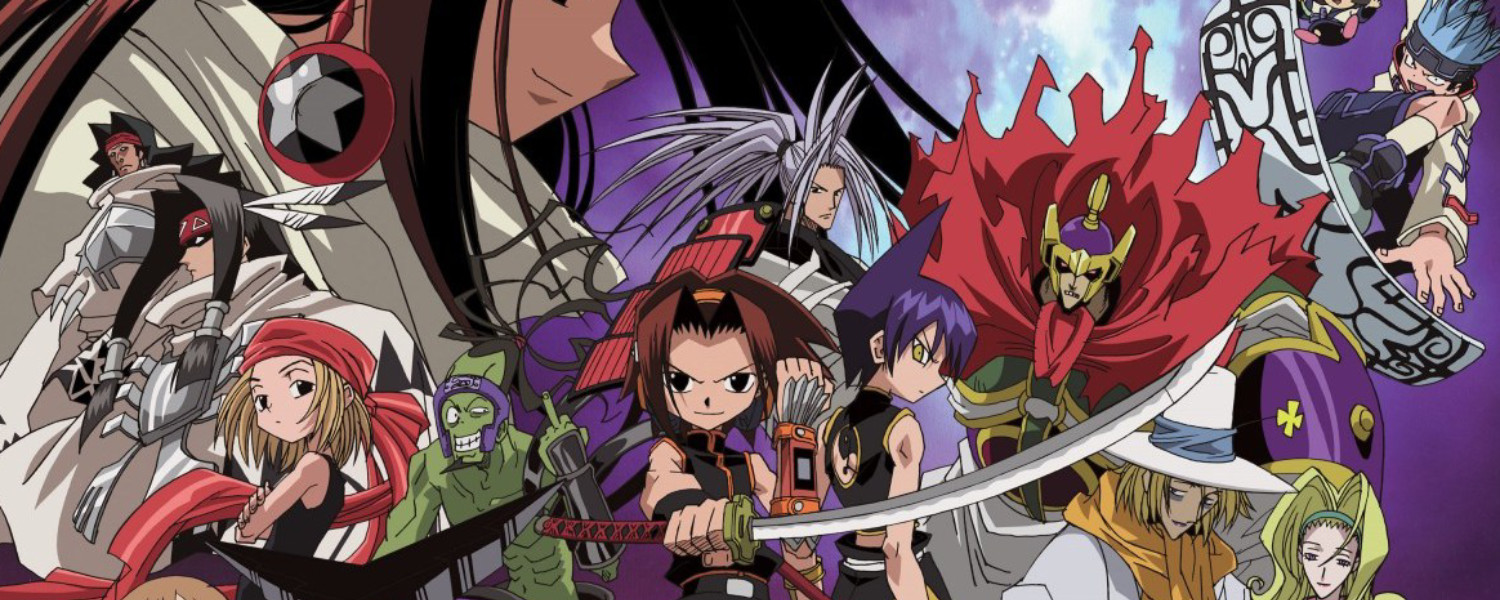
What makes Shaman King vibrate with such singular warmth isn’t its shounen structure or even its mythology—it’s how deeply it treats presence as sacred. Every ghost has weight. Every ritual feels tactile—the scrape of a knife on wood, the heat of a bonfire under open sky, the way Manta’s small frame trembles not from fear alone, but from the sheer density of unseen life pressing in. It’s an anime that makes you feel the earth’s slow pulse beneath your feet, that makes reincarnation feel less like plot device and more like root systems threading through time—quiet, inevitable, tender. There’s no frantic urgency to dominate the supernatural; instead, there’s listening. And that listening breeds reverence—not for power, but for continuity, for memory, for the fragile, flickering line between living and lingering.
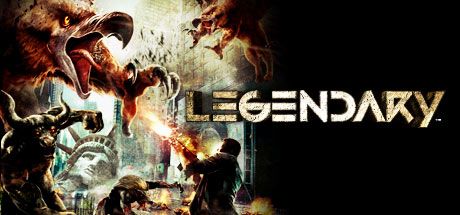
That same reverence lives in Legendary, whose premise hinges on ancient beings held—not erased, not conquered—but sealed, waiting inside Pandora’s Box across millennia. The game doesn’t rush to unleash chaos; it dwells in the weight of containment, the gravity of myth made flesh again. Just as Shaman King treats spirits not as threats but as elders, ancestors, witnesses, Legendary treats its creatures not as monsters to be slain, but as forces whose return reshapes reality’s grammar. A player notes the animations are “incredible… better than most games of the more modern era”—and that’s key: it’s the craft of presence—the deliberate, almost ceremonial pacing of movement, the way a minotaur’s shadow stretches across cracked marble not for spectacle, but to remind you this thing has been here longer than cities. Like Yoh bowing before a shrine before summoning Amidamaru, Legendary’s jank isn’t brokenness—it’s texture, the grit of something old refusing to be polished into slick efficiency.
Then there’s the shared love of body horror & occult—not as shock, but as transformation with consequence. In Shaman King, when Hana Asakura channels her spirit, her limbs elongate, her voice fractures into layered harmonics—not grotesque, but unfolding, as if her human form is only one verse in a longer chant. Similarly, Legendary’s body horror emerges from reintegration: flesh remembering what it was before gods forgot it, bones humming with forgotten names. The occult here isn’t cryptic spells—it’s archaeology of the self, excavation of lineage. You don’t cast a curse; you remember a covenant. That’s why the player review calls out the “Mythology & Folklore” dimension so precisely: both Shaman King and Legendary treat myth not as story, but as ecosystem—alive, breathing, demanding reciprocity.
Who would feel this resonance in their bones? Not just fans of ghosts or shamans—but people who’ve ever stood barefoot on cool soil and felt the quiet certainty that something remembers being walked upon. The kind of viewer who pauses mid-episode to watch real fireflies blink in sync with a spirit’s glow, who replays Yoh’s soft laugh after a near-fatal blow—not because he’s invincible, but because he trusts the rhythm of survival itself. The kind of player who lingers in Legendary’s ruins not to loot, but to trace carvings with a controller thumb, sensing the hand that carved them centuries ago. They’re the ones who don’t seek control over the unseen—they seek kinship. Who understand that the most powerful shaman isn’t the loudest, but the one who can sit still long enough for the wind to tell him its name. Patience. Resonance. Continuity. Not legacy handed down—but roots, deep and silent, holding everything upright.
🎮3 Games That Match the Vibe
Match Dimensions Explained
❓Frequently Asked Questions
Why does Legendary feel so much like Shaman King's spirit battles?
Because both lean hard into mythic beings as living, breathing forces — think Hao Asakura summoning the Over-Soul of his ancestors versus Legendary's Pandora's Box unleashing actual Norse, Egyptian, and Mesopotamian entities with visceral, almost ritualistic animations. The PS3-era jank in Legendary’s combat (like delayed parries or sudden screen shakes during boss entrances) oddly mirrors the raw, unpolished energy of early Shaman King anime fights — especially when Deckard’s desperate dodges echo Yoh’s last-second Spirit Unity saves.
Is there a Shaman King video game adaptation?
No official Shaman King game exists — not on PS3, Switch, or mobile. That’s why fans lean into Legendary: it’s the closest thing we’ve got, with its deep mythology & folklore dimension and body horror/occult tone matching Hao’s dark shamanism and the Five Elements’ grotesque manifestations. Even the review calling its animations 'better than most modern games' nods to how rare it is to get that kind of expressive, lore-drenched spectacle.
Legendary vs. Okami — which one captures Shaman King’s spiritual vibe better?
Legendary wins for raw shamanic intensity — Okami’s serene ink-wash beauty leans more toward Shinto reverence, while Legendary drops you straight into the chaotic, high-stakes summoning rituals of ancient spirits (like Anubis’ sandstorm exorcism cutscene or the visceral tearing open of Pandora’s Box). If you want Yoh chanting over a possessed tree or Amidamaru’s sword-spirit clash, Legendary’s janky, myth-drenched combat hits closer than Okami’s painterly calm.
What’s the best game like Shaman King if I want that eerie, occult-but-epic feeling?
Legendary — hands down. Its 'Body Horror & Occult' dimension nails Hao’s unsettling power-ups and the Five Elements’ twisted transformations, like when Deckard’s arm mutates mid-fight into a writhing Gorgon limb. The PS3-era animation quality (praised by players as 'incredible') gives those moments real weight — think less polished anime cutscene, more fever-dream ritual scroll come alive.