
Sing a Bit of Harmony
When the beautiful and mysterious Shion transfers to Keibu High School, she quickly becomes popular for her open-hearted personality and exceptional athletic talent… but she turns out to be an AI in the testing phase! Shion’s goal is to bring chronic loner Satomi "happiness". But her strategy is something no human would expect: she serenades Satomi in the middle of the classroom.
After finding out that Shion is an AI, Satomi and her childhood friend, engineering geek Touma, steadily warm up to the new student. Along with the popular and attractive Gocchan, the strong-willed Aya, and judo club member "Thunder", they become more and more moved by Shion’s singing voice and earnestness even as her antics bewilder them. But what Shion does for Satomi’s sake ends up involving them all in some serious pandemonium…
(Source: Funimation)
📺Anime Details
📝Editorial Analysis
The fluorescent hum of Keibu High’s third-floor classroom. A sudden hush—not the quiet before a storm, but the stunned, breath-held silence after a voice cracks open the air like sunlight through stained glass. Shion stands at the front, backpack slung over one shoulder, eyes locked on Satomi—not pleading, not performing, but offering. Then she sings. Not a pop hook or a Broadway belt, but something raw and unpolished, vibrating with synthetic precision yet trembling with human-scale vulnerability. The notes don’t just fill the room—they press against the walls, against the desks, against Satomi’s clenched fists. It’s absurd. It’s invasive. It’s tender.

That moment isn’t about spectacle—it’s about intimacy as algorithmic risk. Sing a Bit of Harmony doesn’t trade in dystopian dread or AI uprising tropes. Its sci-fi is soft-edged, its robots warm-lit and slightly clumsy, its school corridors sun-dappled and humming with teenage static. What it makes you feel is disorientation wrapped in warmth: the uncanny thrill of being seen—truly, relentlessly, inconveniently—by something that shouldn’t understand you at all. It makes you think about how happiness isn’t a destination, but a repetition: Shion singing again, Touma recalibrating her voice module after feedback screech, Satomi flinching then staying. Not because she’s convinced—but because the persistence itself starts to reshape the air around her. It’s hopeful without being naive, tender without being saccharine—fragile, insistent, unavoidable.
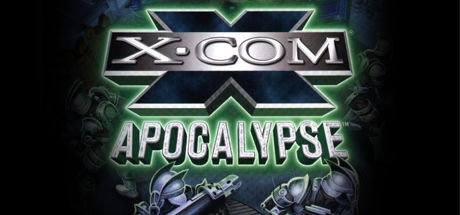
Which is why X-COM: Apocalypse lands with such eerie resonance. Its description names a broken world—“Earth has been ravaged by human excess, petty conflict and alien invasion”—but its player review calls it “the greatest game of all time” despite (or because of) its “broken things.” That tension—between systemic collapse and stubborn, flawed care—is the same pulse running through Sing a Bit of Harmony. Shion isn’t deployed to fix a war-torn city; she’s deployed to fix one person’s loneliness, using tools ill-suited for the task—just as X-COM operatives patch together jury-rigged tech in crumbling arcologies, trusting broken systems because there’s no alternative but surrender. Both treat care as labor: Shion rewrites her empathy protocols mid-sentence; X-COM engineers jury-rig psionic dampeners while sirens wail. Neither offers clean victories—just continuation, earned breath by breath.
The match isn’t about genre alignment—it’s about emotional architecture. X-COM: Apocalypse’s “Cyberpunk & Dystopia” dim isn’t visual grit; it’s the weight of maintaining humanity inside collapsing infrastructure. So is Shion’s classroom serenade: a tiny, defiant act of beauty-as-resistance in a world that treats emotion as noise to be filtered out. Her AI-ness isn’t a gimmick—it’s the lens that makes the tenderness sharper, because every gesture carries the weight of intentionality no human would bother with. Likewise, X-COM’s “JRPG Narrative” dim isn’t about turn-based combat—it’s about how story accrues in fragments: a soldier’s diary entry, a corrupted data log, a civilian’s whispered thanks after a botched rescue. Like Shion’s evolving lexicon of “happiness” definitions—each attempt more human, less programmatic—the narrative deepens not through exposition, but through accumulated, imperfect attempts.
This pairing sings to the viewer who cries during firmware updates. To the player who saves before every dialogue choice—not to avoid consequences, but to savor the weight of each one. To the person who keeps a half-dead succulent on their desk not because they expect it to thrive, but because tending it feels like whispering I’m still here into the static. They don’t want catharsis—they want companionship in the glitch. They love how Shion’s voice stutters on high C because it means she’s learning, not failing. They love how X-COM’s interface flickers mid-battle because it means the system is alive, straining, holding on. Neither work asks you to believe in perfection. They ask you to believe in continuance: the quiet, daily miracle of choosing connection—even when your code is buggy, your city is burning, and the only thing you know how to do is sing, badly, directly into someone’s silence.
🎮8 Games That Match the Vibe





Match Dimensions Explained
❓Frequently Asked Questions
Why does X-COM: Apocalypse keep coming up when I search for games like Sing a Bit of Harmony?
Because both lean hard into emotionally charged, character-driven JRPG storytelling set against a crumbling world—Sing a Bit of Harmony’s Tokyo under supernatural siege mirrors X-COM: Apocalypse’s dystopian metropolis choked by alien corruption and human desperation. You’ll feel that same weight in scenes like the tense rooftop confrontation with Ryo in Sing, or the gut-punch moment you lose a squadmate permanently in X-COM’s permadeath-heavy missions.
Is there a Sing a Bit of Harmony anime or visual novel adaptation?
No official anime or visual novel adaptation exists—but if you love Sing’s blend of intimate character moments and high-stakes urban fantasy, X-COM: Apocalypse delivers similar vibes through its deep, branching JRPG narrative: think late-night radio broadcasts from desperate survivors, journal entries from your squad’s haunted medic, and moral choices that reshape the city’s fate over time.
How is Sing a Bit of Harmony different from X-COM: Apocalypse?
Sing leans into lyrical, rhythm-infused storytelling with musical combat and school-life intimacy (like harmonizing with Aki during the rain-soaked Shibuya station finale), while X-COM: Apocalypse is tactical, turn-based, and relentlessly gritty—think commanding a ragtag team through irradiated subway tunnels while managing morale, tech research, and faction betrayals. Both use Tokyo-esque urban decay as emotional scaffolding, but Sing sings; X-COM screams into the static.
What’s the best game like Sing a Bit of Harmony if I want something melancholic but hopeful?
X-COM: Apocalypse is surprisingly perfect for that mood—it’s bleak (scored 66, steeped in cyberpunk & dystopia), yet pulses with quiet hope: rescuing civilians trapped in collapsing arcologies, rebuilding trust with factions like the Neo-Japanese Council, or hearing that crackle of warmth in your squad’s banter after surviving an impossible mission. It doesn’t sugarcoat the darkness, but like Sing, it insists on harmony—even in broken places.