
So I'm a Spider, So What?
I, the protagonist, was just an ordinary high school girl, but suddenly I was reincarnated as a spider monster in a fantasy world. Not only that, but I awakened in a dungeon filled with vicious monsters. Armed with only my human knowledge and my overwhelming positivity, I'm forced to use spiderwebs and traps to defeat far stronger monsters just to stay alive... So begins the labyrinth survival story of a girl with incredible mental strength living as one of the lowest-ranked beasts!
(Source: Crunchyroll)
📺Anime Details
📝Editorial Analysis
The first time she screams—not in terror, but in pure, ragged, breathless triumph—after weaving her hundredth web-trap and watching a giant centipede impale itself on her own venom-dripping silk… that’s when it hits you. Not the absurdity, not the CGI shimmer of chitin and shadow, but the sheer, unbroken will vibrating through the screen—the kind that doesn’t roar, but calculates, adapts, survives, then laughs, high and sharp, because she’s still here, still thinking, still choosing to live—even as a spider.
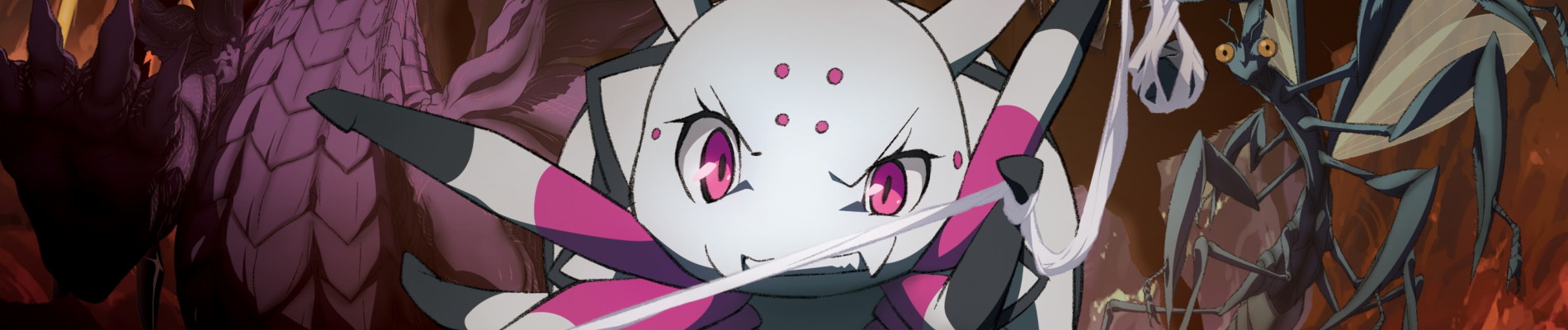
That’s the atmosphere: not hopelessness, not nihilism, but relentless calibration. Every frame hums with the quiet tension of a mind constantly measuring threat, resource, and consequence—human logic bent, stretched, and weaponized inside a monstrous body. It makes you feel hyper-aware: of angles, of time, of how fragile agency is—and how fiercely it can be clawed back, inch by inch, web by web. You don’t just watch her survive; you feel the weight of each decision, the exhaustion behind every giggle, the terrifying clarity of someone who knows exactly how little she’s supposed to matter—and refuses to vanish anyway. It’s resilience as architecture, built from panic, physics, and stubborn, humming joy.
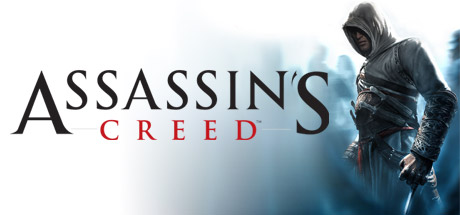
Assassin's Creed™: Director's Cut Edition shares that same bone-deep calibration. Its description calls it a “Political Thriller” wrapped in “Tactical Warfare”—a world where every rooftop perch, every guard patrol rhythm, every whispered conspiracy isn’t backdrop, but data. Like the spider protagonist parsing dungeon acoustics and monster aggression patterns, Altaïr moves through Jerusalem not as a hero, but as a system analyst, reading power structures like trap schematics. The player review admits the models are “dated”—but notes “no issues with me”—because what matters isn’t polish, but precision: the way a delayed leap, a well-timed distraction, or a single blade-strike changes the entire equation. Both demand the same mental posture: observe, infer, commit, adapt. Neither offers safety—only the electric satisfaction of out-thinking the system that was designed to erase you.
The anime’s achronological order—those sudden, disorienting cuts between dungeon floor and classroom desk, between venom sac and calculus homework—mirrors the fractured cognition of survival under extreme duress. That same temporal unease echoes in how Assassin's Creed™ layers memory sequences with present-moment urgency: past trauma isn’t nostalgia—it’s tactical intel, reshaping how you read a corridor or interpret a lie. You don’t get linear catharsis. You get pattern recognition across time, where every flashback isn’t exposition—it’s another variable in the survival algorithm.
And the anti-hero core? It’s not about moral ambiguity for its own sake. It’s about agency as defiance. She’s not “good” because she’s kind—she’s relentlessly herself, even when that self is eight-legged and venomous. That mirrors the cold, almost clinical focus of Assassin's Creed™’s early design: Altaïr isn’t motivated by vengeance or glory, but by restoring balance—a principle so rigid it borders on inhuman. His discipline, his silence, his refusal to be swayed by emotion unless it serves the mission—that’s the same energy as the spider girl laughing while stitching her own wound shut with silk. Both are architects of control in worlds built to deny them any.
This pairing isn’t for fans of power fantasies or effortless ascension. It’s for the ones who light up when a character re-routes a river with a spoon, who feel their pulse sync to the tick before a trap springs, who find poetry in the exact moment a plan shifts—not because it succeeded, but because it adapted. It’s for players who replay a stealth sequence three times not to win faster, but to understand the guards’ blind spots like anatomy, and viewers who rewatch the spider’s first successful ambush not for the gore, but for the micro-expression—the click in her eyes—as human logic finally clicks into place inside the monster’s skull. They’re both love letters to the mind at work, relentless, inventive, and alive—not despite the odds, but because of how fiercely they refuse to stop calculating, weaving, leaping, surviving.
🎮15 Games That Match the Vibe



Match Dimensions Explained
❓Frequently Asked Questions
Why is Assassin's Creed: Director's Cut Edition listed as similar to So I'm a Spider, So What?
It’s not about the spider powers or isekai setup—it’s the *political thriller* and *tactical warfare* vibes that line up with the web-slinging espionage and faction maneuvering in the dungeon layers of the spider dungeon. Think of how Kumoko (as White) analyzes enemy patterns and exploits weaknesses like Altaïr studying guard rotations and chaining assassinations in Jerusalem.
Is there a video game adaptation of So I'm a Spider, So What?
No—there’s no official game adaptation yet. The closest you’ll get is playing games that nail its core energy: high-stakes survival, rapid skill evolution, and layered political tension beneath monster-filled dungeons. Assassin’s Creed: Director's Cut Edition scratches that itch with its emphasis on observation, precision takedowns, and navigating hostile, faction-controlled urban environments—just swap Jerusalem for the Labyrinth.
How does Assassin’s Creed: Director’s Cut Edition compare to other dungeon-crawler RPGs for spider-dungeon fans?
Unlike traditional turn-based or loot-driven dungeon crawlers, Assassin’s Creed leans into *real-time environmental awareness* and *vertical stealth*—which mirrors how Kumoko uses webs, ceilings, and sightlines to outthink stronger foes. It’s less about grinding levels and more about reading systems, just like when she studies the Behemoth’s attack rhythm before striking.
What’s the best game like So I’m a Spider, So What? if I want tactical, brainy survival without fantasy magic?
Assassin’s Creed: Director’s Cut Edition is your best bet—it swaps mana bars for momentum-based combat, replaces spell slots with Eagle Vision and parkour positioning, and trades dragon fights for tense, calculated eliminations in politically charged spaces. You’ll feel that same ‘outsmart, don’t overpower’ rush every time you chain assassinations while dodging Templar patrols—very Kumoko-in-the-early-dungeon energy.