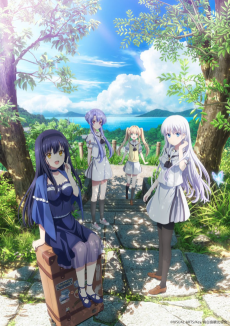
Summer Pockets
Takahara Hairi never expected summer to feel like a dream. Sent to Torishirojima Island to sort through his late grandmother’s belongings, he’s met with endless sea, quiet nostalgia, and mysterious girls, each chasing something just out of reach. As he settles into island life, lost memories begin to surface and he finds what he never knew he’d lost.
(Source: Crunchyroll)
📺Anime Details
📝Editorial Analysis
The salt hangs in the air—not sharp, not briny, but soft, like breath held too long. Takahara Hairi stands barefoot on the sun-warmed dock of Torishirojima Island, watching a single paper lantern drift sideways across the water, caught in a current he can’t see. His grandmother’s old wooden box rests at his feet, unopened. The sea doesn’t roar here—it settles, low and constant, folding time into something thick and slow, like honey pooling in a spoon. That’s the first truth Summer Pockets gives you: grief isn’t loud. It’s the space between waves. It’s the weight of a name you almost remember.
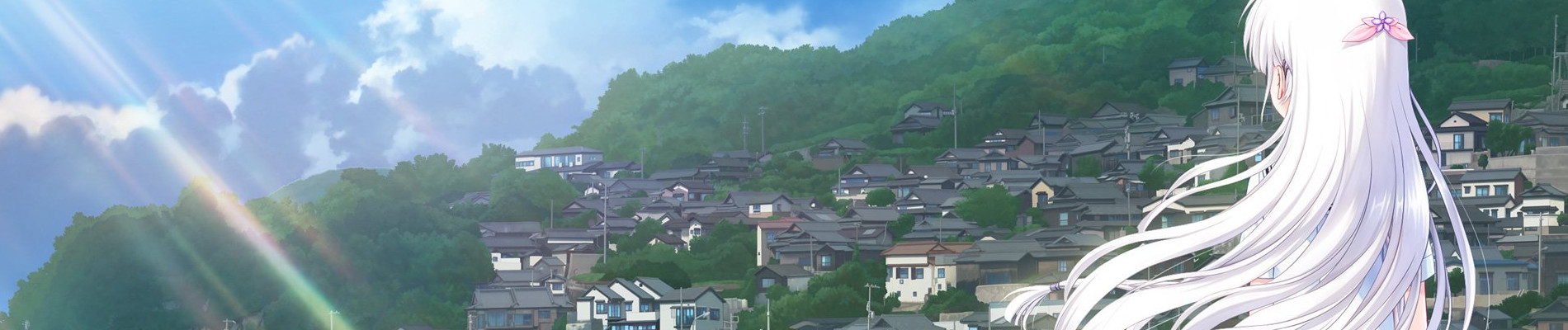
What makes Summer Pockets ache so quietly is how it treats memory—not as data to recover, but as tide-pool residue: shimmering, temporary, slipping through fingers when grasped too tightly. There’s no grand villain, no ticking clock in the usual sense—just the slow, inevitable pull of what was, and the quiet terror of realizing you’ve forgotten how someone’s laugh sounded. The coastal setting isn’t backdrop; it’s grammar. Every rustle of pampas grass, every distant gull cry, every pause before a character speaks—it all bends time just enough to make you lean in, hold your breath, wonder if you forgot something too. It’s not nostalgia for a place you’ve been. It’s nostalgia for a feeling you almost had, once—warmth, safety, belonging—before life folded it away. That’s why the supernatural elements never feel flashy: time manipulation here isn’t power. It’s tenderness. A second chance to say the thing left unsaid. A loop not to win, but to witness—to finally see the girl beside you, not as a plot point, but as someone who also holds her breath waiting for the tide to turn.
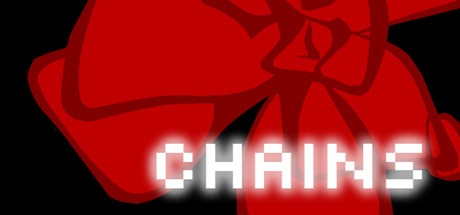
Among games that hum with that same frequency, Chains stands out—not because it’s about islands or memories, but because of how it moves. Its description calls it “a relaxing arcade match 3 casual game” where you “link adjacent bubbles of the same color into chains,” and the challenge emerges from “increasingly difficult physics-driven” interactions. A player review nails it: “Reminds me of connect 4 in nutshell… link 3 or more of the same color and clear enough till you can proceed.” That rhythm—deliberate, tactile, iterative—is pure Summer Pockets. You don’t rush the chain. You wait for the right alignment. You nudge, pause, adjust. Like Hairi learning to read the island’s silence, you learn the weight of each bubble’s fall, the way color settles only after stillness. There’s no penalty for hesitation—only consequence in timing. Just as Hairi must sit with a girl’s quiet, a half-forgotten story, or the creak of an old floorboard, Chains asks you to inhabit the space between actions—to find meaning not in speed, but in the gentle insistence of repetition, of trying again, softer.
That same emotional DNA pulses in the healing and slow life dimensions tagged to Chains, which aligns precisely with how Summer Pockets frames trauma—not as a wound to be sutured, but as weather to be lived through. The anime doesn’t “fix” loss; it teaches Hairi to stand in the rain without flinching, to notice how light catches on wet sand after the storm. Chains mirrors that: its healing isn’t dramatic recovery, but the cumulative calm of pattern recognition—the soft pop of a completed chain, the slight lift in your shoulders when the board clears just enough to breathe again. It’s not victory. It’s respite, earned one careful link at a time.
Who would love this pairing? Someone who cries at the sound of wind chimes. Someone who re-reads the last paragraph of a novel just to feel the sentence land again. Someone who keeps a half-finished sketchbook not because they want to finish it, but because the pencil moving across paper feels like remembering how to hold something gently. Not fans of “story-rich” games—but people who play to breathe in sync with the world’s quiet pulse. They don’t chase endings. They linger in the hush before the wave breaks—and in that hush, they find everything.
🎮2 Games That Match the Vibe

Match Dimensions Explained
❓Frequently Asked Questions
Why does Chains keep coming up in 'games like Summer Pockets' lists?
Because Chains nails the same healing, slow-life emotional rhythm — not through story or characters (it’s a match-3), but through its deliberate pace, gentle physics, and satisfying 'clear-and-breathe' loop that mirrors Summer Pockets’ quiet beachside moments. Players consistently call out how its calming progression — linking bubbles to unlock soft visual transitions and subtle sound cues — echoes the emotional reset you get watching Rina sketch in the summer heat.
Is there an anime or manga adaptation of Chains?
No — Chains has no anime, manga, or novel adaptations. It’s purely a standalone casual puzzle game with no narrative lore or characters beyond its bubble mechanics. Unlike Summer Pockets (which got a full anime, drama CDs, and light novels), Chains leans entirely into its minimalist, wordless emotional resonance — think ‘healing gameplay as storytelling’ rather than adapted media.
Chains vs. Summer Pockets: which is better for unwinding after a stressful day?
If you need zero cognitive load and instant calm, Chains wins — its tactile bubble-linking, soft chimes, and forgiving physics let you zone out in under 10 seconds (just like clearing a row while listening to the ocean in Summer Pockets’ beach scenes). But if you crave emotional catharsis *with* narrative weight — like watching Sora’s quiet determination unfold over rainy afternoons — then Summer Pockets delivers deeper immersion, even if it asks more from your attention.
What if I hate visual novels but love Summer Pockets’ mood? Is Chains actually a good fit?
Absolutely — Chains was built for exactly that. It captures Summer Pockets’ core ‘healing & slow life’ vibe without a single line of dialogue or character portrait: the way bubbles gently bounce after a chain clears mimics the sway of reeds at Cape Kannon, and its stage progression feels like turning pages in a sun-warmed journal. Reviewers even say it’s ‘connect 4 in a nutshell’ — simple, tactile, and emotionally restorative in the same breath.