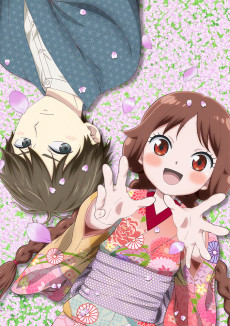
Taisho Otome Fairy Tale
Shima Tamahiko is a self-proclaimed pessimist who hates the world, and with good reason—he’s been exiled to the countryside by his wealthy family because of his disability. But his lonely life is turned upside down by the arrival of Tachibana Yuzuki, his arranged bride. Her cheerfulness slowly heals Shima’s heart in this slice of life romance set during the Taisho era.
(Source: Funimation)
📺Anime Details
📝Editorial Analysis
The teacup trembles in Shima Tamahiko’s hand—not from weakness, but from the sheer, quiet shock of being seen. Outside the tatami room, rain blurs the garden into watercolor strokes; inside, Yuzuki sits cross-legged, humming as she folds origami cranes, her voice light as steam rising from the kettle. He hasn’t spoken in three minutes. She hasn’t asked him to. That silence isn’t empty—it’s held. And in that suspended breath, Taisho Otome Fairy Tale reveals itself: not as escapism, but as reverence for the slow, unglamorous work of becoming soft again.
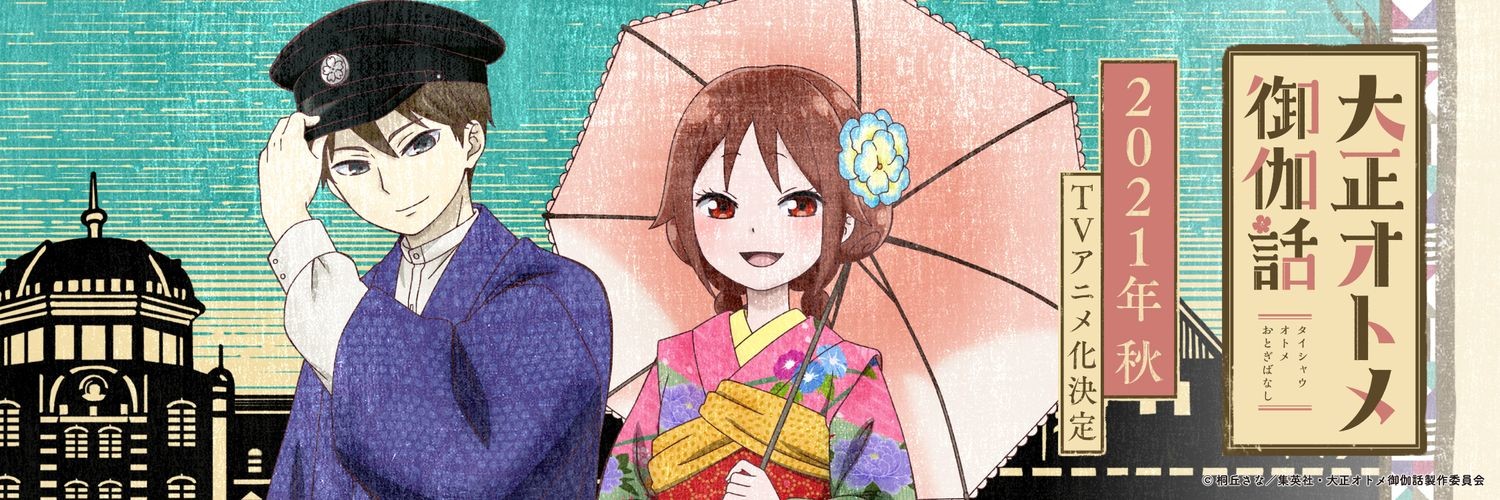
What makes Taisho Otome Fairy Tale ache so tenderly isn’t its historical setting or arranged marriage premise—it’s how it treats time like a physical texture. Every rustle of silk, every pause before a confession, every hesitant step Shima takes during rehabilitation is measured, not rushed. You don’t watch it to see characters “get over” trauma—you watch to witness how grief and hope can occupy the same breath without canceling each other out. It’s the feeling of sunlight warming your closed eyelids after weeks of gray: gentle, undeniable, earned. This isn’t healing as triumph—it’s healing as daily practice, as choosing to sit beside someone even when your hands still shake.
That emotional DNA pulses in Chains, a match-3 game whose description emphasizes “relaxing” and “physics-driven” pacing—not speed, not score, but flow. Its player review calls it “connect 4 in nutshell”, highlighting how the core act—linking three or more bubbles—is simple, repetitive, tactile. Like folding paper cranes with Yuzuki, or practicing grip strength with Shima’s therapist, Chains asks you to move with intention, not urgency. The physics aren’t obstacles to conquer—they’re rhythms to learn, just as Shima learns the weight of his own limbs again. Both the anime and the game treat progress as something that accumulates in small, visible increments: a cleared row, a steadier hand, a single crane placed on the windowsill.
There’s also resonance in the quiet dignity of rural life—how the countryside isn’t a backdrop but a character that breathes slower, listens closer. Taisho Otome Fairy Tale doesn’t romanticize poverty or isolation; it shows how space and slowness create room for repair. That same spatial generosity lives in Chains’s design: no timers, no penalties for pausing, no forced escalation. You clear bubbles until you decide the stage is ready—mirroring how Yuzuki never pushes Shima to speak, only waits until his silence shifts into something else entirely. The player review notes you clear “enough till you can proceed”—not “as fast as possible,” not “perfectly,” but enough. That word—enough—is the heartbeat of both works.
Who would love this pairing? Someone who’s ever held their breath waiting for their own heart to stop hurting. Not the teenager chasing adrenaline rushes, but the young adult relearning how to trust their body after injury—someone who finds catharsis in the weight of a teacup, the click of matching bubbles, the way sunlight catches dust motes above a tatami floor. They’re the ones who cry not at grand declarations, but when Shima finally walks unaided to the garden gate—and then sits there, just watching the sky, because stillness has become sacred again. They don’t need fireworks. They need permission to be here, softly, slowly, enough.
🎮1 Games That Match the Vibe
Match Dimensions Explained
❓Frequently Asked Questions
Why does Chains keep coming up when I search for games like Taisho Otome Fairy Tale?
Because both lean hard into quiet, healing emotional pacing—not flashy action, but gentle progression and soft character moments. In Chains, clearing color-matched bubbles feels meditative (like watering plants or folding laundry in Taisho), and players consistently note how its physics-driven chain mechanics create a soothing rhythm, almost like watching cherry blossoms drift down—exactly the vibe fans of Taisho’s slow-burn romance and post-war tenderness crave.
Is there an anime or manga adaptation of Chains?
Nope—Chains is purely a standalone mobile game with no anime, manga, or light novel adaptations. Unlike Taisho Otome Fairy Tale (which got a well-regarded 2021 anime), Chains stays rooted in its minimalist match-3 loop: linking adjacent bubbles, managing gravity-based cascades, and unlocking serene new stages—all without any narrative expansion beyond its in-game descriptions and player reviews.
Chains vs. Taisho Otome Fairy Tale: which one’s better if I want zero stress and maximum calm?
Go straight to Chains—it’s literally built for that. While Taisho has tender moments (like Hana folding origami with Yuzuru under the veranda lamp), it also carries narrative weight around loss and societal expectations. Chains dials that down to pure sensory ease: no timers, no penalties, just soft chimes, pastel bubbles, and satisfying chain reactions—reviewers even call it 'connect 4 in a teacup' for how effortlessly grounding it feels.
What if I love Taisho’s nostalgic 1920s Japan setting but hate visual novels? Are there alternatives with similar vibes but different gameplay?
Totally—Chains is your surprise match. It swaps dialogue-heavy scenes for tactile, slow-life mechanics: each bubble chain feels like a quiet ritual, echoing Taisho’s unhurried pace (think Hana sipping barley tea at dawn). No kanji scrolls or branching choices—just color, physics, and progression so gentle it’s been praised for helping players unwind after long days, much like Taisho’s healing atmosphere—but through play, not prose.