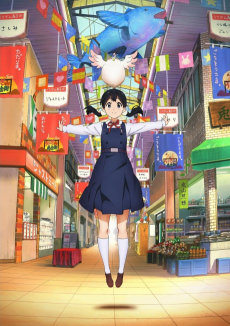
Tamako Market
Tamako knows just about everything there is to know about mochi, the traditional Japanese dessert treats. When she's not attending her first year of high school, she even invents new flavors and varieties for Tama-ya, her family's mochi shop. School and growing up, on the other hand, are some things that she's still trying to find the right recipe for. But with the help of her best friends Kanna and Midori, two girls whose parents run businesses in the same shopping district, Tamako's determined to make the best of things. It's complicated though, especially when it comes to emotions and her relationship with her best boy friend Mochizou, whose family runs a rival mochi shop. And lately, Midori's been feeling a little odd about her feelings towards Tamako as well. And what's with up with that strange bird fluttering around, the one that speaks fluent Japanese? It's all very mysterious and overwhelming, but at least Tamako always has one thing she can count on: No matter if your day's been good or bad, there's certain to be something sugary and delicious waiting at the end of every adventure whenever you take a walk through Tamako Market!
(Source: Sentai Filmworks)
📺Anime Details
📝Editorial Analysis
The steam rises in slow, curling ribbons from the freshly pounded mochi—warm, soft, slightly translucent—just as Tamako lifts it from the usu, her cheeks flushed, hair escaping its ponytail, a smear of rice flour dusting her nose. She grins, not at the camera, but at Kanna, who’s already reaching for a piece before it’s even shaped, and Midori, laughing while wiping flour off the counter with the edge of her apron. No grand conflict, no ticking clock—just the quiet thump-thump-thump of the mallet fading into birdsong from the shopping district’s awnings, sunlight catching motes of starch in the air. That’s the heartbeat of Tamako Market: not motion, but presence. Not plot, but pulse.
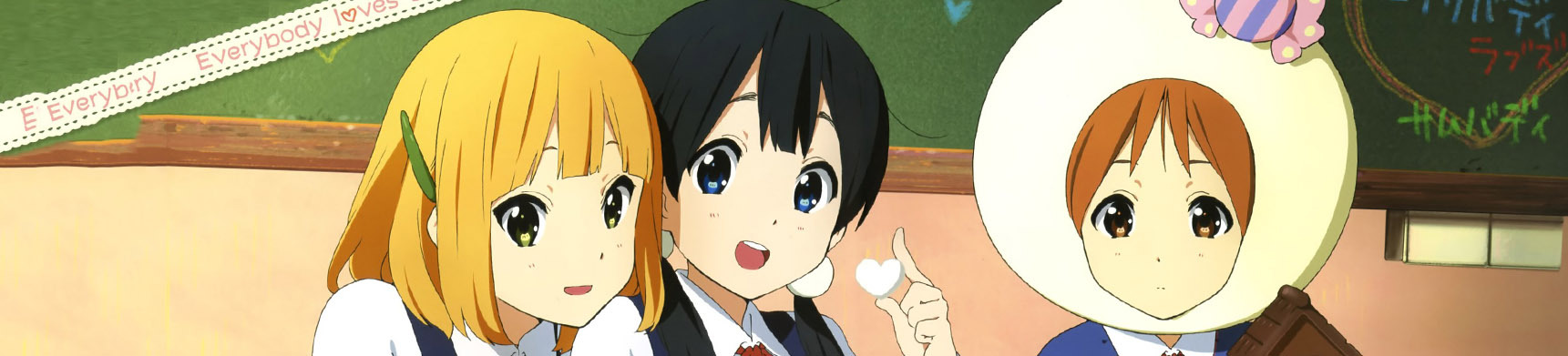
What makes this anime vibrate at such a low, steady frequency isn’t just its gentleness—it’s how deeply it trusts smallness. It doesn’t shrink life down to fit a frame; it expands the frame to hold what’s already there: the weight of a mother’s hand on a daughter’s shoulder as she adjusts her happi coat, the way a stray squirrel pauses mid-leap across the roofline, the precise, unspoken rhythm between three girls walking home past shopfronts whose owners know their names and their favorite mochi fillings. It makes you feel grounded, not in the sense of being anchored, but rooted—like your feet remember the texture of worn wooden floorboards, like your breath syncs to the rise and fall of dough resting under a damp cloth. It asks you to notice—not analyze, not optimize—just taste the moment before it cools.
That same reverence for slowness, for tactile intimacy with place and process, echoes in Prince of Persia, not in its acrobatics or sand magic, but in its dims: Healing & Slow Life, Melancholic Exploration. The description calls it “an all-new epic journey”—but the player review quietly undermines that scale: “a new prince, new lands and a brand new story completely separate from the sands…” What lingers isn’t conquest, but the way the prince walks—shoulders loose, pace deliberate—through sun-baked courtyards where time pools like water in stone basins. You don’t race through the world; you move with its grain, pausing to watch light shift across mosaic tiles, feeling the weight of silence between ruins. Like Tamako pressing her palm into warm, yielding mochi, the prince rests his hand on a weathered wall—not to solve, but to register. Both ask you to dwell, not depart.
And then there’s the quiet, unforced warmth of interdependence—the kind where care isn’t declared in speeches but baked into routine. Tamako Market’s shopping district isn’t a backdrop; it’s a living organism of overlapping rhythms: the fishmonger’s early-morning chant, the florist trimming stems at dawn, Tamako’s father sweeping the same patch of sidewalk every afternoon, same angle, same pause to watch sparrows hop near the drain. There’s no hierarchy, no “main plot” eclipsing side characters—just a web where Kanna’s family’s candy shop and Midori’s family’s bakery exist with equal gravity, each business a node humming with its own history, scent, and stubborn love. That ensemble integrity—Primarily Female Cast, Ensemble Cast, Family Life—finds its echo not in spectacle, but in systems that breathe together. You feel it in the way Prince of Persia’s world responds not just to action, but to stillness: vines unfurl when you linger near a cracked fountain; wind chimes stir without wind, just because you’ve stopped long enough to hear them. The game doesn’t reward speed—it rewards attention, the same attention Tamako gives to the subtle difference between glutinous rice soaked for four hours versus four and a half.
Who would love this pairing? Someone who keeps a notebook not for to-do lists, but for the exact shade of lavender in a neighbor’s garden at 4:17 p.m., someone who replays a cooking minigame not for efficiency, but for the sound of onions sizzling at just the right heat, someone whose idea of adventure is tracing the grain of wood on a decades-old counter, fingers remembering the shape of every dent and stain. They don’t crave resolution—they crave resonance. They want stories that don’t end, but settle—like mochi cooling just enough to hold its shape, like light holding in a courtyard at dusk, soft and unhurried, deeply alive, tenderly enough.
🎮5 Games That Match the Vibe




Match Dimensions Explained
❓Frequently Asked Questions
Why is Prince of Persia listed as a game like Tamako Market when they’re so different?
Great question—it’s not about action or plot, but the shared 'Healing & Slow Life' vibe: Tamako’s quiet mornings at the mochi shop mirror Prince of Persia’s melancholic exploration of sun-dappled ruins and gentle parkour through overgrown palaces. That same soothing rhythm—like Tamako carefully pounding mochi or the Prince pausing to watch light shift across ancient stone—is what reviewers mean by 'slow life' in both.
Is there a Tamako Market video game adaptation?
Nope—there’s never been an official Tamako Market game. The closest you’ll get is how games like Prince of Persia (score 84) capture its emotional texture: think Tamako’s heartfelt conversations at the market stall echoed in the Prince’s quiet, reflective interactions with allies like Zola amid crumbling architecture and golden-hour lighting.
How does Prince of Persia compare to Stardew Valley for Tamako Market fans?
Stardew Valley leans hard into farming routines and community events—more like Tamako’s festival energy—but Prince of Persia nails the *melancholic exploration* and *healing stillness* that underpin Tamako’s quieter moments, like her solitary walks past cherry blossoms or sitting silently with Mochizō on the shrine steps. It’s less about chores, more about presence—and that’s why it resonates.
What’s the best ‘Tamako Market’-style game if I just want something calming and nostalgic?
Prince of Persia is your top pick—it’s got that warm, wistful tone (think Tamako’s bittersweet graduation arc), plus healing mechanics built right in: restoring ancient structures feels like mending relationships, and exploring sunlit courtyards echoes Tamako’s peaceful strolls through the shopping district. Reviewers even call out its 'melancholic exploration'—exactly the mood of Tamako watching fireflies after the Tanabata festival.