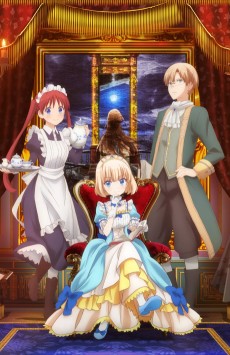
Tearmoon Empire
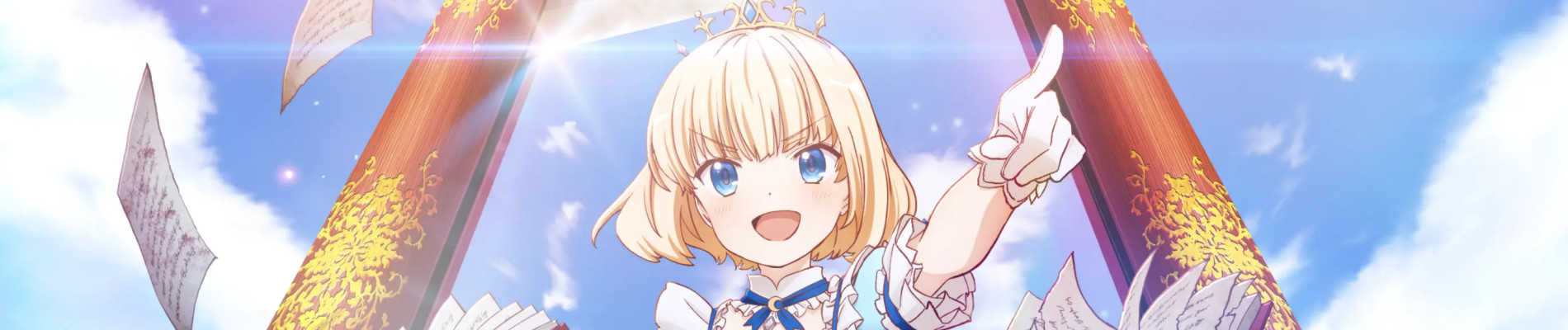
Twenty-year-old Princess Mia of the Tearmoon Empire, often scorned as the "selfish princess," was executed by guillotine in a rebellion. Next thing she knew, she awoke in her own twelve-year-old body, with her own blood-stained diary that she kept before she was beheaded sitting next to her pillow. Given a second chance at life, Mia decides to rebuild the empire. For the sake of Tearmoon's future? To save the people from starvation? For all the soldiers who lost their lives in the civil war? No! Everything she does in this life is for the sake of avoiding the guillotine! "F-For me, this should be a piece of cake!" Thus the useless, cowardly, self-serving princess brings about miracle after miracle in her great struggle to save herself in this altered-history fantasy.
(Source: Crunchyroll)
📺Anime Details
📝Editorial Analysis
The scent of ink and dried blood—sharp, metallic, faintly sweet—clings to the pages of a diary resting on silk sheets. Twelve-year-old Mia stares at her own handwriting: “I don’t care if the grain shipments rot in the docks. Let them starve. I want the new ballroom gilded by Tuesday.” Her fingers tremble—not from fear, but from the nauseating vertigo of recognition. This isn’t memory. It’s evidence. Proof she was the villainess they executed. And now she’s holding the weapon she used to carve her own ruin.
That moment isn’t about magic or mechanics—it’s about accountability. Tearmoon Empire doesn’t wrap second chances in soft light or easy redemption arcs. It wraps them in ledger books, tax rolls, and the quiet dread of realizing your privilege wasn’t just inherited—it was weaponized, and you wielded it without ever reading the manual. The atmosphere isn’t whimsical time-loop fluff; it’s tense, claustrophobic, thick with the weight of structural consequence. You feel the empire not as backdrop, but as a living ledger—every decree, every withheld grain shipment, every dismissed petition echoing like a stone dropped into a well you once ignored the depth of. It makes you think not about “how to win,” but what winning even means when the system itself is built on erasure—of dissent, of hunger, of the names buried beneath royal edicts.
Which is why Disco Elysium - The Final Cut lands with such brutal, resonant clarity. Its description calls it a Political Thriller, Romance & Shoujo—a phrase that sounds like a contradiction until you’re knee-deep in Martinaise, listening to a union organizer quote Marx while offering you tea, or watching a romance blossom amid collapsing infrastructure and ideological collapse. The player review nails it: “Capital has the ability to subsume all critiques into itself. Even those who would critique capital end up reinforcing it instead.” That’s Mia’s central crisis—not “how do I avoid execution?” but “how do I dismantle the logic that made my execution inevitable—and how much of me is still part of that logic?” Both Tearmoon Empire and Disco Elysium force their protagonists (and by extension, us) to interrogate power not as a throne to seize, but as architecture we’ve been breathing since birth—so familiar we mistake its cracks for ornamentation. Mia’s political maneuvering isn’t chess; it’s forensic archaeology. She digs through old trade agreements, cross-references harvest reports with noble land grants, traces famine rumors back to diverted river channels—all while wearing lace gloves and smiling at courtiers who still call her ojou-sama. Just like Harry Du Bois, she doesn’t solve cases by finding “the killer”—she solves them by exposing how the city’s nervous system learned to ignore pain.
This isn’t about escapism. It’s about recognition. The viewer who’ll love these pairings isn’t the one scrolling for fluff or fantasy-as-distraction. It’s the person who watches Mia quietly redirect emergency funds to flood-damaged bakeries—not with fanfare, but with a sigh and three underlined sentences in her revised budget proposal—and feels a jolt of relief, not because it’s heroic, but because it’s real work: unglamorous, reversible, and deeply, stubbornly human. It’s the player who spends hours debating whether to let the wharf union strike—even though it risks food shortages—because the alternative is letting the portmaster rewrite labor law in his favor again. They’re the ones who understand that romance in Tearmoon Empire isn’t just blushing glances—it’s Mia choosing not to manipulate a diplomat’s affection, choosing instead to negotiate grain tariffs face-to-face, her voice steady, her notes precise, her heart pounding not from infatuation but from the sheer, terrifying vulnerability of being honest in a world that rewards performance. That’s the shared pulse: the quiet, grinding, necessary labor of rebuilding something broken—not from scratch, but from inside its own fractures. Not with magic or bullets, but with corrected ledgers, amended treaties, and the unbearable, beautiful weight of remembering exactly what blood looks like on paper.
🎮1 Games That Match the Vibe
Match Dimensions Explained
❓Frequently Asked Questions
Why is Disco Elysium listed as similar to Tearmoon Empire when one’s a gritty detective noir and the other’s a sparkly royal comedy?
Great question—it’s all about the *tone-shifting political satire wrapped in shoujo aesthetics*. Like Tearmoon’s Mia juggling palace intrigue while literally rewriting her fate with a notebook, Disco Elysium’s Harry Du Bois constantly negotiates ideology, class, and identity through surreal internal monologues—and yes, even romantic banter with characters like Kim Kitsuragi or Cuno. Both use absurdity and self-aware narration to dissect power structures, just with different glitter levels.
Is there an anime or manga adaptation of Tearmoon Empire that’s actually worth watching if I love games like it?
No official anime or manga adaptation exists yet—but here’s why that matters: the *exact same creative energy* you’d get from one is already baked into Disco Elysium’s writing. Think of how Tearmoon’s Mia breaks the fourth wall to complain about her doomed route, then pivots to flirting with Leon—Disco does that *constantly*, with Harry arguing with his own Skill voices (like Logic vs. Empathy) mid-investigation, all while navigating romance and systemic rot in Revachol.
How does Disco Elysium compare to Tearmoon Empire in terms of romance and character chemistry?
Both treat romance as deeply entangled with politics and personal growth—not just fluff. In Tearmoon, Mia’s bond with Leon evolves through shared secrets and tactical alliance-building; in Disco, your relationship with Kim Kitsuragi deepens via late-night stakeouts, philosophical spats, and him patiently reeling you back from nihilistic spirals. Neither game lets love exist outside consequence—and both make you *feel* the weight of every choice in dialogue.
What’s the best game like Tearmoon Empire if I’m in the mood for witty, self-aware political satire with romantic warmth?
Disco Elysium — The Final Cut is your perfect match. It’s got Tearmoon’s razor-sharp meta-humor (Harry questioning capitalism while wearing a stained trench coat), its layered romance (Cuno’s guarded loyalty or Joyce’s grounded compassion), and that rare balance where biting critique *coexists* with genuine tenderness—like when Harry stumbles into empathy mid-rant, or Mia pauses her scheming to share cake with a rival. It’s shoujo-adjacent in spirit, not aesthetics—and 78% of players agree it lands.