
The aquatope on white sand
Kukuru Misakino is a 18-year-old girl who works at an aquarium and she encounters a former idol who lost her place in Tokyo and escaped to Okinawa named Fuuka Miyazawa. Kukuru and Fuuka spend their days at the aquarium, their hearts filled with their own passions. But their precious place is about to be shut down forever. The girls face their dreams and reality, loneliness and friendships, bonds and conflicts... This summer is about to turn a glimmering, new page.
(Source: Crunchyroll)
📺Anime Details
📝Editorial Analysis
The salt hangs in the air—not sharp, not stingy, but heavy, like breath held too long. You feel it first: the damp cotton of Kukuru’s uniform clinging to her shoulders as she stands at the edge of the aquarium’s main tank, watching a manta ray glide past the glass—slow, silent, utterly unbothered by the quiet panic humming in her chest. That’s the moment. Not the shutdown notice pinned to the staff bulletin board, not Fuuka’s first hesitant smile after arriving from Tokyo—but this: stillness charged with tenderness, with the weight of something fragile being held, just barely, above water.

What makes The aquatope on white sand vibrate isn’t its coastal setting or its workplace drama—it’s the way time itself seems to soften at the edges. It doesn’t rush toward catharsis; it settles, like silt in clear water. You don’t watch it to solve a mystery or win a battle—you watch to remember how sunlight fractures through surface ripples, how a shared lunch break on a concrete bench can feel like sanctuary, how grief and hope don’t cancel each other out but coexist in the same quiet exhale. It’s melancholic without despair, healing without erasure—less about fixing what’s broken and more about learning how to hold space for what remains. The aquarium isn’t just a job site; it’s a living archive of care—of species, of memories, of girls who’ve been told their dreams are too small, too local, too soft.
That emotional DNA—the hush before change, the dignity in tending rather than conquering—echoes powerfully in Prince of Persia. Its official description names Healing & Slow Life and Melancholic Exploration as core dimensions—not action or conquest, but the texture of movement through ancient, weathered spaces where every step echoes with memory. A player review notes it’s “a new prince, new lands and a brand new story completely separate from the sands…”—and that separation is key. Like Kukuru and Fuuka stepping away from Tokyo’s glare into Okinawa’s humid stillness, the Prince isn’t reliving glory; he’s walking into quiet ruins, learning rhythm, listening to wind in broken archways. There’s no boss rush, no frantic timer—just traversal that feels like breathing underwater: deliberate, resistant, deeply physical. When Kukuru traces algae patterns on tank glass, when the Prince runs his palm over sun-warmed stone carved with forgotten names—they’re both practicing the same reverence: for what endures, even as it fades.
Another resonance lives in the unspoken labor of care. The aquatope on white sand frames work not as grind but as ritual—feeding fish, adjusting filtration, logging water pH, folding laundry in the staff room—all rendered with tactile specificity. That devotion mirrors the office lady tag, yes, but more importantly, it aligns with how Prince of Persia treats movement itself: not as input-output efficiency, but as embodied discipline. Every vault, every wall-run, every pause to catch breath mid-leap carries the weight of practice, of repetition as love. You don’t master the Prince’s acrobatics to win—you do it because the motion matters, because grace under pressure is its own kind of fidelity. Just as Kukuru’s hands know the exact pressure to apply when cleaning coral fragments, the Prince’s body knows the precise shift of weight to land silently on a crumbling ledge. Both are acts of attention disguised as routine.
And then there’s the coastal loneliness—the kind that doesn’t scream but settles in your molars like sea mist. Fuuka arrives adrift, her idol identity stripped away; Kukuru clings to the aquarium like an anchor. Neither has answers—only presence. That same ache lives in Prince of Persia’s melancholic exploration: no grand villain monologues, no exposition dumps—just the Prince moving through landscapes where beauty and erosion are inseparable. His solitude isn’t punitive; it’s generative. Like Kukuru sitting alone on the pier at dusk, watching bioluminescence flicker beneath the waves, the Prince walks through empty courtyards where fountains run dry—and in that emptiness, something vital begins to stir.
This pairing isn’t for the adrenaline-chaser or the lore-deep diver. It’s for the person who replays the opening five minutes of an anime just to feel the humidity rise off the screen. For the player who pauses mid-game to watch dust motes swirl in a sunbeam piercing a cracked dome. For anyone who’s ever loved a place so fiercely they feared naming it—because to name it would be to admit it might vanish. They’ll recognize themselves in Kukuru’s calloused fingers and the Prince’s tired, steady breath—two souls tending fragile, luminous things, one wave, one step, one quiet act of care at a time.
🎮5 Games That Match the Vibe

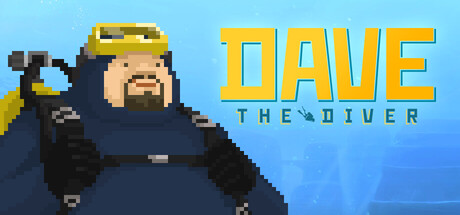
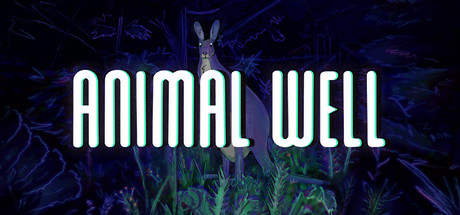

Match Dimensions Explained
❓Frequently Asked Questions
Why is Prince of Persia listed as similar to The Aquatope on White Sand?
Because both center on young protagonists healing through quiet, melancholic exploration—Kukuru’s slow rebuilding of the Gama Gama Aquarium mirrors the Prince’s solitary journey across sun-baked ruins, where every climb and puzzle feels like a meditation. Critics noted its 'Healing & Slow Life' vibe (84 score) and 'Melancholic Exploration' tone, echoing Kukuru’s bittersweet summer of loss, memory, and small daily triumphs.
Is there a game adaptation of The Aquatope on White Sand?
No—there’s no official game adaptation. The anime remains exclusively a Crunchyroll/MAPPA production with no tie-in game, mobile app, or visual novel. If you're craving that same coastal wistfulness and character-driven pacing, Prince of Persia is the closest match: its sun-drenched vistas, tactile environmental storytelling, and emphasis on personal growth over combat mirror Aquatope’s emotional texture.
How does Prince of Persia compare to Spirit Island in capturing Aquatope’s vibe?
Prince of Persia nails Aquatope’s gentle melancholy and healing rhythm—think Kukuru feeding fish at dawn or cleaning algae off tanks—while Spirit Island leans into high-stakes, mythic defense and frantic co-op energy (totally unlike Gama Gama’s peaceful, grounded pace). Spirit Island has no narrative scenes, no character arcs like Fuuka’s quiet resilience or Kukuru’s determination—it’s pure strategy, not slow-life storytelling.
What’s the best game like Aquatope if I want that ‘coastal summer nostalgia’ feeling?
Prince of Persia is your top pick—its golden-hour lighting, crumbling seaside temples, and deliberate, almost meditative traversal (like climbing a sun-warmed cliffside path) directly channel Aquatope’s Okinawa atmosphere. You’ll feel that same hush before a storm, the weight of memory in empty spaces, and the soft hope in small acts—just like Kukuru restoring the aquarium’s saltwater tanks or watching the sunset from the observation deck.