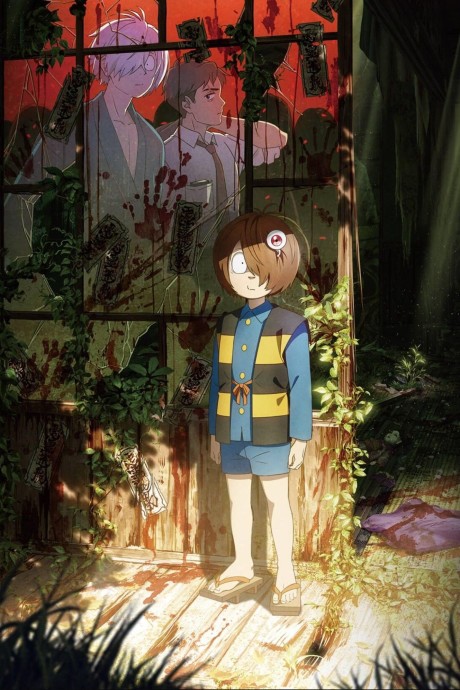
The Birth of Kitaro: The Mystery of GeGeGe
In Showa 31 (1956), Nagura Village was secretly controlled by the Ryuga family, who dominated Japan's political and financial circles. Mizuki, who worked at the Imperial Blood Bank, entered the village under the pretense of mourning the death of the head of the family, carrying ambitions and a secret mission. At the same time, Kitaro's father entered the village searching for his wife. Within the Ryuga family, a vicious struggle over succession had begun.
(Source: Toei Animation)
📺Anime Details
📝Editorial Analysis
The air in Nagura Village doesn’t just smell of damp earth and decaying tatami—it presses. Not from humidity, but from silence that’s been enforced: the kind where a cough sounds like treason, where a glance between villagers holds the weight of decades of withheld breath. You feel it the moment Mizuki steps off the train platform—his polished shoes sinking slightly into the mud, his Imperial Blood Bank badge gleaming under weak afternoon light, while two Ryuga retainers stand motionless at the village gate, eyes unblinking, hands resting not on swords but on something older, quieter, hungrier. That stillness isn’t peace. It’s the calm before a ritual no one dares name.
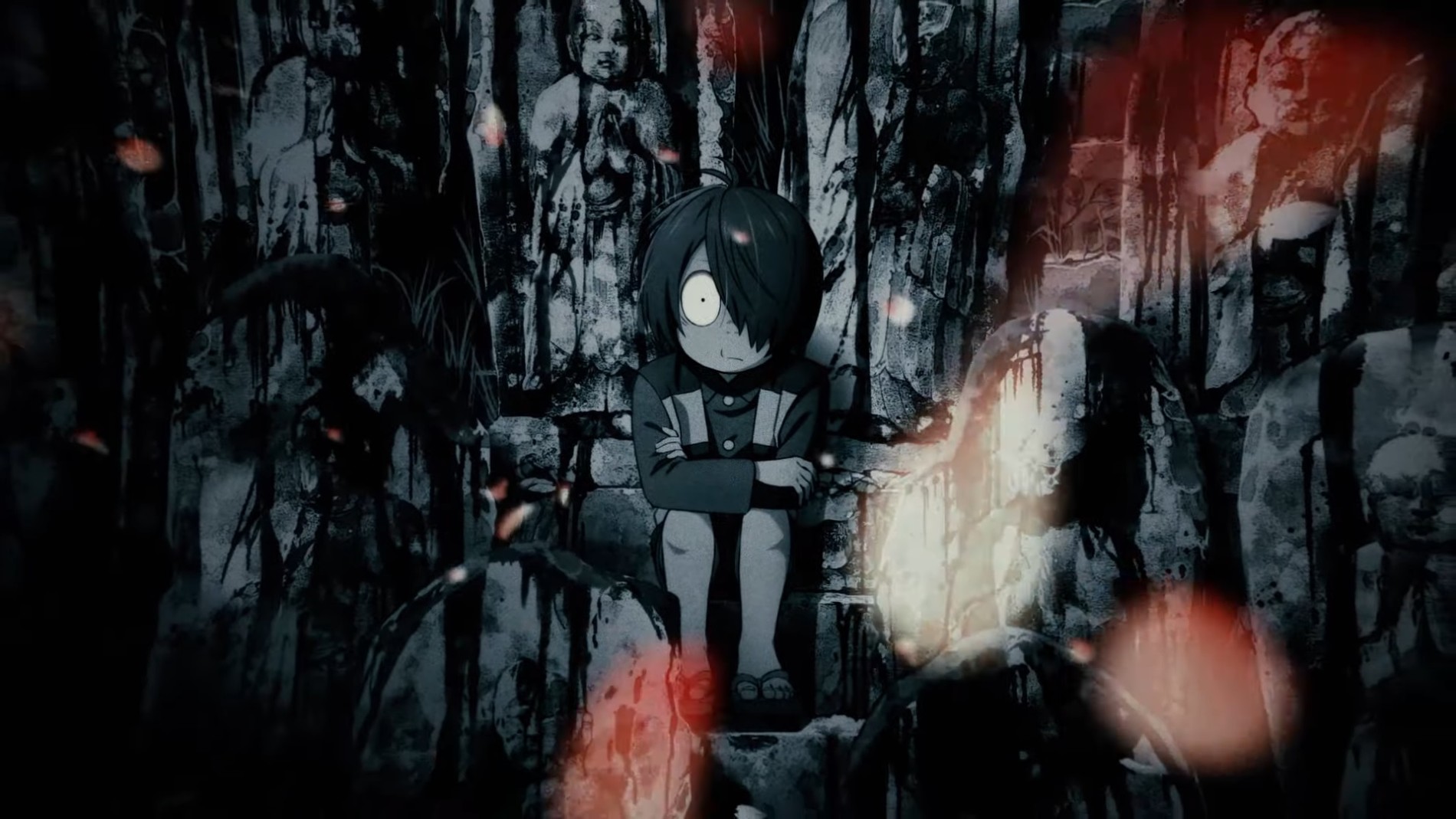
What makes The Birth of Kitaro: The Mystery of GeGeGe unlike any other supernatural horror isn’t its youkai or gore—it’s how deeply it roots dread in structure. This is horror dressed as bureaucracy, tragedy wrapped in lineage charts, the uncanny emerging not from shadows but from boardroom minutes and blood bank ledgers. You don’t jump at monsters—you stiffen when a Ryuga elder smiles just a beat too long after mentioning “the purity of the line.” You don’t flinch at gore—you pause, hollowed out, when Kitaro’s father walks past a shrine where offerings have been replaced with sealed vials labeled Type AB–Ryuga. It makes you think about power that doesn’t shout—it inherits, documents, archives. It makes you feel claustrophobic, watched, complicit—not because you’re in danger, but because you’ve already read the first page of the ledger and know the next entry will be written in someone else’s blood.
That same quiet, suffocating weight lives in Chains—not in its match-3 mechanics, but in how it structures attention. The game asks you to link adjacent bubbles, yes—but the real tension is in the physics-driven lag, the way chains wobble, hesitate, settle—like trying to align fractured family trees under surveillance. A player notes it “reminds me of connect 4 in nutshell,” and that’s precise: it’s not about speed or flash, but about alignment under pressure, about making clean connections while gravity—and memory—pull everything sideways. Just like Mizuki must align his cover story with Ryuga genealogy charts while ignoring the whisper of his own mission, you line up colors knowing one misstep collapses the whole chain. The “Healing & Slow Life” dim isn’t spa-like relaxation—it’s the eerie calm of waiting for the next succession decree, the slow exhale before the knife is named ceremonial.
And yet—there’s a strange kinship in the emotional narrative dim. Not plot, not dialogue, but narrative as residue: the way a cleared level leaves behind faint afterimages of previous chains, like the way Nagura Village’s present is scored with the ghost-lines of past rituals. One reviewer calls it “basically link 3 or more… till you can proceed and hit the next stage”—that “till you can proceed” is pure Ryuga logic: advancement isn’t earned; it’s permitted, conditional, always one misaligned bubble away from collapse. The game doesn’t tell you the stakes—it makes you feel them in your wrist, in the slight resistance before a chain snaps into place. Same as Kitaro’s father feeling the floorboards shift under him—not from weight, but from the house remembering every oath sworn on them.
This pairing won’t resonate with fans of jump-scare horror or high-octane RPGs. It’s for the person who re-watches the scene where Mizuki opens a drawer in the Ryuga archive and finds not papers—but hair ribbons, each tied with a different knot, each labeled in fading ink—and feels their throat close not because it’s scary, but because it’s cataloged. It’s for the player who lingers on the Chains tutorial not to learn rules, but to watch how the bubbles settle, how the silence between taps grows heavier each time. It’s for those who understand that the most devastating politics aren’t shouted in parliaments—they’re whispered over tea, encoded in inheritance law, and felt in the unbearable stillness right before the first drop of blood hits the floor. They don’t want escape. They want recognition. And in Nagura Village—and in the quiet, physics-bound space between three colored bubbles—they find it. Weight. Silence. Inheritance.
🎮16 Games That Match the Vibe











Match Dimensions Explained
❓Frequently Asked Questions
Why does Chains keep coming up in searches for games like The Birth of Kitaro: The Mystery of GeGeGe?
Because both lean hard into quiet, emotionally resonant storytelling with gentle pacing—Chains’ Healing & Slow Life vibe mirrors Kitaro’s nostalgic, melancholic folklore atmosphere, especially in scenes where you’re quietly solving puzzles while listening to soft ambient soundscapes. Players who loved Kitaro’s tender portrayal of yokai coexistence and slow-burn character moments (like Kitaro’s quiet conversations with Nura or Medama-Oyaji) often find Chains’ reflective rhythm and emotional narrative just as soothing and meaningful.
Is there a mobile game adaptation of GeGeGe no Kitaro that plays like The Birth of Kitaro?
No—there’s no official mobile adaptation that replicates The Birth of Kitaro’s specific blend of point-and-click exploration and yokai-themed puzzle-solving. But Chains is the closest *spiritual* match: it swaps yokai encounters for meditative bubble-chaining, yet nails the same calming, story-forward energy—like when you’re slowly clearing levels while absorbing its gentle emotional arcs, much like Kitaro’s thoughtful walks through misty rural Japan.
Chains vs. The Birth of Kitaro: which is better for unwinding after a stressful day?
Chains wins hands-down for pure wind-down vibes—it’s built around healing mechanics (literally tagged ‘Healing & Slow Life’) and has zero time pressure or fail states, unlike Kitaro’s occasional timed puzzles or combat sequences. You can tap bubbles at your own pace while soaking in its warm, low-stakes aesthetic—think of it like sipping green tea while watching Kitaro’s peaceful sunset scenes, but with satisfying visual feedback on every chain you make.
What if I love Kitaro’s yokai lore but hate puzzle-heavy games? Is Chains still worth trying?
Absolutely—if you loved the worldbuilding (Medama-Oyaji’s wisdom, Nezumi-Otoko’s scheming, the eerie charm of the Kitaro Forest) but found the puzzles frustrating, Chains gives you emotional resonance without the pressure. It trades yokai battles for serene, physics-driven bubble-linking, and its Emotional Narrative tag reflects how deeply it leans into mood and tone—like replaying Kitaro’s most heartfelt cutscenes, but with tactile, stress-free gameplay.