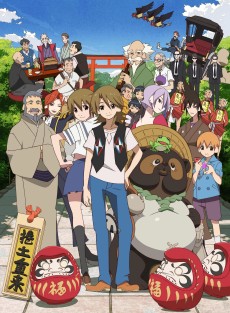
The Eccentric Family
In Kyoto, there are three kinds of residents: humans, raccoon dogs, and tengu. Shimogamo Yasaburou is the third son of the Shimogamo raccoon dog family. His father, Souichirou, had been the head of Kyoto raccoon dog community until he was eaten by the human members of "Friday Club". While taking care of old tengu, fighting with other raccoon dogs, and playing with a psychic human girl, Yasaburou approaches the truth of his father's death.
📺Anime Details
📝Editorial Analysis
The scent of roasted sweet potato on a damp Kyoto evening—steam curling into the indigo hush just after sunset—while Yasaburou sits cross-legged on the Shimogamo veranda, peeling a persimmon with quiet, deliberate fingers. His tail flicks once, unconsciously. A tengu’s shadow glides over the roof tiles. No music swells. No exposition drops. Just warmth, loss, and the unbearable lightness of carrying grief like a second skin.
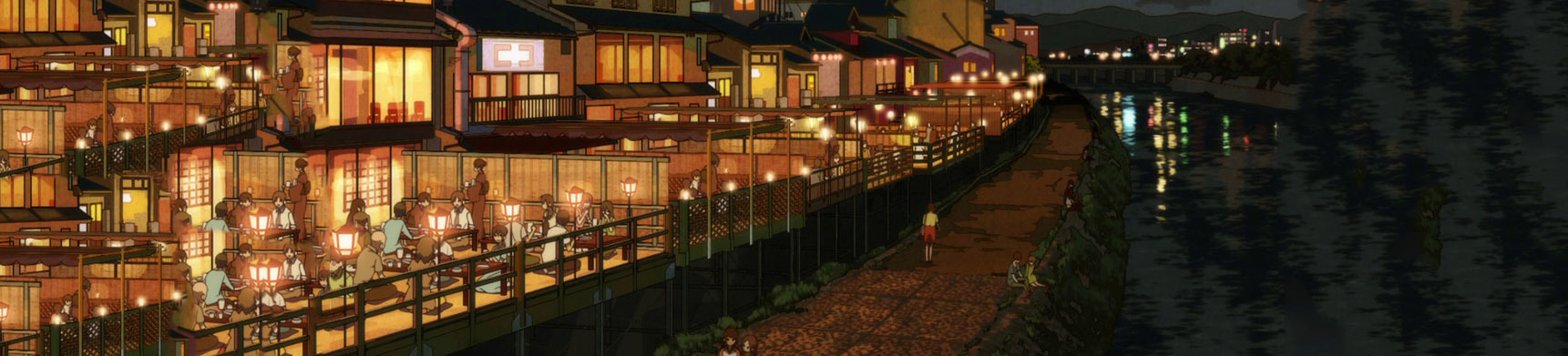
That’s the feeling The Eccentric Family lives inside: tenderness draped over irreversible absence, wrapped in the soft, stubborn rhythm of daily life. It doesn’t treat myth as spectacle—it treats it as weather. Youkai aren’t monsters or mascots; they’re neighbors who argue about property lines, forget their keys, mourn quietly at funerals held under cherry blossoms that fall like ash. The supernatural isn’t added to reality—it’s the grain of the wood, the warp in the fabric. You feel the weight of centuries in the creak of an old temple gate, the way a raccoon dog’s fur catches lamplight just so, the unspoken pause before someone says, “He wasn’t eaten—he was taken.” It makes you think about how memory becomes ritual, how dignity persists even when your body shifts shape, how love survives not by overcoming tragedy—but by folding itself around it, stitch by careful stitch.
Which is why Legendary resonates—not because it shares Kyoto’s alleys or raccoon dogs’ mischievous grins, but because it shares the same philosophical gravity beneath mythic texture. Its description confirms: “All creatures of ancient myth, legend and lore are real—they've just been sealed away for thousands of years inside Pandora's Box, waiting…” That “waiting” is key. Like the tengu who’ve outlived their own relevance, like the Friday Club whose human hunger masks something older and colder—Legendary treats myth not as power fantasy, but as dormant presence, heavy with consequence. And the player review nails the emotional parallel: “The animations in this game are incredible… Better than most games of the more modern era. It definitely has some ‘jank’ as many games of the PS3/X360 era…” That “jank”—the slight awkwardness, the tactile imperfection—is kin to The Eccentric Family’s gentle visual restraint: no flashy transformations, no overwrought battles—just a raccoon dog blinking slowly in sunlight, his eyes holding centuries of quiet observation. Both refuse slickness. Both trust stillness to carry weight.
There’s also an unspoken alignment in how both works handle body horror & occult—not as shock, but as quiet ontological unease. In The Eccentric Family, shapeshifting isn’t liberation; it’s vulnerability. A stretched neck, a trembling paw mid-shift, the way Souichirou’s final form dissolves not into smoke, but into something unnameable—a gap where language fails. Legendary’s tag “Body Horror & Occult” isn’t about gore—it’s about the violation of boundaries: what happens when ancient things reassert themselves in the flesh, not as villains, but as truths the world tried to forget. The Friday Club doesn’t wield knives—they wield appetite, a hunger that blurs species, ethics, time. That same unsettling intimacy lives in Legendary’s sealed myths: not monsters to slay, but forces that remember being worshipped, feared, fed—and now demand reckoning in bone and breath.
Who would love this pairing? Someone who cries when a character refills a teacup exactly the way their father used to. Someone who reads folktales not for adventure, but for the ache in the silences between lines. Someone who plays games not to win, but to linger—in a rain-slicked alley where a tengu folds his wings, or in a crumbling vault where a sealed god exhales dust that smells like burnt cedar and old paper. Not teenagers chasing adrenaline, but adults who keep a worn copy of The Tale of the Heike beside their controller, who understand that the deepest magic isn’t in transformation—but in the courage to sit, unchanged, beside someone else’s sorrow, peeling fruit in the fading light.
🎮3 Games That Match the Vibe

Match Dimensions Explained
❓Frequently Asked Questions
Why is Legendary considered a good match for fans of The Eccentric Family?
Because both lean hard into Japanese folklore reimagined with emotional weight and eerie beauty — like how Legendary’s Yōkai-inspired enemies (e.g., the shapeshifting Kappa boss who weeps black water in the Kyoto sewers) echo the Tanuki’s melancholy transformations and moral ambiguity in The Eccentric Family. It nails that same blend of mythic reverence and body-horror intimacy, especially during the ‘Skin-Stealing Ritual’ cutscene where Deckard’s hand briefly sprouts fox fur — a direct nod to the show’s themes of identity and metamorphosis.
Is there a video game adaptation of The Eccentric Family?
No — there’s never been an official game adaptation, and no announcements from P.A. Works or Fuji TV. Fans sometimes confuse Legendary with one because of its strong yōkai focus and PS3-era aesthetic, but it’s entirely original — just happens to share DNA with The Eccentric Family through its treatment of folklore as living, breathing, and deeply personal.
How does Legendary compare to Okami in terms of folklore storytelling?
Okami leans into Shinto purity and divine restoration with Amaterasu as a benevolent sun goddess, while Legendary goes darker and more ambiguous — think Deckard bargaining with a corrupted Nue in a rain-soaked shrine, its six limbs twitching like broken puppets, not unlike the unsettling grace of the Serpent in Episode 11 of The Eccentric Family. Where Okami paints myths in gold ink, Legendary stains them with inkwash and rust.
What’s the best game like The Eccentric Family if I want that quiet, bittersweet autumn vibe with folklore creatures?
Legendary — hands down. Its Kyoto arc hits that exact mood: mist clinging to torii gates at dusk, tanuki-like trickster spirits selling cursed sake in alleyways, and that haunting PS3-era soundtrack with shamisen and distant temple bells. One player even said the ‘Cicada Lullaby’ ambient track (played during the rooftop chase with the moth-yōkai) feels like watching the Kuroda family sip tea under falling ginkgo leaves — wistful, grounded, and quietly magical.