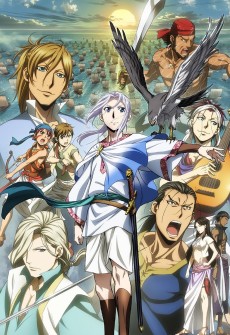
The Heroic Legend of Arslan: Dust Storm Dance
After managing to get past the battles concerning the royal successor for Sindhura, Arslan and company made their triumphal return to Pars to find Hilmes the brave general with the silver mask standing in their way. And by the time they somehow get Hilmes to stand down and they can be on their way to thee capital once again, an even larger threat was fast approaching the land of Pars.
(Source: Anime News Network)
📺Anime Details
📝Editorial Analysis
The dust doesn’t settle — it hangs, thick and golden, caught in the slant of late afternoon light as Arslan stands before the gates of Ecbatana, his hand resting not on a sword hilt but on the worn leather of a saddle. Behind him, the banners of Pars are tattered, not triumphant; ahead, Hilmes waits—not with drawn blade, but with silence so heavy it cracks the air like dry earth. There’s no fanfare, no swelling score—just wind, grit, and the quiet, gut-deep weight of return after war that never truly ends.
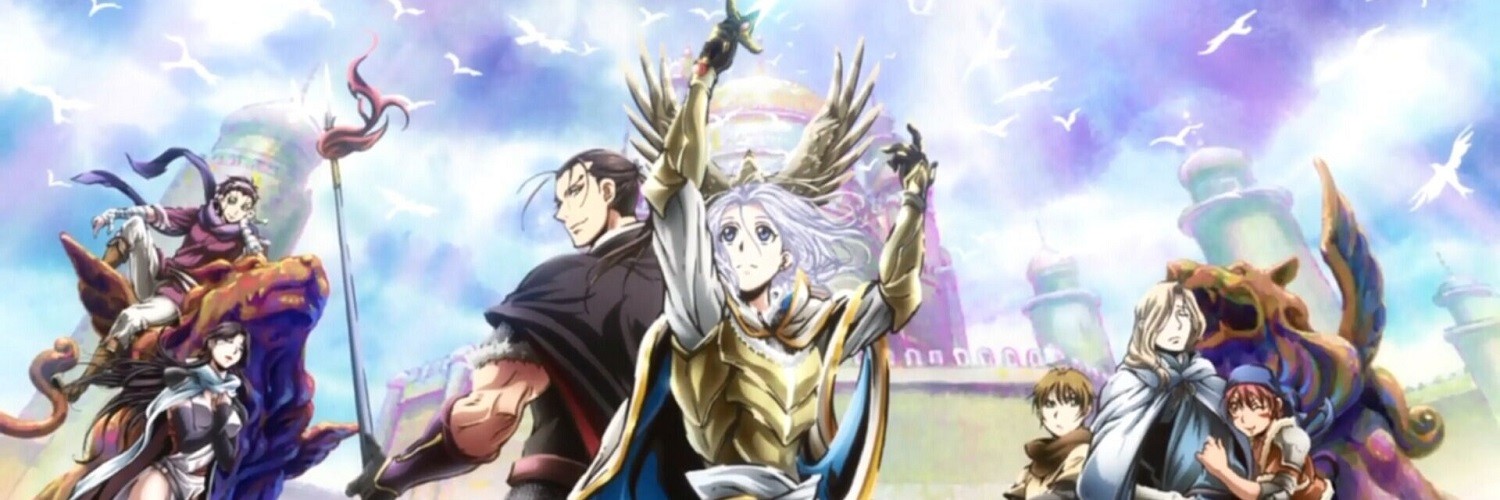
That’s the feeling The Heroic Legend of Arslan: Dust Storm Dance lives inside: exhaustion with purpose. Not despair, not nihilism—but the bone-tired clarity of leaders who’ve bled for a throne they didn’t ask for, who carry strategy like armor and grief like a second shadow. It’s historical fantasy stripped of mythic distance: swords clash with metallic finality, tactics unfold in real time across sun-baked ridges, and royal affairs aren’t about intrigue behind velvet curtains—they’re about supply lines, desert navigation, and the precise moment a general chooses not to raise his banner. This isn’t shōnen about power-ups or destiny—it’s about the slow, grinding recalibration of self when duty outlives certainty. You feel the heat of the sun on your neck. You taste the salt of sweat and sand. You think—not about winning—but about what remains after the last charge.
Which is why STAR WARS™ Jedi Knight - Jedi Academy™ lands with such startling resonance. Its description calls it an “Action Spectacle” and “Tactical Warfare”—two phrases that map directly onto Pars’ battlefield rhythm: the precision of a cavalry feint mirrors the lightsaber parry-and-counterflow of Jedi Academy’s combat system, where stance, timing, and terrain matter more than raw force. And the player review nails the emotional throughline: a Padawan “thrust into a Galaxy-spanning adventure to help…”—not to conquer, not to reign, but to help. Like Arslan, the protagonist isn’t born a legend; he’s forged mid-crisis, learning leadership through consequence, not prophecy. The game’s emphasis on choice in motion—choosing between Force powers mid-swing, adapting stances mid-chase—mirrors how Arslan’s victories hinge not on strength, but on reading Hilmes’ hesitation, adjusting to shifting loyalties, turning pirates into allies not by decree, but by seeing what they need, not what Pars demands.
There’s also the unspoken gravity of legacy—the kind that doesn’t glitter, but settles. In Dust Storm Dance, royal affairs aren’t about bloodline purity; they’re about stewardship under duress. When Arslan negotiates with Hilmes—not as victor, but as heir to a broken covenant—you feel the weight of history pressing down, not as ornament, but as obligation. That same texture hums in Jedi Academy’s world-building: the Jedi Order isn’t a monolith, but a fractured institution trying to rebuild ethics after collapse. The player doesn’t inherit glory—they inherit questions: What does justice look like when the Republic is hollow? What does loyalty mean when masters lie? These aren’t plot devices—they’re lived tensions, just like Pars’ struggle to define kingship without falling back into the very tyranny it overthrew.
And then there’s the tomboy, the crossdressing, the pirates—not as garnish, but as structural honesty. These aren’t winks to the audience; they’re logistical realities of survival in a world where identity shifts like dunes. A commander disguised as a merchant’s daughter isn’t “funny”—she’s using perception as terrain. Pirates aren’t caricatures—they’re displaced naval forces navigating the same collapsing trade routes as Pars’ diplomats. That grounded elasticity—where gender, rank, and allegiance are tactical variables, not fixed traits—is mirrored in Jedi Academy’s classless progression: your Padawan builds their own lightsaber, chooses their own path (light, dark, or something jagged in between), and earns respect not from title, but from how they hold space in a fight. The review’s phrase—“build out a Padawan”—isn’t cosmetic. It’s existential. So is Arslan choosing to ride beside his soldiers instead of ahead of them.
This pairing sings for the viewer who watches battle scenes and counts supply wagons, not just sword swings—who feels a lump in their throat when a character pauses to adjust a torn sleeve before walking into council, not because it’s dramatic, but because it’s true. For the player who replays a duel not to win faster, but to understand why the enemy lowered their guard at 3.7 seconds—and who knows that the most heroic moment isn’t the climax, but the quiet decision after, when the dust finally begins to fall.
🎮1 Games That Match the Vibe

Match Dimensions Explained
❓Frequently Asked Questions
Why is STAR WARS Jedi Academy listed as similar to The Heroic Legend of Arslan: Dust Storm Dance?
Because both lean hard into tactical battlefield command *and* personal heroic spectacle—like when Arslan rallies his cavalry at the Battle of Zattara, Jedi Academy lets you issue squad commands mid-chaos while also dueling with a lightsaber you built yourself. Reviewers even call out how both games blend large-scale war strategy with intimate, character-driven hero moments.
Is there a mobile or anime adaptation of Dust Storm Dance?
No—there’s no mobile game or anime adaptation of *Dust Storm Dance*. It’s a standalone PS2-era tactical RPG inspired by the Arslan novels, and the only official interactive tie-in remains the original game. That said, fans often compare its vibe to *Jedi Academy*, which *does* have a robust modding scene and PC port—but no anime either.
How does STAR WARS Jedi Academy compare to Dust Storm Dance in terms of battlefield tactics?
Both demand real-time unit coordination during large skirmishes—think Arslan’s ‘wedge formation’ charges versus Jedi Academy’s ‘flank-and-hold’ squad orders on Korriban’s ruins—but Jedi Academy adds Force-powered environmental manipulation (like pulling rubble to block blaster fire) that Dust Storm Dance doesn’t have. Still, their shared ‘Action Spectacle + Tactical Warfare’ DNA makes them feel like spiritual cousins.
What’s the best game like Dust Storm Dance if I want that ‘honorable young commander leading from the front’ vibe?
Go straight to *STAR WARS Jedi Academy*: you play a Padawan who earns trust through courage—not just power—and leads squads into battle while staying true to your ideals, much like Arslan refusing to abandon his men at the Siege of Shushtar. Its 55 Metacritic score reflects how well it nails that earnest, duty-bound heroism amid chaos.