The Idol Master
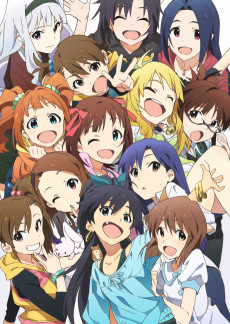
765 Production Studio manages the unique talents of 13 professional idols as they slowly make their way to the top and become country-wide celebrities. But the girls' journey is far from just fun and games: hard work, sweat, and tears are some of the prerequisites needed to flourish in this industry—and for 765 Pro in particular, a watchful eye out for their rival, the infamous 961 Production.
As the girls' fame grows, however, their time together as a family diminishes, and now the very popularity they sought is threatening to tear them apart. A difficult balance of work and bonding must be achieved, or they risk everyone going their separate ways. The personal and professional ordeals of these idols can't be conquered alone, but with each other's loving support, any obstacle or hardship can be overcome!
📺Anime Details
📝Editorial Analysis
The fluorescent hum of the 765 Pro rehearsal studio at 6 a.m. — sneakers squeaking on worn linoleum, breath fogging in the chill air, the low thump of a metronome counting out one-two-three-four as Miki stumbles over the bridge of “GO MY WAY!” for the seventh time, her voice cracking but her feet never stopping. That’s it. Not the glittering dome concert, not the magazine cover — the quiet, stubborn grind, the shared exhaustion in a glance between Ritsuko and Chihaya as they lean against the piano, sweat-damp hair stuck to their temples, waiting for the next take. The air smells like tea leaves, floor wax, and something warmer: hope, thin but unbroken.

This isn’t just about idols singing. It’s the weight of collective aspiration pressing down, then lifting — not all at once, but in tiny, earned increments. You feel the ache in your own shoulders watching them rehearse, the lump in your throat when a shy girl finally holds eye contact during a solo line, the quiet pride in a producer’s tired smile after a small victory. It’s intimacy forged in repetition, vulnerability worn like stage makeup — smudged, real, constantly reapplied. The drama isn’t melodrama; it’s the quiet fracture when Yuki’s schedule pulls her away from group practice, the way the empty chair beside Hibiki at lunch speaks louder than any argument. It’s found family not as a trope, but as oxygen — the only thing keeping them upright when the industry’s machinery threatens to grind them down. You don’t just watch them become stars; you feel the cost of every watt of light they emit.
That specific, resonant frequency — the blend of earnest labor, fragile camaraderie, and music as emotional anchor — vibrates in unexpected places. Strong Bad's Cool Game for Attractive People: Season 1 shares its DNA not in setting or tone, but in its emotional narrative pulse. Its description promises “wacky comedic adventures,” yet player reviews fixate on its emotional core — that longing for revival, that nostalgic ache wrapped in absurdity. Like 765 Pro’s girls rehearsing under flickering lights while dreaming of arenas, Strong Bad’s world is built on sweat and sincerity disguised as chaos. The comedy isn’t escape; it’s the coping mechanism, the glitter coating the hard work — just as 765 Pro’s lighthearted banter masks the exhaustion, the rivalry with 961 Pro sharpens their resolve. Both make you laugh while your chest tightens, because the heart beating beneath the joke is real, vulnerable, and fiercely protected.
Then there’s Persona 5 Royal, scoring lower but hitting deeper on emotional narrative. Its description emphasizes “building relations” alongside dungeon crawling — the duality of daily life and extraordinary stakes. Player reviews spotlight the stunning soundtrack and the seamless transition between daily life — exactly how The Idol Master operates. Every idol’s personal story unfolds in stolen moments: a confession over convenience store bento, a breakthrough during a rain-soaked walk home, a quiet support offered while adjusting a mic headset. Like Joker navigating Tokyo’s layers, the 765 Pro girls navigate the gulf between public persona and private self, their bonds deepening not in grand speeches, but in the texture of shared routine — the rhythm of practice, the weight of a shared secret, the unspoken understanding in a glance across a crowded dressing room. The music isn’t background; it’s the emotional grammar, the language they use to say what words can’t.
Who feels this? The person who cries at a perfectly synced dance break because they saw the bruised knees and rewritten choreography notes. The one who replays a game’s dialogue tree not for strategy, but to linger in the warmth of a character’s quiet, hard-won trust. The viewer who doesn’t just want spectacle — they want to breathe the same air as people trying, failing, adjusting, and trying again, together. They love the sweat, the silence between songs, the way a single note held just a beat too long can hold the weight of everything unsaid. They understand that the most powerful idols — and the most resonant games — aren’t flawless. They’re human, luminous precisely because they’re fragile, persistent, and forever rehearsing the next step, side by side.
🎮3 Games That Match the Vibe



Match Dimensions Explained
❓Frequently Asked Questions
Why does Persona 5 Royal feel like an Idol Master game even though it’s a JRPG?
Because both lean hard into emotional narrative and character-driven idol-adjacent arcs—like Ann Takamaki’s arc where she literally performs on stage as a pop star while grappling with identity and public perception. The daily life sim, social links (especially Confidants like Haru’s café storyline), and that killer jazz-funk soundtrack all mirror The Idolmaster’s rhythm of training, performing, and deepening bonds.
Is there an anime or visual novel adaptation of Strong Bad's Cool Game for Attractive People?
Nope—no anime or VN adaptation exists. It’s purely a Telltale-style episodic adventure built around Strong Bad’s absurd humor and interactive music moments (like the 'Trogdor' karaoke scene), but fans keep hoping Skunkape revives it—especially after the Poker Night remake rumor started circulating.
How is Strong Bad's Cool Game for Attractive People different from The Idolmaster in terms of music and performance?
While The Idolmaster focuses on polished vocal training and choreographed live shows (think Haruna’s ‘Koi no Kiseki’ solo), Strong Bad’s game treats music as chaotic comedy fuel—like the ‘Cool Tunes’ minigame where you mash buttons to ‘compose’ a track while Strong Bad yells nonsense lyrics. It nails ‘Music & Idol’ as satire, not simulation.
What’s the best game like The Idolmaster if I want something stylish, emotionally resonant, and full of Tokyo nightlife vibes?
Persona 5 Royal—hands down. You’ll ride the Yamanote Line at midnight, hang out in Shibuya scramble, and watch confidant scenes unfold under neon lights (like Futaba’s rooftop confession with the city glittering below). Its emotional narrative dimension isn’t just tacked on—it’s woven into every dungeon boss, every rainy-day dialogue, and that unforgettable ‘Last Surprise’ ending sequence.