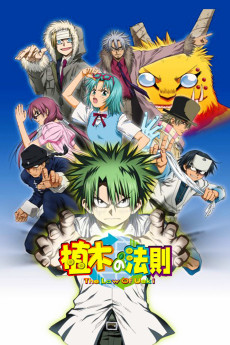
The Law of Ueki
📺Anime Details
📝Editorial Analysis
The first time Ueki punches a tree and it shatters—not with a cartoonish boing, but with a wet, splintering crack that sends wood chips flying like shrapnel—he doesn’t grin. He blinks. His knuckles bleed. And behind him, the schoolyard fence groans under the weight of a sudden, unexplained gust. That moment isn’t about power—it’s about consequence. A boy who turns trash into trees suddenly realizes his gift doesn’t just grow life; it ruptures physics, ethics, gravity itself. The air smells like ozone and damp concrete, not magic sparkles.
That’s the heartbeat of The Law of Ueki: a world where divinity isn’t distant or majestic—it’s clumsy, bureaucratic, and deeply, awkwardly human. Gods bicker over paperwork. Battles erupt in vacant lots behind convenience stores. Power isn’t inherited or earned through lineage—it’s assigned, randomized, and often absurdly specific (turning trash into trees, making paper into iron, growing candy from soil). There’s no grand prophecy, no chosen one—just kids stumbling through cosmic rules they barely understand, trying to keep their friends alive while arguing about lunch money. It makes you feel tenderly off-balance: hopeful but wary, amused but quietly gut-punched by how much sincerity lives inside the ridiculous. You don’t watch to escape reality—you watch because it mirrors reality’s quiet chaos: small choices mattering more than destiny, kindness being both weapon and vulnerability, and every act of courage happening between the cracks of what’s supposed to be normal.
Valheim shares that same emotional DNA—not in plot or aesthetics, but in how it makes you stand in your own skin. Its description calls it “a brutal exploration and survival game… set in a procedurally-generated purgatory inspired by viking culture.” That word—purgatory—is key. Like Ueki’s world, Valheim isn’t heaven or hell; it’s a liminal, weather-beaten in-between where meaning isn’t handed down but forged, one splintered log at a time. The player review nails it: “It’s like Minecraft but instead of punching trees you spend 40 minutes looking for the perfect tree, then a troll destroys your entire house…” That rhythm—intense focus, fragile creation, sudden, disproportionate loss—is pure The Law of Ueki. Ueki doesn’t win by overpowering enemies; he wins by rebuilding after failure, by re-planting a tree where a building stood, by turning rubble into roots. Valheim asks the same thing: not “how strong are you?” but “how tenderly will you rebuild after the troll comes?” Both reward patience over spectacle, humility over dominance, and treat consequence not as punishment—but as the ground where character grows.
And that feeling—the weight of small, repeated acts—echoes in how both works handle myth. The Law of Ueki treats gods like overworked civil servants stuck in a flawed system; its divine hierarchy is less Olympus and more DMV with lightning bolts. Likewise, Valheim’s “Mythology & Folklore” dimension isn’t about worship—it’s about archaeology. You don’t meet Odin face-to-face; you find his name carved into a crumbling stone altar, half-buried in snow, next to a rusted spear and the charred remains of a long-dead bonfire. The lore isn’t delivered—it’s dug up, misinterpreted, pieced together from fragments. Just like Ueki parsing cryptic edicts from celestial bureaucrats, Valheim players read runes, map star charts, and test theories about why the Mistlands hum at dawn—all without ever hearing a god speak directly. Both trust you to feel reverence without revelation, awe without authority.
This pairing isn’t for fans of slick power fantasies or myth-as-spectacle. It’s for the quiet observer who notices how light hits rain-slicked pavement after a fight, who saves their game not before boss battles—but before planting a sapling, or laying the first timber beam, or writing a note to a friend they’re afraid to lose. It’s for people who find holiness in repair, who feel most alive when holding something fragile—and know, deep in their bones, that tenderness is the only superpower that scales.
🎮1 Games That Match the Vibe
Match Dimensions Explained
❓Frequently Asked Questions
Why does The Law of Ueki's 'Ueki vs. Sano' match feel so different from Valheim's boss fights?
Because Ueki’s fight with Sano is all about escalating psychic power-ups, dramatic mid-air clashes, and personality-driven banter—think Ueki turning trash into iron fists while Sano summons giant fists from the sky. Valheim’s boss fights (like against the Elder or Bonemass) are pure environmental survival: you’re dodging AoE sludge pools, managing stamina while kiting, and relying on crafted gear—not charisma or sudden power awakenings.
Is there a Valheim anime adaptation?
Nope—Valheim has zero anime adaptations, official or fan-made. It’s purely a game rooted in Norse myth and sandbox survival, with no narrative arcs or character arcs like The Law of Ueki’s tournament structure. You won’t find Odin showing up to narrate your longboat build—but you *will* find player reviews joking about ‘trolls destroying your entire house’ after 40 minutes of perfect tree-hunting.
How does Valheim compare to The Law of Ueki in terms of power progression?
Ueki’s power growth is story-driven and explosive—like unlocking ‘Heavenly Fist’ after emotional breakthroughs—while Valheim’s is slow, tactile, and gear-based: you earn better armor by defeating bosses (Eikthyr → The Elder → Yagluth), craft weapons from rare materials (Blackmetal → Draconic), and upgrade your base one timber wall at a time. No sudden transformations—just sweat, trolls, and that sweet, sweet mead hall pride.
What’s the best game like The Law of Ueki if I want that hype-team-battle energy but with survival stakes?
Valheim nails it—if you swap ‘tournament arena’ for ‘frost-covered mountain stronghold’ and ‘psychic duels’ for ‘co-op siege defense’. Picture your squad revving up before the Bonemass fight: shields raised, torches lit, potions prepped—exactly that same adrenaline-fueled, high-stakes teamwork vibe, just with more troll ambushes and less ‘Ueki, believe in yourself!’ speeches.