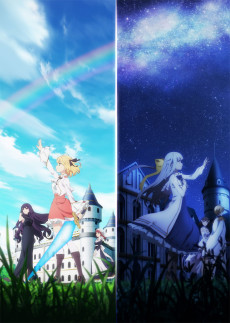
The Magical Revolution of the Reincarnated Princess and the Genius Young Lady
Despite her supposed ineptitude with regular magic, Princess Anisphia defies the aristocracy’s expectations by developing “magicology,” a unique magical theory based on memories from her past life. One day, she witnesses the brilliant noblewoman Euphyllia unjustly stripped of her title as the kingdom’s next monarch. That’s when Anisphia concocts a plan to help Euphyllia regain her good name-which somehow involves them living together and researching magic! Little do these two ladies know, however, that their chance encounter will alter not only their own futures, but those of the kingdom...and the entire world!
(Source: Yen Press)
📺Anime Details
📝Editorial Analysis
The scent of ozone and old paper hangs thick in Anisphia’s workshop—copper coils hum softly beneath glass domes, ink smudges streak the edge of a half-finished diagram, and Euphyllia sits across from her, spine straight as a drawn blade, fingers tracing the rim of a teacup while her voice drops low: “They don’t fear my magic. They fear I remember what they erased.” That quiet, charged stillness—where political danger lives in a shared glance and revolutionary theory is drafted between sips of Earl Grey—is where The Magical Revolution of the Reincarnated Princess and the Genius Young Lady breathes.

This isn’t fantasy as spectacle. It’s fantasy as tension held in check: the weight of inherited power pressing down, the slow burn of trust forged not through grand declarations but through coiled silences, meticulous notes, and the deliberate choice to share a bedroom—not for romance’s sake, but because surveillance makes privacy a tactical necessity. You feel the fragility of safety, the exhilaration of intellectual intimacy weaponized against dogma, the aching precision with which two women dismantle centuries of royal orthodoxy using logic, memory, and quiet defiance. It’s not about escaping the world—it’s about reclaiming its grammar, one recalibrated spell formula at a time.
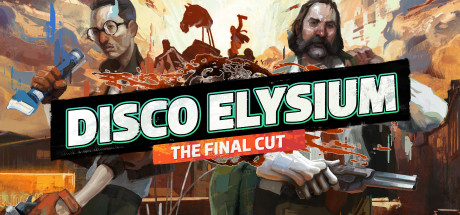
That emotional architecture resonates sharply with Disco Elysium - The Final Cut, whose description names it a Political Thriller, Romance & Shoujo—a pairing that sounds impossible until you sit with Anisphia and Euphyllia parsing court transcripts like forensic linguists, or watch Euphyllia’s title vanish not with a bang but a bureaucratic stamp. Like Disco Elysium, this anime treats ideology as atmosphere: capital isn’t abstract here—it’s the gilded cage of the royal academy, the unspoken rule that “genius” must be neutered if it threatens succession. The player review’s line—“Capital has the ability to subsume all critiques into itself. Even those who would critique capital end up reinforcing it instead.”—lands like a stone in your gut when Anisphia’s “magicology” is first dismissed as “eccentricity,” then co-opted by ministers who demand she patent her findings for the crown. Both works force you to confront how systems absorb resistance—how Euphyllia’s very brilliance becomes proof she’s “unstable,” just as Disco Elysium’s detective internalizes the city’s rot until his own thoughts quote party manifestos. The romance isn’t escape—it’s solidarity as survival strategy, a shared language built in the cracks of a collapsing edifice.
And yes—the maids. Not as comic relief, but as silent witnesses who move through corridors like shadows with agency, folding laundry while overhearing treasonous whispers, polishing silver while calculating allegiances. That layered domesticity—where politics lives in starched collars and tea service—echoes Disco Elysium’s world-building, where every NPC carries history in their posture, every alleyway hums with unresolved class war. The vampire tag isn’t gothic ornamentation; it’s another axis of marginalization folded into the same calculus—bodies deemed “unnatural” by law, yet indispensable to the machinery of state. Like the game’s haunted, self-destructive detective, Anisphia and Euphyllia are haunted by competence: their clarity makes them dangerous, their empathy makes them vulnerable, and their love is the only compass calibrated outside the kingdom’s corrupted magnetic field.
This pairing sings to the reader who underlines marginalia in philosophy texts, who replays dialogue not for plot but for subtextual tremors, who feels relief when a story treats tenderness as rigor and intellect as erotic. It’s for the person who’s ever corrected a citation mid-argument, who keeps a notebook titled “Things I’m Not Allowed to Say Out Loud,” who finds profound comfort in two women choosing each other—not as fantasy, but as method. Not as lovers first, but as co-conspirators in the quiet, daily act of remembering how to name the world correctly.
🎮1 Games That Match the Vibe
Match Dimensions Explained
❓Frequently Asked Questions
Why is Disco Elysium listed as similar to The Magical Revolution of the Reincarnated Princess and the Genius Young Lady?
Because both lean hard into sharp political intrigue wrapped in shoujo-adjacent romance—like when Princess Anisphia debates magical reform with Lainie while navigating court factions, Disco Elysium’s Detective Harrier grapples with ideology, class, and forbidden affection in Revachol’s decaying port city. The match isn’t about magic systems, but how both use intimate character dynamics (e.g., Anisphia/Lainie’s intellectual sparring vs. Harrier’s internal monologues with his own skill voices) to explore power, identity, and quiet rebellion.
Is there a visual novel or anime adaptation of The Magical Revolution of the Reincarnated Princess and the Genius Young Lady?
No official visual novel or anime adaptation exists yet—just the light novels and manga. That’s why fans often pivot to games like Disco Elysium: it delivers the same dense, dialogue-driven emotional weight and layered political tension you’d want from an adaptation, especially in scenes where ideological clashes unfold through quiet conversations (think Lainie challenging royal dogma over tea, mirrored by Harrier debating Marxism with a union organizer in the Whirling-in-Rags).
How does Disco Elysium compare to The Magical Revolution in terms of romance and worldbuilding?
The Magical Revolution builds its world through elegant magical academia and courtly etiquette—Anisphia’s lab, the Royal Magic Academy’s clocktower debates—while Disco Elysium constructs Revachol via crumbling infrastructure, graffiti, and decades of failed revolutions. But both treat romance as intellectually charged and politically entangled: Lainie and Anisphia’s bond deepens through shared dissent, just like Harrier’s slow-burn connection with Kim Kitsuragi hinges on mutual respect amid ideological fractures—and both score 80%+ for blending Romance & Shoujo with Political Thriller vibes.
What’s the best game like The Magical Revolution if I want that ‘quiet, brainy girls changing the system’ vibe?
Disco Elysium — hands down. It’s got that same hushed intensity of brilliant women reshaping broken systems: Lainie dismantling magical orthodoxy with logic and empathy, Kim Kitsuragi quietly steering investigations while holding Revachol’s moral center. You’ll feel that same thrill when Harrier chooses ‘Logic’ or ‘Empathy’ during a tense interrogation—mirroring how Anisphia and Lainie weaponize precision dialogue to outmaneuver entrenched powers. And yes, it’s rated 80 for Political Thriller + Romance & Shoujo for good reason.