The Tale of The Princess Kaguya
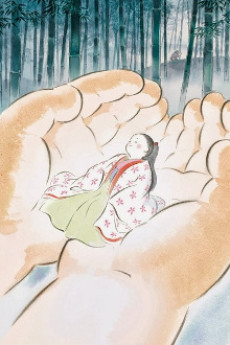
Okina is a bamboo cutter in ancient rural Japan. One day in the forest, he finds a tiny baby in the folds of a bamboo shoot. He brings the creature home to his wife Ounaa and they decide to keep her and raise her as a princess. She is clearly not of this world. Kaguya grows at an unnatural rate, soon maturing into an uncommonly beautiful young woman. Since Okina has now also found a cache of gold and treasure in the forest, every suitor wants Kaguya. But this is not a fairy tale of courtship and marriage.
(Source: Toronto International Film Festival)
📺Anime Details
📝Editorial Analysis
The bamboo grove at dusk—light thin as rice paper, air thick with the scent of damp earth and crushed leaves—where Okina first hears the faint, silver chime of something not human inside the hollow shoot. Not a cry, not a whimper, but a sound like wind catching the edge of a silk sleeve: fragile, ancient, already slipping away. That’s where it begins—not with wonder, but with quiet dread masked as awe.
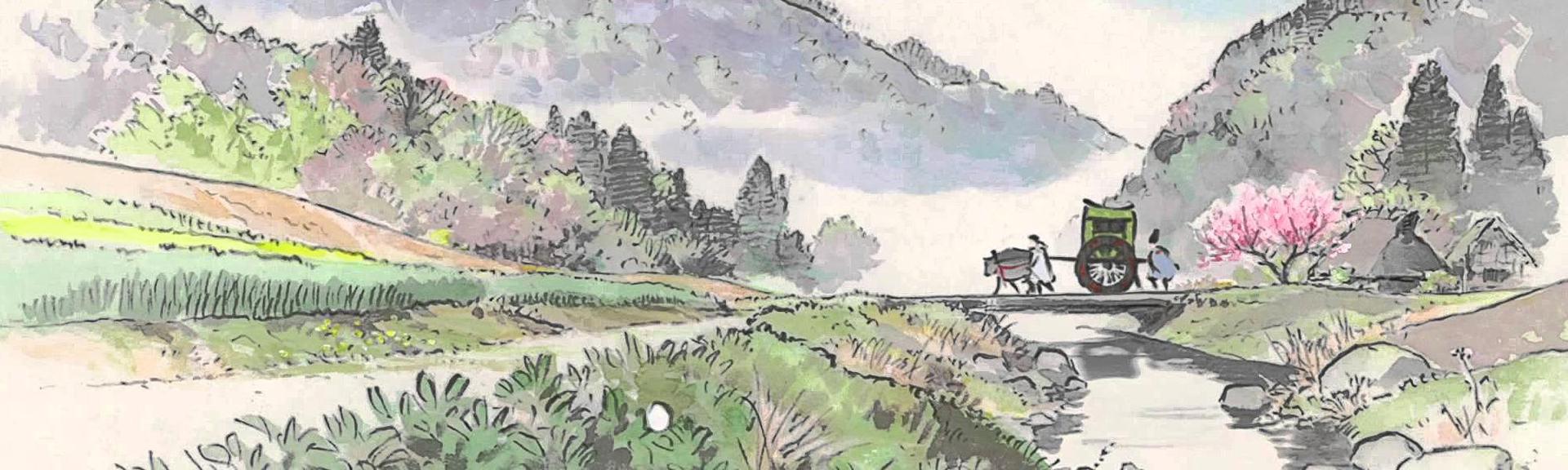
What makes The Tale of The Princess Kaguya ache so deeply isn’t its tragedy, but its slowness. Not pacing—though it moves like mist over paddy fields—but the way time itself feels porous, tender, and unbearably finite. You don’t watch Kaguya grow; you feel her seasons pass in the weight of a single glance toward the moon, in the way her bare feet sink into mud one summer and never touch soil again after she’s cloistered in Kyoto. It’s the hush before a temple bell tolls—not silence, but listening. It makes you think about what it means to be held, truly held—not as possession, but as witness—and how love, when rooted in impermanence, becomes both sacred and suffocating. There’s no villain, no grand betrayal—just the unbearable softness of farewell, repeated in every folded sleeve, every unopened letter, every breath held too long.
That emotional DNA—the reverence for stillness, the gravity of small gestures, the quiet insistence that healing isn’t loud or linear—echoes unmistakably in Chains. Its description calls it “a relaxing arcade match 3 casual game” built on linking adjacent bubbles, but the player review cuts deeper: “Reminds me of connect 4 in nutshell… link 3 or more of the same color and clear enough till you can proceed…” Notice the rhythm: link, clear, proceed. Not rush, not conquer—clear enough. Like Kaguya arranging peonies in a lacquered bowl, or Okina smoothing rice paper over a lantern frame: deliberate, tactile, unhurried. The physics-driven challenge isn’t about speed—it’s about patience with collapse, with things falling just so, then settling. That’s the same feeling as watching Kaguya walk barefoot through dew-laced grass one last time—no fanfare, just the world holding its breath while something precious rearranges itself, gently, irrevocably.
None of the other games appear in the data—only Chains, with its score of 84 and its paired dimensions: Healing & Slow Life, Emotional Narrative. Those two phrases aren’t marketing fluff—they’re diagnostic. Healing here isn’t restoration, but attunement: the kind that comes from matching color to color, breath to breath, moment to moment. Slow Life isn’t idyllic—it’s the weight of ordinary time made visible, like Ounaa’s hands kneading dough at dawn, or the way Kaguya’s laughter lingers a half-second too long before dissolving into stillness. And Emotional Narrative—not plot-driven, not exposition-heavy, but narrative carried in texture: the grain of bamboo, the tremor in a wrist, the silence between bubble pops.
This pairing isn’t for fans of epic battles or mythic quests. It’s for the person who rewatches the scene where Kaguya runs—really runs—down the mountain path in her white kosode, hair unbound, not toward freedom, but toward feeling, and feels their chest crack open not because she escapes, but because she lets herself be wild for three breaths. It’s for the player who doesn’t chase high scores in Chains, but lingers on the ripple pattern after a chain clears—watching colors bleed softly at the edges, waiting for the next gentle cascade. It’s for those who understand that some stories don’t ask for your attention—they ask for your presence, your pulse synced to theirs, your willingness to sit beside sorrow without fixing it. They love the space between things: between bamboo and sky, between bubble and bubble, between breath and breath. They don’t seek escape. They seek resonance. And in that shared, quiet hum—fragile, tender, unhurried, sacred—the anime and the game hold the same trembling, luminous truth.
🎮2 Games That Match the Vibe

Match Dimensions Explained
❓Frequently Asked Questions
Why does Chains keep coming up when I search for games like The Tale of The Princess Kaguya?
Because Chains mirrors Kaguya’s quiet, contemplative pacing and emotional weight—not through story, but through its healing, slow-life rhythm and gentle physics-based chain-building. Players often describe clearing bubbles as meditative, like watching cherry blossoms fall in Kaguya’s forest scenes, and its 84-score reflects how deeply it resonates with fans seeking that same tender, unhurried emotional narrative.
Is there a video game adaptation of The Tale of The Princess Kaguya?
No—there’s no official video game adaptation of the Studio Ghibli film or the original Japanese folktale. But games like Chains capture its soul: the soft melancholy of fleeting beauty, the emphasis on stillness over action, and emotionally resonant minimalism—think Kaguya’s moonlit departure scene translated into the hush between bubble pops and chain formations.
Chains vs. Spirit Island: which feels more like The Tale of The Princess Kaguya?
Chains is the clear match—Spirit Island is intense, strategic, and combat-heavy, while Chains leans fully into Kaguya’s healing & slow-life dimensions. Where Spirit Island has you commanding spirits to burn invaders, Chains has you gently linking pastel bubbles like tracing the delicate ink strokes in Kaguya’s hand-painted backgrounds—no urgency, just presence and poignancy.
What’s the best game like The Tale of The Princess Kaguya if I want that wistful, autumnal mood?
Chains is your best bet—it’s built for exactly that feeling: the bittersweet hush of changing seasons, the quiet ache of impermanence. Reviewers call it ‘connect 4 in a teahouse,’ and its physics-driven chains evoke Kaguya’s bamboo grove scenes—soft light, slow motion, and emotional resonance baked into every cleared set of bubbles.