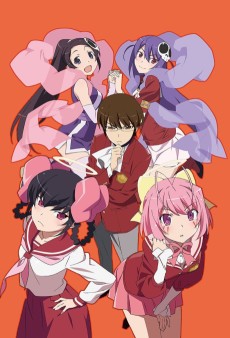
The World God Only Knows: Goddesses
Keima and Elsie confronted with a new task: to find the six Goddesses known as the Jupiter Sisters.
Each Sister lays dormant within the heart of a girl they previously helped, making each encounter much more difficult, while also running against time for the demon faction called "Vintage" intends to capture the Goddesses and take over the world.
📺Anime Details
📝Editorial Analysis
The fluorescent hum of a Tokyo convenience store at 2 a.m., Keima’s fingers flying across his phone screen—not for a dating sim, but because it’s a dating sim: the pixelated girl on display isn’t fiction anymore. She’s sitting three aisles over, headphones in, unknowingly housing a dormant Goddess—her heartbeat syncing with the rhythm of Elsie’s trembling hand on his shoulder. Time isn’t just ticking; it’s pulsing, like a boss fight timer overlaid on ordinary life. That’s the core sensation: urgency wrapped in mundanity, where love isn’t a slow burn—it’s a real-time rescue mission disguised as flirtation.

What makes The World God Only Knows: Goddesses vibrate so distinctly isn’t its harem or gods or demons—it’s how deeply it trusts emotional logic over plot logic. Every confession, every hesitation, every tear shed in a school rooftop or empty classroom isn’t about “winning” a girl—it’s about retrieving something sacred buried under layers of trauma, silence, or self-erasure. The Jupiter Sisters don’t awaken because Keima charms them into compliance; they stir when he sees the wound beneath the posture—the girl who smiles too wide to hide grief, the one who studies obsessively to outrun loneliness. It makes you feel tenderly responsible, like you’re holding fragile circuitry that powers both a human heart and the fate of the world. You don’t laugh at the absurdity—you laugh with the ache of recognition, because the stakes are cosmic, but the tools are achingly small: a shared umbrella, a borrowed textbook, the exact right line from a 15-year-old visual novel.
That same emotional architecture lives in Jade Empire™: Special Edition, where myth isn’t backdrop—it’s muscle memory. You don’t just choose “open palm” or “closed fist”; you embody philosophies through gesture, dialogue, and consequence—just as Keima doesn’t recite lines, he performs empathy until it reshapes reality. The player review mentions needing Reddit instructions to launch the game—that friction mirrors Keima’s own struggle: mastery requires navigating clunky, inherited systems (dating sims, demon contracts, ancient goddess lore) to reach something luminous underneath. Both demand patience with flawed interfaces to access profound resonance.
Then there’s Persona 5 Royal, where Tokyo breathes like a character—not as setting, but as emotional weather. Its brilliance isn’t just in stylish combat or soundtrack (though yes, stunning), but in how daily life is the dungeon: building bonds means showing up consistently, noticing shifts in tone, remembering what someone said last Tuesday about their mother’s illness. Like Keima tracking each Jupiter Sister’s behavioral tells across timelines, the Phantom Thieves don’t steal hearts—they reconstruct them by honoring context, history, and quiet vulnerability. The review praises the “seamless transition between daily life…”—exactly what Goddesses does when a lunchtime conversation about bento boxes becomes the key to unlocking millennia-old divine power.
Even Dragon Age: Origins, with its lower score but raw narrative weight, shares this DNA. Its pause-attack mechanic isn’t just tactical—it’s contemplative. You freeze time to weigh consequences, to protect your party not just in battle, but in choice. That same deliberateness lives in Keima’s pauses before speaking—not calculation, but careful calibration: how much truth can this girl hold right now? The review calls it “help a lot to strategist your tactic”—and yes, love here is strategy, but strategy rooted in reverence, not control.
This pairing sings loudest for the person who keeps a notebook full of half-remembered conversations—not because they’re collecting data, but because they believe every offhand remark holds a door. For the player who replays a romance route not to unlock endings, but to hear that one line again—the one where the heroine finally stops apologizing for existing. For the viewer who watches Keima kneel in rain outside a girl’s apartment not for fanservice, but because that’s where devotion lives: in the damp, unglamorous, utterly necessary act of waiting—patient, present, trembling—for someone to remember their own light.
🎮5 Games That Match the Vibe



Match Dimensions Explained
❓Frequently Asked Questions
Why is Jade Empire recommended for fans of The World God Only Knows: Goddesses?
Because both lean hard into mythic romance and shoujo-tinged character arcs—like Keima’s slow-burn emotional unraveling with goddesses such as Kanon or Elsie, Jade Empire lets you build deep bonds with characters like Dawn Star or Silk Fox through dialogue choices that shape their personal myths and romantic outcomes. Its 'open palm vs. closed fist' moral duality even mirrors how Keima shifts between cynical gamer and empathetic savior across story arcs.
Is there a visual novel adaptation of The World God Only Knows: Goddesses?
No official visual novel adaptation exists—but Persona 5 Royal delivers that same addictive blend of school-life simulation, timed relationship-building (like maxing Ann’s Confidant before the Velvet Room deadline), and supernatural romance that made Goddesses click. You’ll feel that same rush when your protagonist finally unlocks a heroine’s true heart scene after juggling classes, part-time jobs, and dungeon runs—just like Keima balancing homework and divine matchmaking.
How does Persona 5 Royal compare to Dragon Age: Origins for someone who loves the goddess-hunting dynamic in The World God Only Knows?
Persona 5 Royal nails the 'structured emotional conquest' vibe—tracking Confidants on a calendar, unlocking new dialogue paths with each hangout, and watching relationships bloom through tangible, time-gated progress—very much like Keima’s checklist-driven goddess rescues. Dragon Age: Origins offers deeper tactical combat (that pause-and-command system reviewers loved) but leans more into epic fantasy stakes than intimate, slice-of-life romantic escalation.
What’s the best game like The World God Only Knows: Goddesses if I want that warm, nostalgic high-school romance + light mythology vibe?
Jade Empire™: Special Edition is your sweet spot—it swaps anime tropes for wuxia-inspired folklore, but keeps that tender, earnest tone: think bonding with Dawn Star over shared tea ceremonies or choosing whether to forgive Silk Fox’s past betrayal—exactly the kind of emotionally grounded, culturally textured romance that made Goddesses’ quieter moments (like Keima helping Kanon rediscover her voice) so memorable.