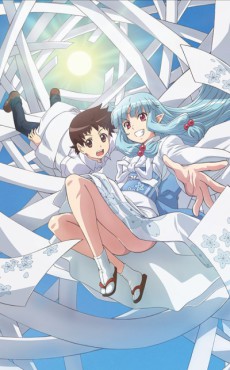
Tsugumomo
One day Kagami Kazuya, an ordinary boy, encounters Kiriha, a beautiful girl in a kimono. It turns out Kiriha is a tsukumogami, a spirit, whose true identity is the precious obi Kazuya carries around as a memory of his late mother. All kinds of bizarre things unfold in this supernatural action comedy!
(Source: Funimation)
📺Anime Details
📝Editorial Analysis
The silk of Kiriha’s obi brushes Kagami Kazuya’s wrist—not as cloth, but as warmth, as memory, as something that hums just beneath the skin. He doesn’t flinch. He holds still, breath caught not in fear, but in the quiet, aching recognition of his mother’s presence folded into every knot, every fold, every whisper of spirit made manifest through something he’s carried—literally—since childhood. That moment isn’t spectacle. It’s intimacy disguised as supernatural accident: a boy touching legacy, and it touching back.

What makes Tsugumomo vibrate at this particular frequency isn’t its ecchi gags or harem scaffolding—it’s how deeply it treats objects as vessels of grief and continuity. The obi isn’t a weapon first; it’s a relic worn like a second heartbeat. The tsukumogami aren’t monsters or conquests—they’re echoes given form, bound to things loved, used, mourned. There’s no grand cosmic war here, just a boy navigating puberty while literally holding his mother’s soul in his hands—and learning that love doesn’t vanish when bodies do, it transmutes. That creates a feeling both tender and unsettling: weight, reverence, disorientation. You don’t watch it for power fantasies—you feel the quiet panic of realizing your most ordinary possession might sigh your name in the dark.
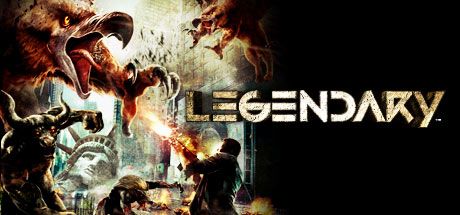
That same emotional architecture pulses through Legendary, where ancient mythic beings aren’t abstract lore but trapped, breathing things—sealed not out of malice, but necessity, waiting in suspended dread inside Pandora’s Box. Like Kiriha bound to Kazuya’s obi, these creatures aren’t summoned for battle—they’re released, unmoored from time, their very existence a consequence of human carelessness and devotion alike. The game’s description nails it: “All creatures of ancient myth, legend and lore are real—they’ve just been sealed away for thousands of years…” That sealing mirrors the obi’s quiet containment—both are acts of preservation laced with danger, reverence tangled with risk. And the player review? “The animations in this game are incredible… it definitely has some ‘jank’…” That jank—the slight uncanny stutter, the physicality of movement straining against old constraints—is exactly how Tsugumomo renders its spirits: not sleek avatars, but entities whose forms flicker between grace and instability, whose power feels earned through friction, not flash.
Then there’s the body horror & occult dimension—listed as one of Legendary’s core dims—that resonates with Tsugumomo’s quieter, more visceral unease. Not gore, but transformation as violation and revelation: age regression, shifting forms, the discomfort of a girl’s body flickering between human and artifact-bound spirit. Kiriha isn’t just magical—she’s anchored, her identity stitched to fabric, her autonomy negotiated across generations of memory. That’s occult intimacy: belief made flesh, history made present, and presence made fragile. When Legendary leans into body horror, it’s not about shock—it’s about the terror and awe of matter remembering what it once was, just as Kiriha’s kimono remembers the hands that tied it, the woman who wore it, the boy who clings to it now.
Who would love this pairing? Not just fans of “supernatural harem” or “mythology games.” It’s the person who keeps their grandmother’s teacup on the shelf not because it’s pretty, but because holding it makes time thin. It’s the player who pauses mid-fight in Legendary not to optimize damage, but to watch a minotaur’s knuckles crack as it flexes after millennia of silence—feeling the weight of that stretch. It’s the viewer who watches Kagami stare at his obi not for fan service, but for the tremor in his fingers, the way his throat works when he says, “She’s warm,” and understands: that warmth is grief wearing a smile, and reverence wearing a skirt, and love wearing silk. They don’t want escape. They want resonance—the kind that hums in your bones when an object remembers you better than you remember yourself.
🎮3 Games That Match the Vibe
Match Dimensions Explained
❓Frequently Asked Questions
Why is Legendary often compared to Tsugumomo despite having no romance or school setting?
Because both lean hard into Japanese folklore with visceral, emotionally charged spirit battles — like Tsugumomo’s Kiriha vs. Shikigami fights, Legendary drops you into brutal, close-quarters clashes against yōkai like Nue and Kappa, complete with ritualistic summoning animations and body-horror transformations that echo Tsugumomo’s grotesque yet elegant supernatural aesthetics. Reviewers even note how Legendary’s ‘jank’ feels intentional, like the imperfect, tactile energy of Tsugumomo’s early anime fight choreography.
Is there a Tsugumomo video game adaptation?
No — there’s never been an official Tsugumomo game. That’s why fans turn to matches like Legendary: it’s the closest thing we’ve got in terms of tone and mythic weight, swapping Tsugumomo’s romantic tension for high-stakes occult combat rooted in the same Shinto-Buddhist-legendary framework. Even the PS3/X360-era ‘jank’ gives it that same slightly raw, analog charm as the anime’s early seasons.
Legendary vs. Sekiro: Shadows Die Twice — which one captures Tsugumomo’s vibe better?
Legendary wins on folklore authenticity and visual spectacle — Sekiro leans samurai minimalism and precision, while Legendary throws you into chaotic, animation-rich battles against creatures straight out of the Konjaku Monogatarishū (like the Nue’s multi-limbed lunge), mirroring Tsugumomo’s blend of beauty and body horror. Plus, Legendary’s Pandora’s Box mechanic — unsealing ancient beings — feels like a direct parallel to Tsugumomo’s ‘awakening’ of sealed shikigami.
What’s the best game like Tsugumomo if I want that eerie, sacred-but-sensual shrine-and-spirit atmosphere?
Legendary nails it — especially in its ‘Kami Sanctum’ level, where you fight a corrupted Inari fox spirit amid torii gates and blood-bloomed sakura trees, all rendered with those jaw-dropping PS3-era animations reviewers call ‘better than most modern games’. It’s not about romance, but the *weight* of the divine, the danger of breaking taboos, and the way spirits twist flesh and faith — exactly the vibe Tsugumomo fans chase.