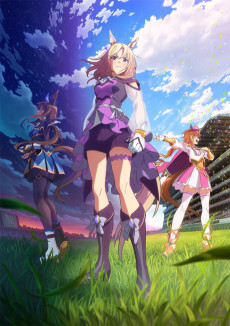
Umamusume: Pretty Derby - Road to the Top
📺Anime Details
📝Editorial Analysis
The wind whips dust off the track as she stumbles—just once—mid-stride, knees buckling not from fatigue but from the weight of a promise whispered to her twin at dawn. Not a fall, not a crash, just that single, silent hitch in her breath before she pushes harder, hair flying, ears twitching, eyes locked on the finish line where sunlight bleaches the colors into something holy and aching. That’s Umamusume: Pretty Derby - Road to the Top: not victory, not defeat—but the raw, trembling in-between, where every stride is a vow made flesh.
This isn’t sports-as-spectacle. It’s sports-as-ritual. The air hums with the scent of wet grass after morning rain, the squeak of rubber on asphalt, the low murmur of girls stretching in unison like saplings leaning toward the same sun. There’s no grand villain, no last-minute sabotage—just the quiet, grinding pressure of time, expectation, and love so fierce it borders on self-erasure. You feel the weight of a shared uniform, the way a glance between twins holds decades of unspoken history, the way a single lap can collapse years of doubt or hope into one breathless, luminous second. It makes you think about legacy—not as inheritance, but as echo. How we carry each other, even when we run alone. How ambition and tenderness aren’t opposites—they’re the same muscle, flexing in different directions. It’s devotion, fragility, kinship, longing—all wrapped in sweat, sunlight, and the soft, insistent flick of a kemonomimi ear.
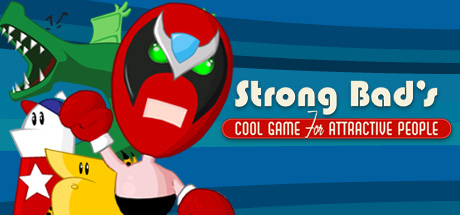
That emotional DNA pulses strongest in Strong Bad's Cool Game for Attractive People: Season 1, which shares its Emotional Narrative, Competitive Spirit, and Music & Idol dimensions. Yes—on paper, it’s absurd comedy, five episodes of wrestling masks and fake band auditions. But read that player review again: “With the recent remake of Poker Night, I hope Skunkape considers bringing this game back next…” — that wistful, almost tender nostalgia? That’s the same ache Road to the Top mines when a character hums an old training song under her breath, or when the camera lingers on a worn pair of running shoes beside a shrine offering. Both works treat performance—not just as spectacle, but as sacred, vulnerable offering. The idol stage and the racetrack are both altars. And the competitive spirit? It’s never about crushing others—it’s about measuring yourself against the ghost of who you swore you’d become.
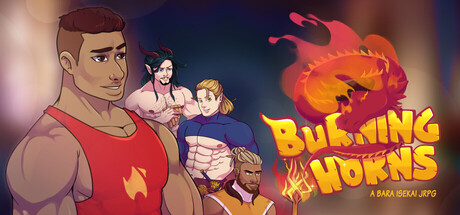
Then there’s Burning Horns: A Bara Isekai JRPG, rated 79 for its JRPG Narrative and Emotional Narrative. Its description doesn’t name horses or idols—but JRPG Narrative implies structure built on growth arcs, sacrifice, and bonds forged in trial. Like Road to the Top, it likely trusts silence as much as dialogue, lets emotion live in posture and pacing, not exposition. The tragedy tag in the anime isn’t melodrama—it’s the quiet understanding that some dreams require letting go of others, and Burning Horns’ emotional core likely resonates because it, too, treats consequence as texture, not plot twist.
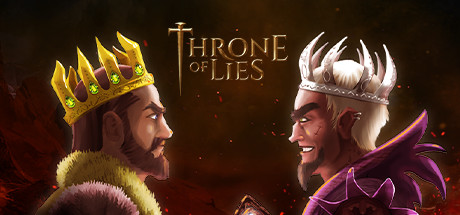
Even Throne of Lies®: Medieval Politics, with its 74 score across Competitive Spirit, JRPG Narrative, and Emotional Narrative, finds kinship—not in castles or crowns, but in how power circulates through relationships. In Road to the Top, influence isn’t wielded with swords or decrees; it’s passed hand-to-hand during relay baton exchanges, whispered in locker-room pep talks, absorbed through shared silence on a bus ride home. The politics here are intimate, granular—the kind where loyalty is tested not by betrayal, but by choosing whose dream to hold while your own slips sideways.
This pairing sings loudest for the viewer who cries during warm-ups, who saves voice memos of friends saying “I believe in you,” who replays cutscenes not for lore but for the exact timbre of a laugh or the way light catches a tear before it falls. For the player who doesn’t skip dialogue trees, who names their save files after people they miss, who understands that the most devastating moment in any story isn’t the climax—it’s the quiet exhale right after the race ends, when the crowd fades and all that’s left is two girls walking side by side, breathing the same air, carrying everything.
🎮4 Games That Match the Vibe
Match Dimensions Explained
❓Frequently Asked Questions
Why does Umamusume: Pretty Derby - Road to the Top feel so different from Throne of Lies® despite both having Competitive Spirit and Emotional Narrative?
Because Throne of Lies® leans hard into medieval backstabbing and social deduction—think lying to your friends during a royal council meeting—while Umamusume is all about sprinting down Nakayama’s final stretch with Special Week cheering you on. Umamusume’s Competitive Spirit comes from timed training minigames and race-day tension, whereas Throne of Lies® delivers it through vote-based betrayals and shifting alliances.
Is there an anime or mobile adaptation of Burning Horns: A Bara Isekai JRPG?
No—Burning Horns is purely a standalone JRPG with no anime, manga, or mobile spin-offs. It’s got that classic isekai setup (a modern guy reborn as a horned warrior in a fantasy world), but unlike Umamusume’s massive multimedia empire, Burning Horns stays grounded in its single, heartfelt narrative arc—no racing scenes, no idol concerts, just emotional character growth across five distinct story paths.
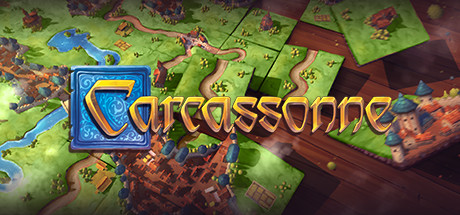
How accurate is Carcassonne - Tiles & Tactics compared to Umamusume’s racing mechanics?
Not at all—it’s a tile-laying strategy game where you build roads and cities, zero racing or stamina bars. While Umamusume has you juggling Support Cards like Tokai Teio’s ‘Rivalry’ skill mid-race, Carcassonne’s ‘Competitive Spirit’ dimension shows up in head-to-head scoring tension, like blocking someone’s cathedral with a single tile. Think board-game chess, not horse-track adrenaline.
What’s the best game like Umamusume if I just want that warm, emotional idol + racing vibe without the grind?
Strong Bad's Cool Game for Attractive People: Season 1—it nails the Music & Idol + Emotional Narrative combo with absurd charm. You won’t train stats or race horses, but you *will* belt out ridiculous karaoke with Strong Sad, film low-budget music videos, and get surprisingly invested in his weirdly heartfelt friendships—all in 5 tight, joke-packed episodes. It’s the joyful, character-driven antidote to Umamusume’s intensity.