
Villainess Level 99: I May Be the Hidden Boss but I'm Not the Demon Lord
This college kid wants nothing more than a quiet life. So when she’s reborn as Yumiella, the hidden villainess of an Otome RPG, she’s not exactly thrilled. Still yearning for peace, she abandons her evil duties to live a more discreet life. Until her gamer side kicks in and she accidentally reaches level 99! Now, everyone suspects that she’s the infamous Demon Lord. What future awaits her?
(Source: Crunchyroll)
📺Anime Details
📝Editorial Analysis
The sigh. Not the dramatic, world-weary exhale of a fallen monarch—but the soft, almost inaudible huff Yumiella lets out as she leans back in her dorm chair, textbook closed, tea cooling untouched on the desk. Her fingers hover over a glowing mana crystal—not to cast a curse, not to sabotage a rival’s love confession, but to calibrate its ambient light output. She’s just trying to read in peace. That sigh is the show’s heartbeat: the quiet, stubborn insistence on stillness in a world wired for spectacle.
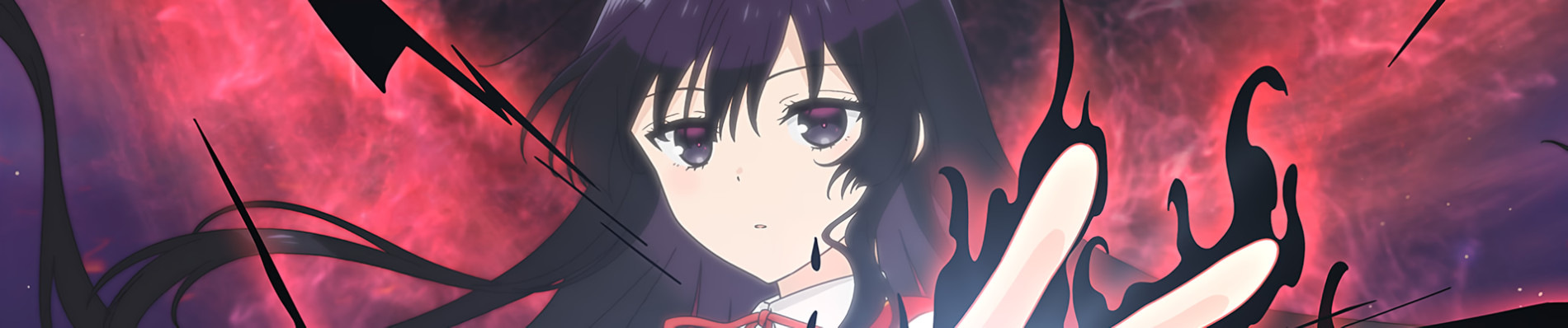
What makes Villainess Level 99 vibrate with such rare warmth isn’t its isekai setup or royal intrigue—it’s the weightlessness it cultivates. This isn’t about escaping responsibility; it’s about reclaiming agency through deliberate non-performance. Yumiella doesn’t reject villainy because it’s evil—she rejects the script, the expectation that power must announce itself, that level 99 must mean rampaging chaos. The feeling is recognition: that exhaustion of being perpetually misread, of having your competence mistaken for threat, your silence for scheming, your competence for conspiracy. It makes you think about how rarely fiction rewards quiet mastery—how often “strong female lead” defaults to loud, reactive, emotionally legible. Here, strength is measured in how long she can go without casting a single flashy spell—and how much relief floods her face when she succeeds.
That emotional DNA hums in surprising harmony with games whose player reviews all whisper the same exhausted truth: they run, but barely. Take Sacred Gold: its description promises “blood-thirsty orcs & lumbering ogres” and destruction—but the player review confesses it’s “full of jank, bugs and is not very stable on modern systems…” That dissonance—between grandiose fantasy promise and the fragile, glitchy reality—is pure Yumiella energy. She’s supposed to be the Demon Lord; the world expects apocalyptic cutscenes and throne-room monologues. Instead, she’s debugging her own existence like a corrupted save file—trying to get the game (her life) to run smoothly without triggering the boss fight everyone assumes is inevitable.
Then there’s Dark Messiah of Might & Magic, described as “ferocious combat in a dark and immersive world”—yet praised by players for its melee combat holding up “pretty well today,” even if it “needs a patch.” That tension between raw, tactile physicality and persistent technical friction mirrors Yumiella’s magic: devastatingly precise, deeply personal, yet constantly undermined by the system’s assumptions. She doesn’t need cinematic explosions to prove her power—just one perfectly timed shield-shatter against a charging knight. Like Dark Messiah’s satisfying crunch of bone and steel, her strength lives in the feel of control, not the spectacle. The player who edits config files to cap FPS manually? That’s Yumiella adjusting mana resonance frequencies at 3 a.m. so her room lights don’t flicker during study hour.
And Alice: Madness Returns, with its “grim reality of Victorian London” bleeding into “beautiful yet ghastly Wonderland,” lands with eerie precision. Its player review admits: “I will not refund this game because it ‘kinda’ works for me (after editing config files manually).” That resigned, resourceful perseverance—making it work, anyway—is Yumiella’s entire ethos. She doesn’t wait for the world to rewrite her role. She tweaks the parameters: enrolls in botany instead of dark arts, joins the library committee, practices invisibility spells not to spy—but to vanish from mandatory tea parties. Her Wonderland isn’t surreal horror—it’s the boarding school hallway where every glance feels like a loading screen waiting to crash.
This pairing sings for the player who’s spent three hours hunting down a Steam forum thread to fix texture tearing, then emerged blinking into sunlight, triumphant and slightly shell-shocked. For the viewer who watches Yumiella sip tea while a prince kneels outside her door—not because she commanded it, but because the game’s AI pathfinding glitched toward her quietest balcony. For anyone who’s ever whispered, “I just want to exist at level 99 without becoming the final boss”—and found, against all odds, that the most radical act in a scripted world is choosing stillness, again and again.
🎮2 Games That Match the Vibe
Match Dimensions Explained
❓Frequently Asked Questions
Why is Sacred Gold listed as similar to Villainess Level 99 when it has zero romance or villainess tropes?
Great question—it’s not about the tropes, but the *vibe*: both lean hard into Dark Fantasy + Action Spectacle, with over-the-top boss fights (like Sacred Gold’s final confrontation with the Undead Lord in the Obsidian Citadel) and a morally ambiguous power fantasy. Villainess Level 99’s ‘hidden boss’ energy mirrors Sacred Gold’s lone antihero carving through hordes of orcs and ogres—no dialogue choices, just ruthless spectacle.
Is there an anime or manga adaptation of Villainess Level 99 that explains the lore better?
No official anime or manga exists yet—just the light novel and web novel. That said, fans often compare its tone to Alice: Madness Returns, where Victorian London’s grim reality and Wonderland’s twisted beauty echo the same layered duality: surface-level fairy tale masking deep psychological stakes (like Alice’s trauma mirroring the protagonist’s ‘I may be the hidden boss but I’m not the demon lord’ self-awareness).
How does Villainess Level 99 compare to Two Worlds II HD in terms of player agency and world-building?
Two Worlds II HD gives you open-world freedom (flying fortress, spell-crafting via gesture-based magic), but its story is rigidly linear and lore-heavy—think Kyra’s abrupt disappearance driving the plot. Villainess Level 99 flips that: no open world, but *massive* narrative agency through branching villainess decisions (e.g., choosing to sabotage the hero’s sword *before* the final battle vs. letting him win to trigger a secret epilogue)—much like how Alice: Madness Returns lets you explore Wonderland’s symbolic zones to unlock deeper truths about Alice’s psyche.
What’s the best game like Villainess Level 99 if I want that ‘dark but stylish, emotionally sharp, and slightly unhinged’ vibe?
Go straight to Alice: Madness Returns—its blend of gothic Victorian horror, surreal platforming, and razor-sharp psychological storytelling nails that exact tone. The way Alice’s combat shifts between balletic swordplay and brutal, hallucinatory finishers (like the Jabberwocky boss fight in the Dollhouse) mirrors Villainess Level 99’s balance of elegance and menace—plus, both use visual distortion and unreliable narration to keep you questioning who’s really in control.