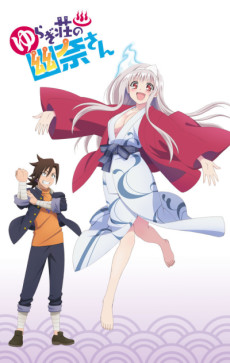
Yuragi-sou no Yuuna-san OVA
📺Anime Details
📝Editorial Analysis
The steam rises off the onsen water just as Yuuna’s ghostly form flickers—translucent, warm, unafraid—as she leans against the wooden edge, her nekomimi twitching at the sound of a distant cicada. Her bare shoulder catches the late afternoon light, not as spectacle, but as quiet fact: she is here, she is present, and the boundary between living and dead feels less like a wall and more like a sliding shoji screen—thin, paper-thin, sometimes left ajar by accident, sometimes held open on purpose.
That’s the feeling Yuragi-sou no Yuuna-san OVA lives inside: gentle permeability. Not dread, not awe—but the soft, persistent hum of coexistence. Ghosts don’t haunt the ryokan; they settle in. Youkai nap on tatami with snack wrappers beside them. Nudity isn’t coded as tension or taboo—it’s laundry day, bath time, accidental overlap in the corridor—ordinary as humidity in summer air. There’s no grand ritual to contain the supernatural; instead, there’s shared miso soup, mismatched socks, and the low, grounding thrum of daily rhythm holding everything together. It makes you think about how care wears no ceremonial robes—it shows up in refilling the hot water, remembering someone’s favorite mochi flavor, letting a spirit borrow your umbrella when it rains through her.
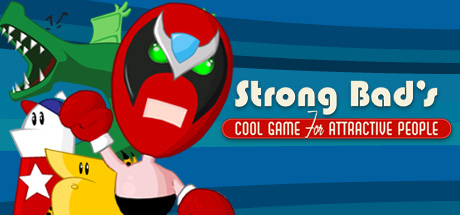
Which is why Strong Bad's Cool Game for Attractive People: Season 1 lands with such uncanny resonance. Its description promises “Strong Bad's wacky comedic adventures over 5 full episodes!”—and that’s exactly it: episodic, tactile, deeply domestic absurdity. Like Yuuna adjusting her ribbon while floating mid-air during breakfast, Strong Bad’s world treats surrealism as furniture—you sit on it, spill coffee on it, argue with it about whether a taco counts as a sandwich. The player review nails the emotional kinship: “With the recent remake of Poker Night, I hope Skunkape considers bringing this game back next…” That wistful, almost nostalgic plea isn’t for nostalgia’s sake—it’s for the return of a space where the occult isn’t ominous (no eldritch glyphs, no cursed relics) but conversational, where body horror isn’t visceral terror but a cartoonish, rubber-hose stretch of identity—like a ghost learning to hold chopsticks, or Strong Bad turning into a sentient nacho chip. Both works treat transformation—not as loss, but as adjustment.
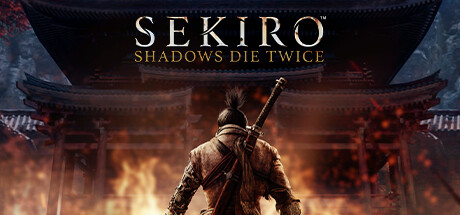
Then there’s Sekiro™: Shadows Die Twice - GOTY Edition, which at first glance seems galaxies away—until you read its matched dimensions: Music & Idol, Body Horror & Occult. Not combat. Not stealth. Those two precise, haunting pairings. In Yuragi-sou, the idol isn’t a stage persona—it’s the quiet reverence for small, sacred routines: the chime of the wind bell, the way Yuuna hums while folding towels, the unspoken vow to keep the ryokan’s warmth alive. And body horror? Not gore—but the tender, unsettling beauty of a form that shouldn’t hold heat doing so anyway; of a girl whose feet don’t quite touch the floor, yet leaves damp footprints on the bathhouse tiles. Sekiro’s prosthetic arm isn’t just a weapon—it’s a limb that remembers being flesh, that whirs and clicks with the intimacy of something worn like a favorite sweater. Its occult isn’t about summoning demons, but about the quiet horror—and grace—of persisting: a shinobi who dies and returns, again and again, not unscathed, but changed, softer at the edges, carrying memory like moss on stone.
These aren’t matches of plot or palette—they’re alignments of emotional gravity. Both the anime and these games orbit the same quiet truth: that the most profound hauntings aren’t of places, but of presence—the stubborn, luminous insistence of being here, even when physics, logic, or mortality says otherwise.
You’d love this pairing if you’ve ever cried at a scene where someone pours tea for a ghost—not because it’s tragic, but because the kettle whistle sounds exactly right, and the steam curls the same way it does for everyone else. If you replay a game not for mastery, but to hear that one ambient track—the one that smells like rain on old tatami. If your idea of comfort isn’t safety, but soft continuity: the kind that lets a nekomimi ghost braid your hair while humming off-key, and lets a scarred shinobi kneel in prayer before a shrine that hasn’t been visited in centuries—not to beg for answers, but to whisper, “I’m still here.”
🎮2 Games That Match the Vibe
Match Dimensions Explained
❓Frequently Asked Questions
Why does Sekiro: Shadows Die Twice show up in 'Games Like Yuragi-sou no Yuuna-san OVA' matches despite being so different?
It's not about tone—it's about shared dimensional overlaps: both lean into Body Horror & Occult (think Yuuna's spectral transformations and Sekiro's grotesque Ashina corruption, like the Divine Dragon's rotting flesh or Genichiro's mutated arm), plus Music & Idol (Yuuna's shrine rituals and Sekiro's flute-based Spirit Emblems and haunting Gekko theme). Reviewers even noted how Sekiro's 'occult dread' mirrors the OVA's quiet, uncanny spiritual unease—not action vs. romance, but *how* the supernatural feels physically invasive.
Is there a visual novel adaptation of Yuragi-sou no Yuuna-san that captures the OVA's vibe?
No official visual novel exists—but Strong Bad's Cool Game for Attractive People nails that same self-aware, fourth-wall-bending charm you love from the OVA's lighter moments (like Yuuna teasing Kaito in the bathhouse hallway). Its episodic structure, character-driven gags, and playful use of music/idol motifs (Strong Bad's 'Trogdor' anthem, the 'Cool Game' title track) tap into the same Music & Idol + Body Horror & Occult blend—just with cartoonish absurdity instead of tsundere ghosts.
Sekiro vs. Strong Bad's Cool Game: which one better matches the Yuragi-sou OVA's emotional rhythm?
For emotional rhythm—warmth punctuated by eerie stillness—Strong Bad's Cool Game wins hands-down. Think Yuuna’s gentle smile right after a jump-scare cutaway: Strong Bad delivers that whiplash too (e.g., a heartfelt moment with Pom-Pom instantly undercut by a nonsense email reply). Sekiro leans heavier into oppressive Body Horror & Occult without the OVA’s tender, idyllic downtime—its score is 66 in the same dimensions, but its pacing is relentless, not languid.
What's the best game like Yuragi-sou no Yuuna-san OVA if I want that cozy-but-uncanny summer vibe?
Go straight to Strong Bad's Cool Game for Attractive People—it’s got that exact 'cozy-but-uncanny' texture: sun-drenched, low-stakes comedy (like Episode 1’s beach day chaos) layered with subtle surrealism (the 'Trogdor' fire demon lore feels as spiritually off-kilter as Yuuna’s shrine-bound existence). Both lean hard into Music & Idol (Strong Bad’s karaoke minigames, Yuuna’s festival dances) and Body Horror & Occult (glitchy VHS effects, cursed cassette tapes) without ever losing their warm, lived-in feel.