
Yurikuma Arashi
At some point, somewhere in outer space, the small planet Kumalia exploded. As the particles of what used to be Kumalia showered upon Earth as a meteor shower, for some reason all the bears on earth stood up to attack humanity! In due time, a great "Wall of Extinction" was built between humans and bears, and they could no longer show aggression towards one another... One morning, Kureha Tsubasa and Sumika Izumino were alone watching lily flowers blooming. Just then, a Bear Warning pierces loudly through the air! Mystery brings on more mysteries, a series of one raging blow after another!
(Source: Crunchyroll)
📺Anime Details
📝Editorial Analysis
The lily petals fall slowly, impossibly slow—each one a tiny white weight suspended midair as Kureha and Sumika stand beneath them, breath held, fingers almost touching. Then the Bear Warning shrieks—not a siren, but a distorted, guttural voice tearing through the silence like glass dragged across bone. The sky doesn’t darken; it flickers, as if reality itself is skipping frames. That moment isn’t fear first—it’s recognition: something ancient and tender has just been declared illegal.
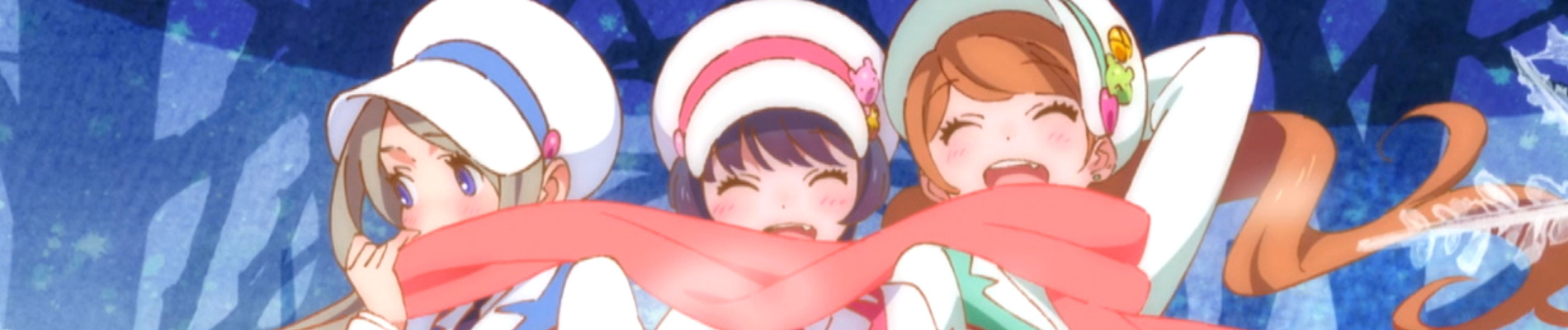
That’s the atmosphere of Yurikuma Arashi: not dread, but sacred disorientation. It feels like remembering a dream you weren’t supposed to have—where love is both a lily and a wound, where bears speak in riddles wrapped in courtroom logic, and where every kiss carries the weight of exile. It doesn’t ask you to suspend disbelief; it asks you to relinquish chronology, to let time fold like origami so that grief, desire, and testimony arrive all at once. This isn’t fantasy as escape—it’s fantasy as interrogation, where every fairy-tale flourish (the talking bears, the Wall of Extinction, the courtroom trials) is a scalpel slicing open how society polices intimacy, especially between girls. You don’t just watch it—you unravel inside it. Your pulse doesn’t race; it stutters, caught between awe and ache.
Which is why Prince of Persia lands with such eerie resonance. Its description calls it “an all-new epic journey” built by Ubisoft Montreal—but what lingers isn’t the acrobatics or the sands. It’s the romance & shoujo dimension tagged alongside adult & dark seinen. A player review notes it’s the “3rd reboot… completely separate from the sands.” That deliberate rupture—erasing continuity to tell a new story about love, consequence, and bodily autonomy—mirrors Yurikuma Arashi’s own refusal to inherit narrative logic. Both treat romance not as subplot, but as physics: gravity shifts when two people choose each other against walls literal and ideological. The prince doesn’t just climb ruins—he climbs out of inherited fate, just as Kureha climbs out of Sumika’s absence, out of Ginko’s bear-form, out of the Wall’s verdict.
Then there’s Persona 5 Royal, tagged identically: romance & shoujo, adult & dark seinen. Its description promises “building relations” while exploring Tokyo—but the magic isn’t in the dates. It’s in how the game forces you to live in contradiction: attend school by day, steal hearts by night, confess feelings in quiet train stations while your confidant’s shadow self screams in the Metaverse. A player review praises the “seamless transition between daily life and surreal combat”—exactly the tonal whiplash Yurikuma Arashi weaponizes. When Lulu testifies in court while wearing a floral headdress made of thorns, or when Kureha’s tears crystallize into lilies mid-trial, it’s not whimsy. It’s emotional synesthesia, where feeling becomes flora, law becomes fable, and love is both evidence and indictment. Persona 5 Royal does the same: your bond with Ann Takamaki deepens not during battle, but while sharing cheap melon soda on a rainy bench—then that same intimacy powers your ultimate attack. The heart isn’t metaphor. It’s mechanic.
And Disco Elysium - The Final Cut, despite its lower score, pulses with the same philosophical ferocity. Its description positions you as a detective with “a unique skill system” and “a whole city to carve your path across.” But the player review quotes a line that aches with Yurikuma Arashi’s core tension: “Capital has the ability to subsume all critiques into itself. Even those who would critique capital end up reinforcing it instead.” That’s the Wall of Extinction in human language—the way systems absorb resistance, repackage dissent as decoration, turn rebellion into ritual. In Yurikuma Arashi, the Bear Court doesn’t just judge bears; it performs justice so thoroughly that even the accused recite its logic like scripture. Both works force you to navigate institutions that demand participation in your own erasure—and make you feel, viscerally, how exhausting, how intimate, that labor is.
This pairing isn’t for fans of “queer stories” as category—it’s for the person who reads Plato’s Symposium and cries at the part where Aristophanes says love is the ache of severed wholeness. For the one who replays a JRPG romance route not for the kiss, but for the exact frame where the protagonist’s voice cracks mid-confession. For anyone who’s ever loved someone so fiercely they feared the world would dissolve them—and found, instead, that the dissolving was the first true shape of devotion.
🎮6 Games That Match the Vibe

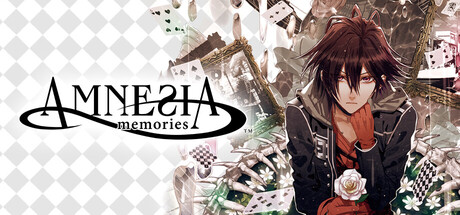


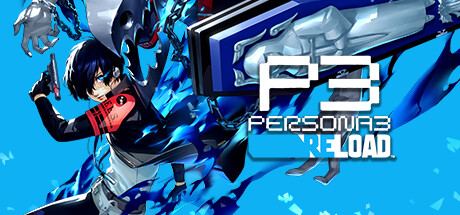
Match Dimensions Explained
❓Frequently Asked Questions
Why does Prince of Persia keep coming up in Yurikuma Arashi game recommendations?
Because both lean hard into surreal, dream-logic romance wrapped in adult-dark symbolism—like the Prince’s time-bending trials mirroring Yurikuma’s bear-girl transformations and taboo love rituals. The franchise’s ‘Romance & Shoujo’ + ‘Adult & Dark Seinen’ dimensions (score 82) align tightly with Yurikuma’s tonal duality, especially in how intimacy and danger blur during action set-pieces—think the Prince’s gravity-defying acrobatics echoing Kureha’s emotional leaps in the Wall of Severance.
Is there a Yurikuma Arashi visual novel or RPG adaptation?
No official game adaptation exists—but fans often reach for Persona 5 Royal (70 score) because its ‘Romance & Shoujo’ + ‘Adult & Dark Seinen’ framework mirrors Yurikuma’s layered social coding: like how Ann Takamaki’s arc explores shame, desire, and public performance just like Ginko’s ‘bear’ identity, and the Phantom Thieves’ heists echo Yurikuma’s theatrical, rule-breaking confrontations with societal walls.
How is Dragon Age: Origins different from Persona 5 Royal for Yurikuma Arashi vibes?
Dragon Age: Origins leans into grim, morally gray world-building (‘Adult & Dark Seinen’) with heavy emphasis on forbidden romance—like Morrigan’s ritual seduction or Alistair’s conflicted nobility—whereas Persona 5 Royal layers stylized, almost musical-theater romance (Ann, Makoto) over psychological rebellion. Both hit ‘Romance & Shoujo’, but DA:O feels like Yurikuma’s raw, mythic underbelly; P5R feels like its glittering, defiant surface.
What’s the best Yurikuma Arashi-like game if I want melancholy, poetic loneliness with romantic tension?
Disco Elysium — The Final Cut (58 score) nails that vibe: its ‘Romance & Shoujo’ + ‘Adult & Dark Seinen’ blend lives in quiet, devastating moments—like the detective’s fragmented memories of lost love echoing Kureha’s grief for Sumika, or the way dialogue choices in Martina’s bar scene mirror Yurikuma’s delicate, loaded silences. It’s not flashy, but it *aches* with the same kind of lyrical sorrow.