
YuruYuri Season 3
The third season of Yuru Yuri continues following four girls who take over the former room of a tea ceremony club for their own amusement.
📺Anime Details
📝Editorial Analysis
The fluorescent hum of the old tea ceremony room—dust motes swirling in afternoon light, a half-unwrapped melon soda sweating on the windowsill, Kyoko’s socked foot dangling off the edge of a tatami mat as she stares blankly at a ceiling fan spinning just a little too fast. That’s it. Not a punchline yet, not even a setup—just four girls occupying space, breathing the same air, letting time soften at the edges. No crisis looms. No deadline presses. Just the quiet, almost imperceptible weight of being sixteen and temporarily unmoored from expectation.

What makes YuruYuri Season 3 singular isn’t its genre—it’s the permission it grants: permission to be gently adrift, permission to misplace your motivation and still count as whole, permission to love someone without needing to name it tightly or move it forward. It’s not warmth as comfort—it’s warmth as atmosphere, thick and humid like the air before rain, where laughter bubbles up not because something’s funny but because silence would be too loud. You don’t watch it to follow a plot—you sink into its rhythm, where a failed attempt to fold origami cranes becomes a meditation, and a shared bag of candy dissolves an entire episode’s emotional labor. It makes you think about how much of daily life is just holding space for each other, without agenda, without translation.
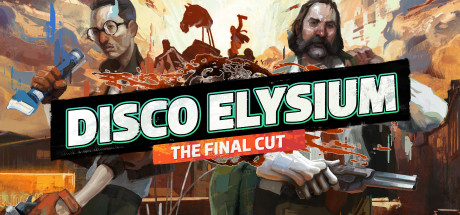
That feeling—the tender, slightly melancholic suspension of consequence—echoes sharply in Disco Elysium - The Final Cut. Its description calls it “a groundbreaking role playing game” where you’re “a detective with a unique skill system… and a whole city to carve your path across.” But what resonates isn’t the noir scaffolding—it’s the melancholic exploration, the way the game lets you wander through failure, self-sabotage, and fractured memory without demanding redemption. Like YuruYuri Season 3, it treats emotional drift not as pathology but as texture. A player review quotes: “Capital has the ability to subsume all critiques into itself. Even those who would critique capital end up reinforcing it instead.” That line lands with eerie kinship—not because YuruYuri engages capitalism, but because both works understand how systems (social, institutional, even linguistic) quietly absorb our resistance, leaving us softening instead of fighting. In YuruYuri, the girls inherit a former tea ceremony club room—not a legacy to uphold, but a hollow to fill with their own harmless noise. In Disco Elysium, you inherit a broken mind and a broken city—and the most radical choice is often to sit down, sip cheap coffee, and let the world blur at the edges.
There’s also a shared commitment to comedy as emotional camouflage. The slapstick in YuruYuri Season 3—Chinatsu tripping over her own shoelaces, Akari’s deadpan stare locking onto absurdity like a targeting reticle—is never just gag-driven. It’s the body’s way of releasing pressure when words fail. Likewise, Disco Elysium’s comedy & parody isn’t satire for satire’s sake; it’s how the game deflects despair without denying it. When your character hallucinates a communist revolutionary critiquing your fashion choices, it’s ridiculous—but it’s also the only language left that can hold contradiction without collapse. Both use humor not to resolve tension, but to hold it lightly, like balancing a teacup full to the brim.
Who loves this pairing? The person who cries during a cooking montage in K-On! not because it’s sad, but because it’s full. The player who spends three hours in Disco Elysium just watching rain fall on a cracked sidewalk, listening to their own thoughts argue in circles. The reader who underlines sentences in Moyashimon not for plot, but for the exact weight of a sigh between friends. They’re not chasing catharsis—they’re drawn to the sacred ordinariness of being seen, mid-fumble, mid-sip, mid-doubt. They recognize that tenderness isn’t always gentle—it can be sticky, awkward, slightly embarrassing—and that’s where the real connection lives: in the shared, unspoken understanding that sometimes, the bravest thing you can do is stay exactly where you are, eating melon soda with your best friends, while the fan spins just a little too fast.
🎮5 Games That Match the Vibe


Match Dimensions Explained
❓Frequently Asked Questions
Why is Disco Elysium listed as similar to YuruYuri Season 3 when it’s so dark and serious?
Great question — it’s all about the *tonal whiplash* and layered comedy! Like YuruYuri S3’s infamous 'mochi incident' where Ayano’s deadpan panic spirals into absurdity, Disco Elysium uses melancholic exploration and self-aware parody to undercut heavy themes — think your detective arguing with his own Skill Tree ('Logic' vs. 'Inland Empire') while trying to order coffee. The Romance & Shoujo dimension isn’t about romance per se, but about intimate, character-driven bonds and gentle, off-kilter affection — just like the way Akari and Kyoko bicker while sharing one pair of headphones in episode 7.
Is there a visual novel or game adaptation of YuruYuri Season 3 itself?
No — there’s never been an official game adaptation of YuruYuri Season 3 (or any season, for that matter). The closest thing is the fan-made doujin 'YuruYuri: Nanamori Chūshin Kōkō Seitokai' on Japanese Comiket circuits, but it’s not commercial or widely available. That’s why curated matches like Disco Elysium — which nails the same blend of Comedy & Parody + Melancholic Exploration — are so valuable: they deliver that warm, slightly unhinged, emotionally grounded vibe without needing canon continuity.
How does Disco Elysium compare to Doki Doki Literature Club! in terms of tone and humor?
DDLC leans hard into meta-horror and fourth-wall shattering, while Disco Elysium keeps its surrealism grounded in character voice and world-weary charm — much like YuruYuri S3’s balance of slice-of-life sweetness and sudden, quiet existentialism (e.g., Chinatsu staring out the classroom window during the cultural festival prep, murmuring 'Do mochi dreams have endings?'). Both use parody brilliantly, but Disco’s humor lives in dialogue trees and skill checks — like convincing a union rep you’re a 'professional disappointment' using your 'Authority' stat — whereas DDLC’s jokes often break the game itself.
What’s the best game like YuruYuri Season 3 if I just want that cozy, low-stakes, gently silly hangout vibe?
Disco Elysium — yes, really! Don’t let the grimy cityscape fool you: its 'Melancholic Exploration' dimension means long, meandering walks through rain-slicked alleys where your detective debates philosophy with a trash bag, then stops to pet a stray dog named 'Dogs'. That’s the same energy as YuruYuri S3’s 'tea party arc', where the whole club spends 20 minutes debating whether strawberry jam counts as 'fruit' — low stakes, high sincerity, and warmth baked right into the mechanics. It’s not about saving the world; it’s about showing up, being weird, and feeling seen.