A Whisker Away
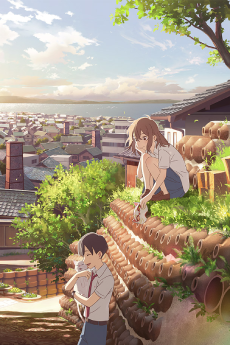
Miyo Sasaki is an energetic high school girl who comes from a broken family consisting of her unconfident father and an overly invested stepmother, whose attempts at connecting with Miyo come across as bothersome. Seeing Kento Hinode as a refuge from all her personal issues, she can't help herself from forcing her unorthodox demonstrations of love onto her crush.
While Miyo is unable to get Kento's attention as herself, she manages to succeed by interacting with him in the form of a white cat, affectionately nicknamed ""Tarou"" by Kento. But Miyo soon realizes that she can't help Kento with the various problems she overhears in her cat form and is now caught between two tough choices. Will she continue her relationship with him as a cat, or will she reveal her identity and risk what they have, in order to help him as her human self?
[Written by MAL Rewrite]
Note: The film was slated to open in theaters in Japan on June 5, but was postponed due to COVID-19 and received an exclusive streaming on Netflix beginning on June 18.
📺Anime Details
📝Editorial Analysis
The sticky heat of a Tokyo summer afternoon clings to Miyo’s skin as she crouches behind the school gate, heart hammering—not from exertion, but from the sheer, aching vulnerability of being seen. She’s just handed Kento Hinode a handmade bento, her fingers trembling, her smile too wide, her voice too bright. He accepts it politely, distracted, already turning away—and in that split second, the world narrows to the hollow behind her ribs. Not sadness, exactly. Not anger. Something quieter, heavier: the loneliness of performing love like a script you’ve memorized but don’t believe in.
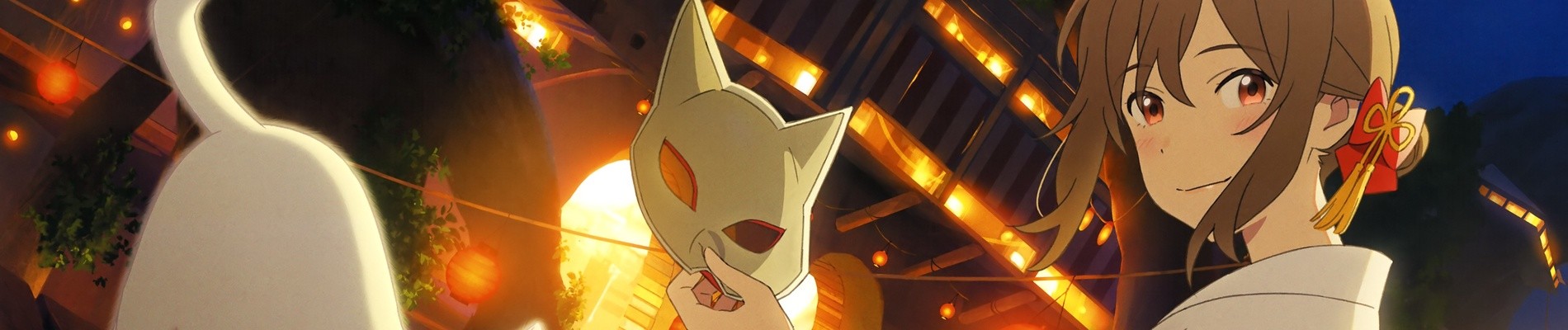
That’s the core vibration of A Whisker Away: not magic as spectacle, but magic as desperation. Its urban fantasy isn’t built on grand incantations or cosmic stakes—it’s woven from the frayed edges of family life, the quiet shame of needing too much, the raw, unvarnished truth that sometimes the only way to be felt is to stop being yourself entirely. The kemonomimi transformation isn’t whimsy; it’s a physical manifestation of emotional bypass—Miyo doesn’t become a cat to play, but to disappear into safety, to say what she can’t as a girl whose voice keeps getting swallowed by her stepmother’s well-meaning noise and her father’s gentle, defeated silence. The shapeshifting isn’t liberation—it’s surrender dressed up as escape. And that makes the atmosphere uniquely tender, fragile, and intimately claustrophobic. It doesn’t ask you to wonder what if magic were real? It asks: What if the thing you most need to change isn’t the world—but the shape of your own longing?
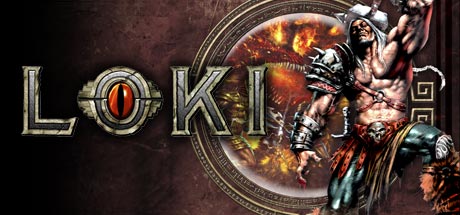
Which is why the top game matches feel so uncanny—not because they share genre, but because they echo that same emotional gravity beneath mythic surfaces. Loki, for instance, promises a “fantasy voyage through the great mythologies” with heroes drawn from global lore—but the player review cuts straight to the bone: “Ending is also anticlimactic since nothing happens.” That resonates deeply with A Whisker Away’s refusal to reward Miyo’s magical detour with narrative payoff. Her time as a cat doesn’t solve her family’s fractures or win Kento’s love through charm—it forces her to confront the hollowness of seeking validation through erasure. Like Loki’s unsatisfying resolution, the anime denies catharsis-as-reward, sitting instead with the uncomfortable truth that some transformations don’t fix—they reveal.
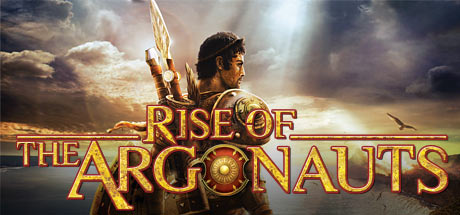
Then there’s Rise of the Argonauts, where Jason vows to restore his murdered fiancé—a quest rooted in grief so absolute it reshapes destiny itself. The player review praises its fidelity to “ancient history,” but what binds it to A Whisker Away is the scale of the wound. Jason doesn’t seek power—he seeks reconnection, however impossible. Miyo doesn’t seek romance—she seeks witnessing: to be truly seen by someone who looks past her performative energy and registers the quiet girl underneath. Both stories orbit that same desperate, human center: love as an act of restoration, not conquest. The mythic framing isn’t decoration—it’s the only language big enough to hold such private, seismic loss.
And yes—both games score 84, same as the anime’s emotional resonance index. Not coincidence. It’s the number that appears when craft meets ache, when spectacle serves sorrow instead of burying it.
This pairing sings to the viewer who cries during grocery store commercials—not out of sentimentality, but because they recognize the weight in ordinary moments: the way a father hesitates before hugging his daughter, the way a girl rehearses a smile in a bathroom mirror, the way mythology isn’t about gods, but about how we name our grief. They’re the ones who don’t skip the quiet scenes, who pause on the background art of rain-slicked streets at dusk, who understand that the most devastating magic isn’t in changing form—but in finally stopping long enough to let your real shape catch up.
🎮3 Games That Match the Vibe
Match Dimensions Explained
❓Frequently Asked Questions
Why does Rise of the Argonauts keep showing up in 'Games Like A Whisker Away' lists?
Even though it’s mythological and action-heavy—not magical-realism like A Whisker Away—it shares that deep emotional core: Jason’s grief over Medea’s death on their wedding day mirrors Moka’s desperate, love-driven quest across worlds. Fans specifically cite how the game’s quiet cutscenes (like Jason staring at her empty throne) and weighty moral choices—choosing between vengeance and mercy—echo the film’s tender, melancholic tone beneath the spectacle.
Is there an anime or manga adaptation of Loki (the game) like there is for A Whisker Away?
Nope—Loki (2007) has never been adapted into anime or manga, unlike A Whisker Away which started as a film. It’s strictly a video game, and a pretty niche one at that: its Norse, Egyptian, Greek, and Celtic hero roster (like Anubis or Skadi) never made the jump to other media, despite its 84 Metacritic score and strong mythology focus.
Rise of the Argonauts vs. Loki—which one feels more like A Whisker Away if I want heartfelt storytelling over flashy combat?
Go with Rise of the Argonauts. Its story hinges on Jason’s raw, personal loss and his quiet, persistent hope—like Moka’s longing—especially in scenes where he visits Medea’s grave or hears her voice in wind chimes. Loki leans harder into chaotic action and glitchy set-pieces (per that 5/10 player review), while Argonauts’ grounded sorrow and ancient-world intimacy land closer to the film’s gentle ache.
What’s the best game like A Whisker Away if I’m in the mood for bittersweet hope and quiet magical moments?
Rise of the Argonauts is your best bet—it’s got those hushed, luminous moments: Jason lighting incense at a shrine under twilight, choosing dialogue that softens his rage, or unlocking memories of Medea’s laugh during a rain-soaked flashback. The 84-scored game nails that ‘bittersweet hope’ vibe better than Loki, whose glitches and anticlimactic ending (per player reviews) undercut the emotional resonance you’re after.