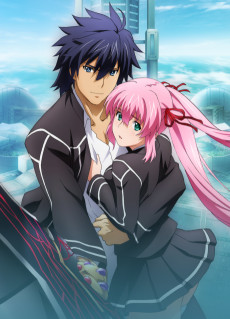
Aesthetica of a Rogue Hero
📺Anime Details
📝Editorial Analysis
The first time Ren Aikawa shatters a classroom window with raw magical force—not to destroy, but to stop—you feel it in your ribs: the sudden hush after chaos, the scent of ozone and chalk dust, the way every girl’s breath catches not in fear, but in recognition. Not of power—but of permission. Permission to be unapologetically loud, unreasonably capable, wildly imperfect—and still held, even when the magic flares too bright or the skirt rides up mid-leap.
That’s the core vibration of Aesthetica of a Rogue Hero: not wish-fulfillment as escape, but containment as catharsis. It’s the feeling of standing inside a glittering pressure cooker—school corridors humming with latent spells, uniforms straining against sudden growth spurts of confidence and magic alike, every battle less about stakes and more about release. You don’t watch it to believe in another world—you watch to feel the visceral relief of existing where competence and chaos aren’t opposites, but collaborators. Where nudity isn’t titillation but texture: skin flushed with exertion, sweat-slicked hair clinging after a spell detonates, the unselfconscious sprawl of girls recovering on sun-warmed stone after a skirmish that felt more like synchronized gymnastics than war. It’s exhilaratingly unbalanced, emotionally generous in its excess—like breathing air thick with perfume and gunpowder.
Which is why The Sims™ 4, despite its broken DLC economy and player frustration (“TS4 has become awful, the packs are insanely expensive and often broken”), shares its DNA—not in plot, but in architectural empathy. Like Ren reshaping reality with a flicker of will, Sims players build worlds where romance, disaster, absurdity, and quiet tenderness coexist without hierarchy. The anime’s school isn’t a setting—it’s a sandbox, just as TS4’s neighborhoods are. Both invite you to orchestrate collisions: a shy girl tripping into Ren’s arms mid-spell is the same emotional logic as a Sim spontaneously proposing marriage while their toaster catches fire. The feeling is identical: playful sovereignty, where consequence is soft, identity is mutable, and joy lives in the glitch between intention and outcome.
Thrillville®: Off the Rails™ lands even closer—not because of coasters, but because of trajectory. Its description promises “20 death-defying rides” where you “build incredible coasters to leap from one track to another, launch through the air like cannonballs.” That’s Ren’s magic: physics bent into joyful, reckless arcs. And the player review nails the resonance: “Used to play this game on the Wii around 13 years ago. Glad to see the PC port runs smoothly and is still as fun. This game has aged really well!” That warmth—the fondness for something unapologetically unserious, mechanically simple but emotionally rich—is pure Aesthetica. Both thrive on kinetic generosity: no penalty for overcommitting, no shame in flying too high, no narrative guilt for landing hard and laughing anyway.
Even Stardew Valley, with its exhausted player confessing, “Spent the first 2 years trying to do everything and never having enough time. Days upon days of constantly running around trying to find the town…”, echoes the anime’s rhythm. Ren doesn’t save the world—he juggles classes, rivalries, magical mishaps, and accidental harem logistics all at once, breathless and grinning. The anime’s pacing mirrors Stardew’s early-game sprint: frantic, tender, deeply human in its overwhelm. Neither asks you to choose one role—they hand you five hats and say, wear them all, drop one, catch it, laugh, keep going. The exhaustion isn’t a flaw—it’s the shared pulse of carefully sustained abundance.
This pairing sings to the person who keeps three tabs open on their laptop: one for a fan wiki, one for a modding forum, one for a half-finished story doc—and whose idea of rest is watching a 12-minute clip of Ren deflecting ten simultaneous fireballs while a girl yells his name, her braid whipping like a banner. They don’t crave coherence—they crave vibrancy with volume. They love systems that hum with possibility, characters who treat dignity like a suggestion, and worlds where magic, romance, and mechanical delight aren’t separate genres—they’re different frequencies of the same frequency: alive, unfiltered, and utterly, wonderfully full.
🎮3 Games That Match the Vibe
Match Dimensions Explained
❓Frequently Asked Questions
Why does Aesthetica of a Rogue Hero feel so different from Stardew Valley even though both have romance and shoujo elements?
Great question—Stardew Valley leans hard into slow-burn, grounded relationships (like befriending Abigail at the mine or helping Shane heal his grief), while Aesthetica is all about over-the-top magical girl tropes, tsundere banter, and battle-driven character arcs. The romance in Stardew happens through daily gifts and dialogue choices over seasons; in Aesthetica, it’s tied to combat wins, costume reveals, and dramatic confession scenes mid-dungeon crawl—so the vibe is totally different despite sharing Romance & Shoujo as a dimension.
Is there an anime or manga adaptation of Aesthetica of a Rogue Hero that actually captures the game's tone?
No official anime or manga adaptation exists—but if you're craving that same chaotic energy, Thrillville®: Off the Rails™ nails the playful, physics-defying spectacle: think building rollercoasters that launch Sims like cannonballs (literally!) or watching NPCs react with cartoonish panic as your ride derails—very much in the same spirit as Aesthetica’s absurd action-comedy setpieces, like when Ryouma accidentally triggers a magical girl transformation during a cafeteria food fight.
How accurate is The Sims 4 as a match for Aesthetica of a Rogue Hero fans?
Not very—it scores high on Romance & Shoujo *and* Survival & Crafting, sure, but TS4’s relationship system is sandbox-y and grounded (e.g., wooing a sim via cooking or dancing), while Aesthetica’s is plot-driven and genre-savvy (think Kana’s tsundere arc escalating after boss fights). Plus, without DLCs—which players complain are 'insanely expensive and often broken'—TS4 barely supports meaningful storytelling, unlike Aesthetica’s tightly scripted character beats.
What’s the best game like Aesthetica of a Rogue Hero if I want that mix of goofy charm and heartfelt character moments?
Thrillville®: Off the Rails™ is your sweet spot—it’s got the same joyful absurdity (building coasters that loop-de-loop through haunted mansions) and surprisingly warm NPC interactions (like the park manager cheering you on after a near-disaster ride), plus that nostalgic, slightly unhinged charm. Players say it ‘has aged really well’ and feels just as fun today as it did on Wii—exactly the kind of earnest, silly-but-sincere energy Aesthetica fans love.