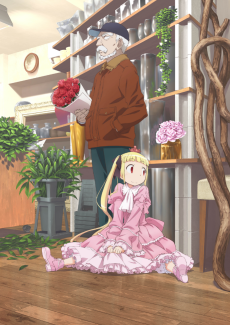
Alice & Zoroku
The fantasy story begins with a group of young girls who hold a power named "Alice's Dream," which allows them to make their imaginations come true. These girls have been locked up and treated as research subjects. Sana, one of these girls whose specific power includes the ability ignore the laws of physics and physically manifest anything she can imagine, has escaped. Afterwards, she meets an old man named Zouroku, who dislikes disruptions in his everyday life.
(Source: Anime News Network)
Note: The first episode aired with a runtime of ~44 minutes as opposed to the standard 25 minute long episode.
📺Anime Details
📝Editorial Analysis
Rain slicks the pavement outside Zoroku’s quiet apartment building, and Sana stands barefoot on the wet concrete, holding a single dandelion she just willed into existence—petals trembling, stem impossibly rigid against gravity. She doesn’t smile. Her eyes are wide, not with wonder, but with the raw, unprocessed weight of first breath after suffocation. That dandelion isn’t cute. It’s evidence: proof she can disobey physics, yes—but more quietly, proof she can disobey them. The lab. The restraints. The silence they enforced between her thoughts and her hands.

What makes Alice & Zoroku ache like this isn’t its sci-fi scaffolding or even its “cute girls doing cute things” surface—it’s the tremor beneath domesticity. It’s the way Zoroku’s teacup rattles just slightly when Sana sketches a bird mid-air and it flaps, real-feathered, into his sunlit kitchen. It’s the exhaustion in his voice when he says, “I don’t want trouble,” while already folding a blanket around her shivering shoulders. This isn’t urban fantasy as spectacle—it’s urban fantasy as rehabilitation: slow, awkward, tender recalibration of self after systemic erasure. Every shared meal, every muttered disagreement over grocery lists, every time Sana hesitates before touching a doorknob—that’s the atmosphere. Not safety, not freedom yet—but grounding. The profound, fragile relief of being held, not contained.
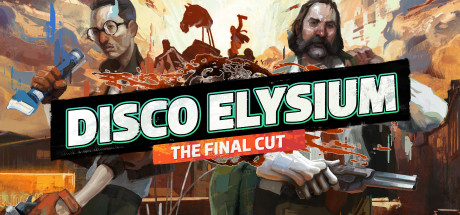
That emotional DNA pulses strongest in Disco Elysium - The Final Cut, where the city isn’t just setting—it’s a breathing, oppressive archive of failed systems. Like Sana, Harry Du Bois is a fugitive—not from law, but from coherence, from memory, from the ideological cages built around him. The player review nails it: “Capital has the ability to subsume all critiques into itself. Even those who would critique capital end up reinforcing it instead.” Sana’s “Alice’s Dream” power was weaponized by institutions that claimed to study imagination while erasing its subjectivity—and Harry’s entire mind is colonized by the very logics he’s supposed to investigate. Both stories treat trauma not as backstory, but as architecture: the walls you walk through daily, the furniture you learn to sit on without noticing the cracks. The quiet fury in Zoroku’s refusal to call the authorities mirrors Harry’s Skill Checks that reject dogma—not with grand speeches, but with a sigh, a cigarette, a refusal to fill out the form.
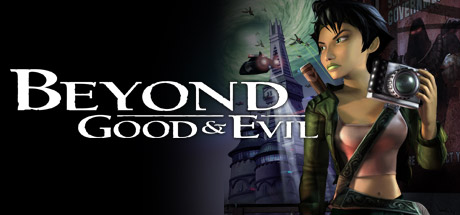
Then there’s Beyond Good and Evil™, where Jade films grainy footage of military convoys while her village pretends nothing’s wrong. Her camera isn’t just a tool—it’s an act of witnessing against erasure, just as Sana’s manifestations are assertions of selfhood the lab tried to delete. The player review calls it “Crazyyy game!”—but that energy isn’t chaos; it’s the electric shock of suppressed truth breaking surface. Jade doesn’t storm the Ministry of Information alone—she does it with Pey’j, with Double H, with a network of women who trade intel like recipes. That’s the found family pulse in Alice & Zoroku: not chosen in ceremony, but forged in shared silence at the dinner table, in Zoroku adjusting his glasses while Sana redraws the constellations on his ceiling—not as data, but as belonging. Both works understand that resistance isn’t always a rally; sometimes it’s a girl learning how to hold chopsticks without flinching, or a reporter smuggling film canisters inside a loaf of bread.
This pairing sings for the person who watches Sana trace raindrops down the window and feels their throat tighten—not because it’s sad, but because it’s true: the monumental labor of rebuilding trust in your own hands. It’s for the player who lingers in Disco Elysium’s rain-soaked alleys, not to solve the case, but to hear the echo of their own fractured logic in Harry’s internal monologues. It’s for the one who replays Jade’s first solo infiltration not for the stealth mechanics, but for the way her breath hitches—just once—before she pushes open the door. These aren’t stories about escaping systems. They’re about learning, slowly, how to breathe inside them—without letting them define your lungs.
🎮5 Games That Match the Vibe
Match Dimensions Explained
❓Frequently Asked Questions
Why does Beyond Good and Evil keep coming up when I search for games like Alice & Zoroku?
Because both lean hard into quiet, emotionally resonant political thrillers where a gentle but determined young woman—Jade in BG&E, Alice in the anime—uncovers systemic corruption while navigating tender, found-family bonds (like Jade with Pey'j or Alice with Sui). The slow-burn tension, morally gray worldbuilding, and focus on empathy over action make them tonal soulmates.
Is there a Disco Elysium anime adaptation?
Nope—no official anime adaptation exists (and honestly, it'd be near-impossible to capture that game's dense internal monologues and skill-check-driven dialogue without losing its magic). But if you loved Alice & Zoroku’s blend of psychological depth and surreal tenderness, Disco Elysium’s 'Political Thriller' + 'Emotional Narrative' dimensions hit similar notes—just swapped out tea ceremonies for rain-soaked detective work and existential skill checks.
Beyond Good and Evil vs. Disco Elysium: which one’s better if I love Alice & Zoroku’s calm-but-urgent vibe?
Go with Beyond Good and Evil—it’s got that same grounded warmth: Jade’s investigative curiosity mirrors Alice’s quiet observation, Pey'j’s loyalty echoes Sui’s protective care, and the 20th Anniversary Edition’s polished pacing keeps the emotional beats intimate and unhurried. Disco Elysium is brilliant, but its fragmented, alcohol-soaked psyche and heavy systemic satire lean sharper and more abrasive than Alice & Zoroku’s gentle melancholy.
What’s the best game like Alice & Zoroku if I’m in the mood for something soothing but quietly intense?
Beyond Good and Evil™ is your perfect match—its sun-dappled island setting, tactile platforming, and scenes like Jade quietly developing photos or sharing meals with Pey'j deliver that same soothing-yet-tense rhythm. You’ll feel the weight of the conspiracy unfolding, but never at the cost of warmth or stillness—the exact vibe Alice & Zoroku nails with its library scenes and late-night conversations.