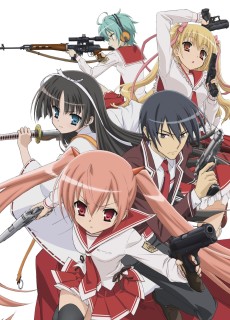
Aria the Scarlet Ammo
📺Anime Details
📝Editorial Analysis
The scent of gunpowder hangs in the humid Tokyo air—not from war, but from a rooftop training session where Aria the Scarlet Ammo’s protagonist, Aria, flicks sweat from her brow after discharging a custom 9mm with surgical calm, then immediately scolds her classmate for misaligning his stance—her voice sharp, her eyes softening just a fraction when he stumbles. That split-second contradiction—precision and warmth, discipline and dawdling, lethal skill wrapped in school uniform pleats—is the show’s heartbeat.
What makes Aria the Scarlet Ammo vibrate isn’t its genre checklist—it’s how it treats competence as tender. This isn’t urban fantasy that leans into grimness or mythic scale; it’s a world where elite combatants train in high school gymnasiums, where swordplay drills double as lunchtime banter, and where every bullet fired carries the weight of responsibility and the lightness of teenage ritual. You don’t feel awe at power—you feel recognition: the quiet pride in mastering a reload sequence, the nervous flutter before a sparring match, the way a tsundere’s glare dissolves when someone remembers how she takes her tea. It’s intimate spectacle—action scaled to human rhythm, not galactic stakes.
That same pulse thrums in STAR WARS™ Jedi Knight - Jedi Academy™, where you forge your own lightsaber—not as a godlike artifact, but as a student’s first real tool: weighted, imperfect, deeply personal. The description calls it “a new student eager to learn the way of the Jedi,” and the player review echoes that humility: “thrust into a Galaxy-spanning adventure to hel…”—cut off mid-thought, like breath catching mid-sentence. That’s Aria’s tone: grand systems (the Jedi Order / Butei Academy) framing small, earnest growth. No one is born a master here; they’re handed a weapon, taught to breathe, and told to pay attention to their feet.
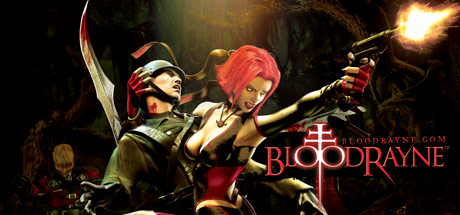
Then there’s BloodRayne (Legacy)—a game described as “a killing machine for The Brimstone Society” hunting supernatural threats between the World Wars. Its player review nails the resonance: “This is a very schlocky, one note action game—but it’s very fun… nostalgic for games of this era.” Aria shares that schlocky sincerity: it winks at its own ecchi tropes while treating gun safety protocols with deadpan seriousness; it gives yandere characters tragic backstories and lets them fret over cafeteria seating charts. Like BloodRayne, Aria doesn’t apologize for its pulp texture—it polishes it until it gleams with affection. Both understand that tactical warfare isn’t just about angles and cover—it’s about how a person holds their body when they draw, how posture becomes personality, how violence and vulnerability live in the same exhale.
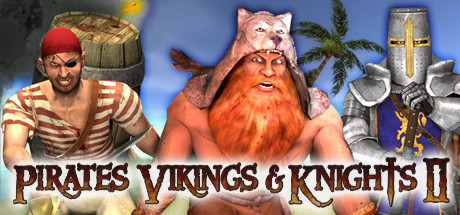
Even Pirates Vikings & Knights II, with its “three-way war for honor, glory, and gold,” taps into the same kinetic joy—its description highlights “swashbuckling Pirates, battle-hardened Vikings, and chivalrous Knights in hilarious…” tension. That ellipsis feels intentional: the chaos isn’t random—it’s structured play. Just like Aria’s classroom brawls or rooftop duels, PVKII’s melee isn’t mindless—it’s choreographed absurdity where timing, stance, and counterplay matter because the players care. The review admits balance is broken (“devs R ass at balance”), yet insists you “gotta join the discord and connect to actual servers to get a good round”—a testament to community-built competence, mirroring how Aria’s characters constantly recalibrate skill through rivalry, mentorship, and accidental teamwork.
These aren’t pairings for fans of “cool guns” or “hot girls.” They’re for the viewer who rewinds the scene where Aria adjusts her glove twice before drawing—not because she’s nervous, but because ritual grounds her. For the player who spends ten minutes tweaking their Jedi stance in Jedi Academy, not to win faster, but to feel the weight shift correctly. For the one who laughs at BloodRayne’s over-the-top vampiric lunge and pauses to admire how her coat flares mid-air—exactly like Aria’s skirt snapping in wind during a vault. They love the care inside the chaos: the way a character checks their magazine with the same reverence another might check a love letter, the way a sword swing lands with sound design that hums in your molars, the way a joke lands because everyone on screen knows the rules—and chooses, tenderly, to bend them just once. That’s the shared frequency: competence as intimacy, spectacle as devotion, and every gunshot, lightsaber hum, or pirate yell echoing the same truth—you are here, you are learning, and it matters.
🎮5 Games That Match the Vibe

Match Dimensions Explained
❓Frequently Asked Questions
Why does Aria the Scarlet Ammo feel so different from BloodRayne (Legacy) despite both having gun-wielding female leads?
Great question — it’s all about tone and pacing. Aria leans into playful, character-driven school-life banter and tactical team-based gunplay (think Hikari’s sniper precision or Aria’s close-quarters acrobatics), while BloodRayne is pure schlocky, over-the-top WWII-era supernatural slaughter — Rayne’s more of a one-note killing machine for the Brimstone Society, with campy one-liners and vampiric gore. The vibe shift is huge: Aria’s got that light-hearted, anime-romcom energy; BloodRayne’s got ’00s-era ‘very fun’ but ‘very schlocky’ energy, as one player put it.
Is there an official Aria the Scarlet Ammo game adaptation?
Nope — no official Aria the Scarlet Ammo game exists. The franchise has stayed firmly in anime/manga/light novel territory, so fans looking for that specific blend of tactical school-based gunplay and romantic tension have to lean into spiritual matches instead. Games like STAR WARS™ Jedi Knight - Jedi Academy™ offer that same mix of student-mentor dynamics, weapon customization (build your lightsaber!), and galaxy-spanning action — just swap out Tokyo Private Police Academy for the Jedi Temple.
How do Pirates Vikings & Knights II and DYNASTY WARRIORS: ORIGINS compare for someone who loves Aria’s chaotic team skirmishes?
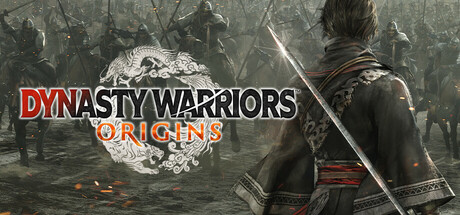
PVKII nails the fast-paced, class-based chaos you get when Aria’s squad storms a rooftop or hijacks a train — think Viking berserkers clashing with Pirate musketeers mid-air, all with hilarious physics and tight 3v3 balance (if you join the Discord servers, as players advise). Dynasty Warriors: Origins, meanwhile, swaps that grounded melee mayhem for massive-scale battlefield spectacle — imagine Aria’s final arc scaled up to 100+ enemies swarming at once, with flashy Musou-style combos and strategic officer commands. Both deliver Action Spectacle + Tactical Warfare, but PVKII’s more intimate and snappy; Dynasty Warriors is epic and overwhelming.
What’s the best game like Aria the Scarlet Ammo if I want that ‘cool-but-flirty tactical school life’ vibe?
STAR WARS™ Jedi Knight - Jedi Academy™ is your best bet — it’s got the student-teacher dynamic (Jaden Korr learning under Kyle Katarn), customizable gear (lightsaber color/style matters *so much*), and missions that blend stealth, dialogue choices, and stylish Force-assisted gunplay (yes, blasters count!). Plus, the writing leans into earnest camaraderie and quiet character moments — like Aria’s late-night rooftop talks — just swapped for Tatooine sunsets and holocron training sessions.