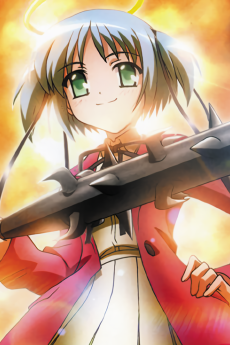
Bludgeoning Angel Dokuro-chan 2
📺Anime Details
📝Editorial Analysis
The crunch of a skull splitting open—then the wet schlorp as it reassembles mid-air, pink brain matter dripping like melted candy onto Sakamoto’s school uniform, while Dokuro-chan giggles, her halo tilting just so, and says, “Oopsie-doodle! Let’s try that again!”—that’s not shock for shock’s sake. That’s rhythm. A violent, looping, absurdly tender metronome ticking inside a world where physics are negotiable, death is a punctuation mark, and affection arrives wrapped in splatter.
This isn’t just slapstick or ecchi—it’s sacred dissonance. Bludgeoning Angel Dokuro-chan 2 doesn’t ask you to laugh at the gore or leer through the nudity; it forces you to feel both simultaneously, then yanks the rug with a wink so deadpan it borders on divine indifference. You’re never safe in your own emotional response: one second you’re recoiling from arterial spray, the next you’re sighing at how softly Dokuro-chan tucks Sakamoto’s collar after decapitating him for the third time today. It’s warmth forged in trauma, devotion weaponized into cartoon violence, schoolyard intimacy stretched across cosmic stakes—and all of it feels uniquely unmoored, like floating in zero gravity inside a shrine full of broken idols.
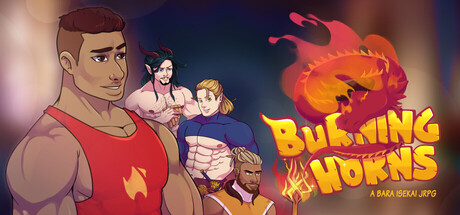
That same emotional DNA pulses in Burning Horns, a Bara Isekai JRPG built on Comedy & Parody and Dark Fantasy—a pairing that sounds contradictory until you remember how Dokuro-chan’s angelic authority collapses into bath-time negotiations or snack-based diplomacy. The game’s tagline (“Bara Isekai”) hints at its tonal tightrope: queer-coded power fantasies colliding with grotesque, self-aware spectacle—just like Dokuro-chan’s celestial mandate dissolving into sticky rice ball bribes and accidental nudity during magic class. There’s no distance between reverence and ridicule here; both are held in the same trembling hand.
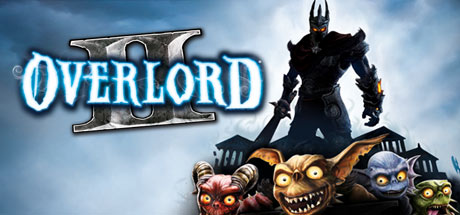
Then there’s Overlord™, where player reviews call it “iconic” and praise how “your actions impact the game world”—but crucially, not in moral binaries. The description insists: “how corrupt you become depends on how you handle any given situation.” That’s Dokuro-chan’s entire ethos. Her “corruption” isn’t evil—it’s context collapse: turning divine law into playground rules, rewriting causality for convenience, treating Sakamoto’s mortality like a software bug she’ll patch later (with glitter glue and a kiss). One review even notes it “gives off Strong Fable vibes”—and yes, like Fable, Overlord™: Raising Hell leans into moral elasticity, but with Dokuro-chan’s casual godhood. Its description asks, “How evil can you get?”—while Dokuro-chan asks, “How many times can I resurrect him before he stops flinching?” Both treat consequence as optional, charm as armor, and chaos as covenant.
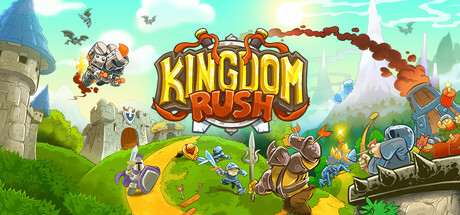
Even Overlord II, described as having “Glorious E” (likely “Glorious Evil”), mirrors Dokuro-chan’s aesthetic logic: bigger, badder, more beautifully destructive. Its player review calls it “a real treat” and “unique”—words that fit Dokuro-chan’s schoolroom carnage perfectly. When the Minions swarm with gleeful, anarchic precision, it echoes Dokuro-chan’s halo-flare summoning—both deploy overwhelming force not for conquest, but ritual. Violence becomes ceremony. Power becomes pettiness dressed in regalia. And Kingdom Rush, though tower defense, shares that same layered absurdity: waves of goblins, skeletons, and demons crashing against cartoonish fortifications while puns fly and upgrades include “Holy Water Splash” and “Angel Choir Barrage”—not as lore, but as tone. Its Dark Fantasy + Comedy & Parody dimensions align with Dokuro-chan’s classroom-as-battlefield, where chalk dust and blood mist share the same air.
These aren’t matches based on plot or art style—they’re resonances in emotional grammar. They all speak fluent whimsy-as-weapon, tenderness-as-torture, divine boredom. You don’t watch or play them to escape reality—you do it to feel the relief of a world where trauma loops like a skipping CD, where love wears steel gauntlets and leaves fingerprints in viscera, where every scream ends with a giggle and every resurrection smells faintly of strawberry shampoo.
This is for the person who laughs when their coffee spills and when their heart cracks—because both feel equally ridiculous and sacred. For the player who reloads a save not to fix a mistake, but to savor the exact moment the goblin king trips over his own horns. For the viewer who watches Dokuro-chan slice Sakamoto in half, then gently wipe his tears with her wingtip—and feels, unmistakably, seen. Not understood. Seen.
🎮5 Games That Match the Vibe


Match Dimensions Explained
❓Frequently Asked Questions
Why is Overlord II listed as similar to Bludgeoning Angel Dokuro-chan 2 when it doesn’t have any harem or slapstick fanservice?
Great question—it’s not about the harem tropes, but the shared tonal whiplash: Overlord II leans hard into absurd, over-the-top violence *paired* with relentless parody (like Dokuro-chan’s cartoonish head-smashing), plus that same 'dark fantasy done silly' vibe. The Minions’ chaotic antics—e.g., tossing peasants into lava while cackling in unison—mirror Dokuro’s sudden shifts from cute to brutally surreal, and both use exaggerated anime-style expressions during cutscenes.
Is there a Bludgeoning Angel Dokuro-chan 2 anime or game adaptation I can actually play right now?
No official game or anime adaptation of *Bludgeoning Angel Dokuro-chan 2* exists—it was never released outside Japan, and no licensed remake or port has surfaced. But if you’re chasing that exact blend of edgy parody + dark fantasy chaos, *Overlord™: Raising Hell* nails the spirit: its DLC lets you unleash unhinged minion mayhem (like dropping a giant anvil on a village square) while riffing on JRPG tropes just as relentlessly as Dokuro-chan mocks shonen clichés.
How does Burning Horns compare to Overlord II for someone who loves Dokuro-chan’s mix of raunchy comedy and sudden gore?
Burning Horns leans heavier into Bara-coded satire and body-horror absurdity—think grotesque transformation scenes and campy, self-aware dungeon-crawling—whereas Overlord II delivers more structured, mission-driven chaos (like ordering minions to ‘fling that knight into the volcano’ mid-battle). Both nail Dokuro-chan’s ‘laugh-then-wince’ rhythm, but Burning Horns feels like a fever-dream cousin; Overlord II is the polished, action-packed sibling.
What’s the best game like Bludgeoning Angel Dokuro-chan 2 if I want something short, chaotic, and full of fourth-wall-breaking gags?
Go straight to *Kingdom Rush – Tower Defense*: it’s bite-sized (levels last 5–10 mins), packed with meta-jokes (like skeletons yelling ‘I’m not dead yet!’ while getting crushed by boulders), and mirrors Dokuro-chan’s rapid-fire absurdity—especially when your tower’s ‘Cannon’ accidentally blows up your own troops. It’s not narrative-heavy like Overlord, but its tone matches Dokuro-chan’s playful, anarchic energy better than anything else on the list.