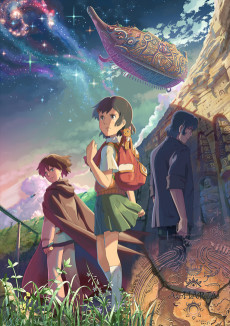
Children who Chase Lost Voices
Strange sounds in the darkness... Unearthly music from an old crystal radio... These are all the warning Asuna Watase has before a simple walk to her clubhouse catapults her into a nightmarish adventure that will take her beneath the Earth to a lost land beyond the realm of legend! Attacked by a strange monstrous creature, rescued by a mysterious stranger and pursued by a relentless enemy, Asuna finds herself enmeshed in a centuries old mystery that will bind her to a strange young defender and lead her inevitably, towards a secret that may hold the key to life itself!
(Source: Sentai Filmworks)
📺Anime Details
📝Editorial Analysis
The silence after the crystal radio stops playing. Not empty silence—thick, humming with the memory of sound, like air still vibrating from a struck bell. Asuna sits cross-legged on her tatami floor, the old radio cold in her hands, the last notes of that unearthly melody clinging to the walls of her quiet mountain village. Outside, cicadas drone; inside, something ancient and tender has just brushed past her ear—and she doesn’t know whether to shiver or reach out.
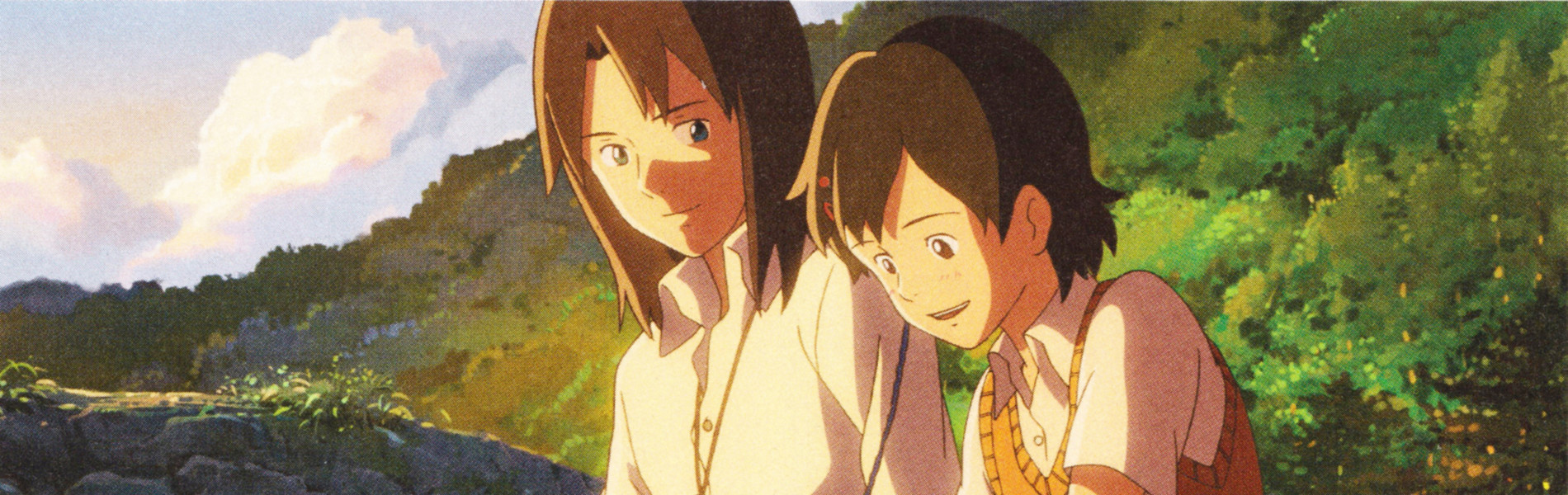
That moment isn’t about plot. It’s about resonance: the way grief, curiosity, and myth fold into one breath. Children who Chase Lost Voices doesn’t rush toward spectacle—it lingers in thresholds: between waking and dreaming, between rural stillness and subterranean awe, between a girl’s ordinary loneliness and the weight of gods who’ve long since turned away. Its atmosphere is hushed reverence. You feel the damp moss underfoot in Agartha not as set dressing but as a living sigh; you sense the tragedy not in grand battles but in the way Asuna’s voice catches when she whispers her mother’s name into cavernous dark. This isn’t fantasy as escape—it’s fantasy as echo chamber, where every stone, every flute note, every glance between Asuna and Shun carries the quiet ache of things already lost, already slipping.
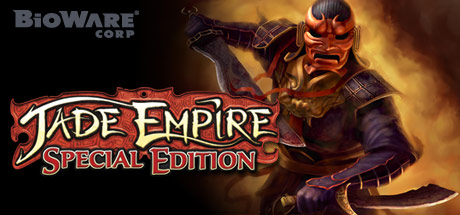
Which is why Jade Empire™: Special Edition lands with such uncanny kinship—not because it shares plot points (it doesn’t), but because its Emotional Narrative and grounding in Mythology & Folklore operate on the same hushed frequency. The game invites you to walk a path shaped by ancestral duty, spiritual ambiguity, and choices that ripple not through kingdoms, but through silence between words. A player notes it demands attention to tone and consequence—not just combat—but to “the path of the open palm or the closed fist,” echoing Asuna’s own quiet moral navigation: not between good and evil, but between holding on and letting go. That resonance isn’t in spectacle—it’s in how both works treat belief as texture, not exposition.
Then there’s Chains, a match-3 arcade title whose official description calls it “relaxing” and “physics-driven,” and whose player review homes in on its slowness: “link adjacent bubbles… clear enough till you can proceed.” No urgency. No timers screaming. Just deliberate, tactile connection—three colors aligned, a soft pop, space opening up. That’s the emotional DNA again: Healing & Slow Life, yes—but more precisely, the profound relief of intentional slowness as resistance. In Children who Chase Lost Voices, time dilates in train stations, stretches across mist-laced rice fields, halts entirely when Asuna holds the crystal radio to her ear. Chains mirrors that—not in story, but in rhythm. Its player says it “reminds me of connect 4 in nutshell,” which nails it: it’s about pattern, patience, small acts of alignment that accumulate meaning. Like Asuna tracing constellations in the cave ceiling, or brushing dust from an ancient glyph—not to solve, but to witness.
Neither game replicates the anime’s plot. Neither features a girl from Nagano chasing a boy into the earth. But both share its emotional grammar: the gravity of quiet moments, the sacredness of small gestures, the way myth lives not in thunderclaps but in the space after sound fades.
This pairing sings to the viewer who cries during train scenes—not because of what’s said, but because of what’s unpacked in the pause before departure. To the player who saves mid-game not to win, but to sit with a character’s silence at a moonlit shrine. To the person who keeps an old radio on their shelf not to listen, but to remember how music once made the walls feel thin. They don’t seek lore dumps or power fantasies. They seek resonance. The kind that hums in your ribs long after the screen goes dark.
🎮4 Games That Match the Vibe
Match Dimensions Explained
❓Frequently Asked Questions
Why does Jade Empire feel like Children Who Chase Lost Voices despite being a martial arts RPG?
Because both lean hard into mythic melancholy—Jade Empire’s Spirit Monk path mirrors Asuna’s quiet grief and journey through liminal spaces like the Spirit Realms, while its emotional narrative hinges on loss, memory, and bridges between worlds (like the Gate of the Moon). The game’s ‘open palm’ philosophy even echoes the film’s themes of gentle acceptance over force, much like how Asuna chooses compassion over conquest in the Sky People’s ruins.
Is there a visual novel or game adaptation of Children Who Chase Lost Voices?
No official adaptation exists—but Chains captures the *vibe* in unexpected ways: its slow, meditative bubble-linking mimics the film’s hushed pacing and healing rhythm, like when Asuna sits by the river restringing her harmonica. Players have called it ‘connect 4 in a nutshell’, which fits the film’s focus on small, deliberate acts that slowly mend broken things—just like Asuna rebuilding connection after Sumi’s death.
How does Chains compare to Jade Empire in terms of emotional impact?
They’re opposites in mechanics but twins in tone: Jade Empire delivers sorrow through epic, character-driven choices (e.g., choosing whether to save Master Li or the village), while Chains distills that same ache into tiny, tactile moments—clearing a chain feels like releasing held breath, just as Asuna releases tears at the cliff’s edge. Both scored high for ‘Emotional Narrative’, but Chains leans into quiet healing; Jade Empire into mythic sacrifice.
What’s the best game like Children Who Chase Lost Voices if I want that bittersweet, rain-soaked, ‘walking home at dusk’ feeling?
Chains is your answer—it’s not about plot, but *texture*: the soft pop of bubbles, the gentle physics sway, the way stages unfold like turning pages in a watercolor journal. That ‘rain-soaked dusk’ mood? It’s baked into every level transition, like when Asuna walks back from the Sky People’s temple, alone but unbroken. Even the player review nails it: ‘Reminds me of connect 4 in nutshell’—simple, soothing, deeply felt.