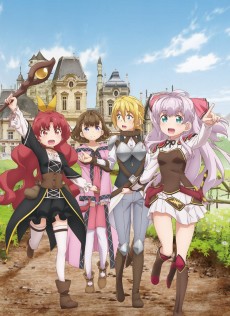
Didn't I Say to Make My Abilities Average in the Next Life?!
When she turns ten years old, Adele von Ascham is hit with a horrible headache–and memories of her previous life as an eighteen-year-old Japanese girl named Kurihara Misato. That life changed abruptly, however, when Misato died trying to aid a little girl and met god. During that meeting, she made an odd request and asked for average abilities in her next life. But few things–especially wishes–ever go quite as planned.
(Source: Seven Seas Entertainment)
📺Anime Details
📝Editorial Analysis
The first time Adele trips over her own boots while trying to not summon a fireball—her face flushing, her hands flailing, the spark fizzling harmlessly into a puff of smoke like a damp match—that’s it. Not the grand battle, not the godly negotiation, but that breathless, slightly sweaty, deeply human stumble. Her wish for averageness isn’t a plot device; it’s a nervous tic, a quiet rebellion against spectacle, a plea whispered into the void: Let me be unremarkable. Let me breathe. And yet—here she is, magic crackling at her fingertips like static on a wool sweater, surrounded by girls whose competence hums with cheerful, unselfconscious ease, while she’s still figuring out how to tie her sash without looking like she’s wrestling a startled badger.
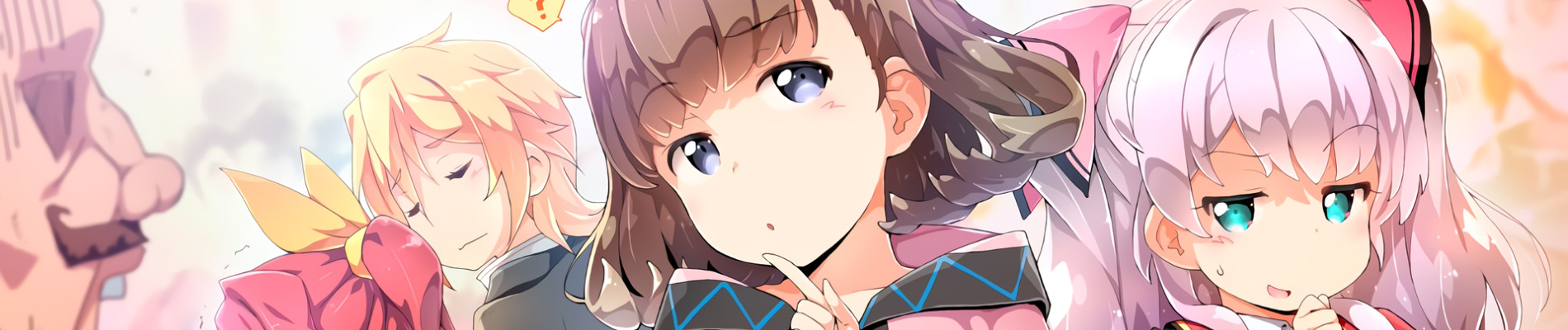
That’s the atmosphere: soft resistance. Not defiance, not despair—but the warm, low-grade friction of someone gently pushing back against destiny’s overeager handshake. It’s in the way Adele’s internal monologue stutters between teenage pragmatism and childlike wonder, in how her “average” magic somehow works—just slower, messier, more stubbornly hers. This isn’t irony for irony’s sake. It’s tenderness disguised as parody. The medieval setting isn’t backdrop—it’s texture: cobblestones under small boots, ink smudges on spellbooks, the weight of a too-big cloak slipping off one shoulder. The comedy doesn’t land because things go wrong—it lands because Adele notices them going wrong, and reacts with the exhausted, affectionate exasperation of someone who’s already mentally drafted three apology letters to the universe. It makes you feel seen, not as a hero or a joke, but as a person perpetually mid-adjustment—trying, failing gracefully, trying again with slightly less panic.
That emotional DNA pulses strongest in Prince of Persia. Its description calls it “an all-new epic journey” built on “Healing & Slow Life, Comedy & Parody”—and yes, there’s swordplay and sand, but what lingers is the Prince’s physicality: the way he stumbles, recovers, grabs ledges at the last millisecond, his movements full of near-misses and second chances. Like Adele, he’s not flawless—he’s recovering, constantly. A player review notes it’s the “3rd reboot… completely separate from the sands,” echoing Adele’s own clean-slate disorientation—no legacy, no expectations, just a body learning its new gravity. Both ache with the same gentle, kinetic humility.
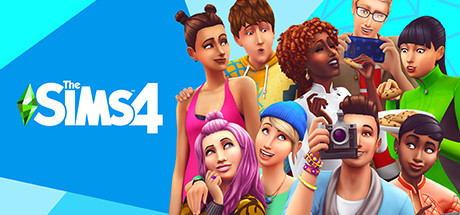
Then there’s The Sims™ 4, whose description invites you to “Play with life and discover the possibilities”—a phrase that could be Adele’s mantra. Its top dimension? Healing & Slow Life. Not conquest. Not transcendence. Just living: making tea, arranging furniture, watching sunlight hit a windowsill just so. The player review complains about DLC costs and bugs—but beneath that frustration is a raw, undeniable truth: people return to TS4 for the quiet rhythm of ordinary days, for the joy of a Sim finally nailing that guitar solo after weeks of practice. That’s Adele’s magic: not world-shattering blasts, but the slow, stubborn bloom of competence—her version of a Sim leveling up Cooking skill, one burnt pancake at a time.
And then, surprisingly, the Overlord series—not for its darkness, but for its tone. All three entries (Overlord, Raising Hell, Overlord II) share the dimension “Comedy & Parody,” and their descriptions lean hard into absurd power dynamics: “How corruptible you are,” “how evil you can get,” “Glorious Evil.” But player reviews keep circling back to something warmer: “the story the humor,” “Think Fable meets…”—a recognition that the satire works because it’s wrapped in charm, in self-aware silliness. Like Adele pretending her accidental healing spell was “totally intentional,” or her friends cheerfully enabling her delusion with zero judgment, the Overlord games let you wield apocalyptic power while delivering deadpan one-liners to sentient mushrooms. It’s parody that cares—it mocks grandeur only to make room for something smaller, kinder, and infinitely more human.
This pairing sings for the viewer who cries during grocery lists, who finds catharsis in a perfectly folded laundry pile, who loves fantasy not for its scale—but for the way it lets a girl trip over her own feet and still be enough. Not the chosen one. Not the prodigy. Just Adele—breathing, blinking, holding her magic like it might slip through her fingers—and loving her, fiercely, exactly as she is.
🎮5 Games That Match the Vibe


Match Dimensions Explained
❓Frequently Asked Questions
Why does Overlord feel so similar to Didn't I Say to Make My Abilities Average in the Next Life?! despite being a dark fantasy game?
It’s all about the tonal whiplash—Overlord leans hard into Comedy & Parody while wrapping it in Dark Fantasy, just like Average! does with its 'boring is best' protagonist pretending to be weak while secretly mastering everything. You play as a morally flexible Overlord bossing around Minions and delivering deadpan one-liners during absurdly over-the-top cutscenes—very much like Ristarte’s exasperated reactions when Lugh casually breaks reality without trying.
Is there a mobile or anime adaptation of Didn't I Say to Make My Abilities Average in the Next Life?! that’s actually good?
No official mobile game or anime adaptation exists yet—just light novels and manga. But if you’re craving that same vibe *now*, Prince of Persia (2024) nails the ‘reluctant chosen one forced into heroics’ energy: the new Prince stumbles through ancient ruins, bickers with his snarky companion, and keeps accidentally solving puzzles with zero effort—like Lugh ‘failing’ at magic training while rewriting the rules of mana flow.
How does The Sims 4 compare to Didn’t I Say to Make My Abilities Average in the Next Life?! for low-stakes slice-of-life vibes?
They’re shockingly aligned on Healing & Slow Life—and yes, that’s intentional. In TS4, you can build Lugh’s cozy cottage in the woods, host tea parties with Ristarte (via custom NPCs), and spend hours gardening or napping—no quests, no stakes, just gentle routine. One player even modded in ‘average skill’ challenges where Sims deliberately avoid leveling up, mirroring Lugh’s whole shtick—though, fair warning: base-game TS4 feels barebones without DLCs, unlike Average!’s self-contained charm.
What’s the best game like Didn’t I Say to Make My Abilities Average in the Next Life?! if I want something relaxing but still with witty banter and zero pressure?
Go straight to Prince of Persia (2024)—it’s got the highest score (75) in both Healing & Slow Life *and* Comedy & Parody, plus that effortless charm. You’ll wander sun-dappled ruins, banter with your dry-witted companion (think Ristarte meets Kaileth), and solve environmental puzzles that feel satisfying—not stressful—like Lugh ‘accidentally’ fixing broken bridges while complaining about how *tired* he is. No timers, no permadeath, just calm competence wrapped in gorgeous animation.