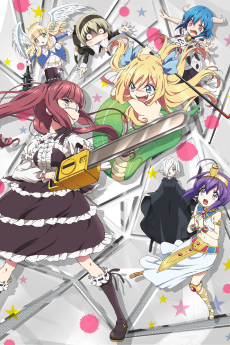
Dropkick on My Devil!
The demon Jashin-chan has been summoned to Earth by Yurine Hanazono, a girl with a knack for the occult. Unfortunately, Yurine does not actually know how to send Jashin-chan back to Hell. Now stuck on Earth, she must live at Yurine's apartment as her familiar.
The only way for Jashin-chan to return would be to kill her summoner, but this is easier said than done for the incompetent demon. Since Jashin-chan is immortal and can regenerate her body, Yurine does not hold back in attacking her with a range of weapons, punishing her in gruesome manners for her evil schemes. Jashin-chan is also often visited by her demon friends: the kindhearted Gorgon Medusa and the energetic minotaur Minosu, who seem much more well-behaved in contrast, and disapprove of her plans to kill Yurine.
(Source: MAL Rewrite)
📺Anime Details
📝Editorial Analysis
Jashin-chan’s head rolls off her shoulders—again—bounces twice on Yurine’s linoleum floor, and lands upright like a grinning jack-o’-lantern while her body scrambles after it, limbs flailing, tail whipping dust into the air. Yurine doesn’t even look up from her phone. She just kicks the detached cranium gently toward the fridge with her bare foot, muttering, “Put yourself back together before dinner.” That’s not chaos—it’s routine. It’s the show’s quiet, unblinking heartbeat: immortality treated like a minor household inconvenience, violence stripped of consequence but never of texture, and cruelty so casual it loops back around to tenderness.
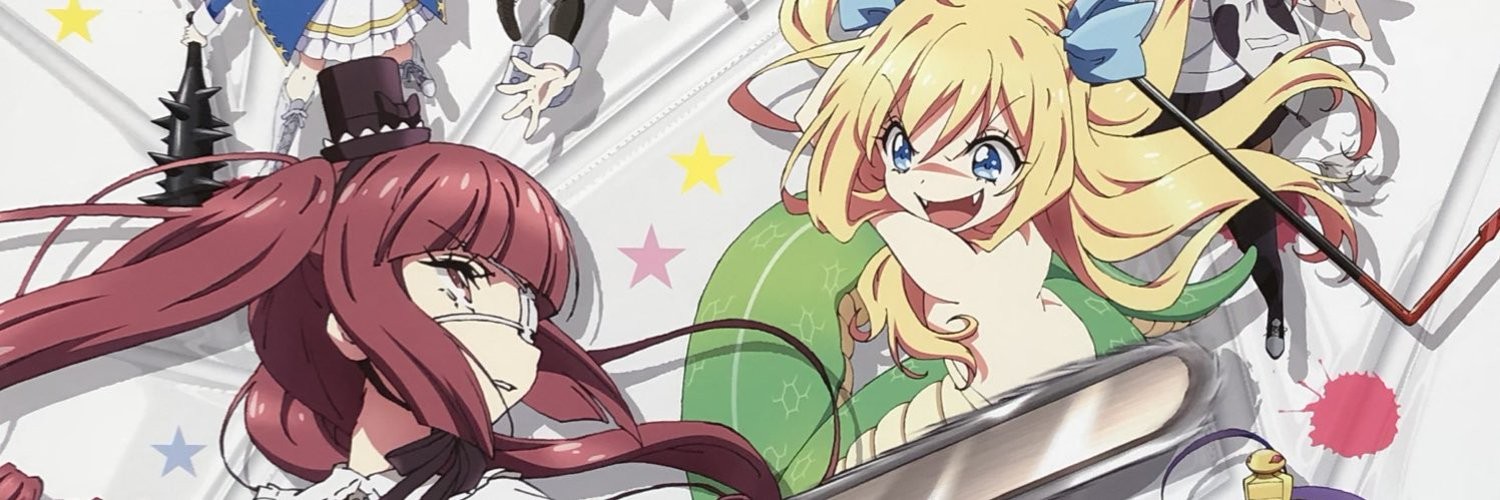
What makes Dropkick on My Devil! vibrate at this particular frequency isn’t its demon-girl premise or urban fantasy trappings—it’s the weightlessness of suffering. Gore here isn’t shock; it’s punctuation. Slapstick isn’t gag-driven—it’s structural. Every dismemberment, every spontaneous combustion, every time Jashin-chan’s torso gets stapled back together with office supplies feels less like punishment and more like shared domestic grammar. You don’t wince—you recognize. It’s the feeling of living inside a joke that’s been told so many times it’s become shelter. There’s no moral panic, no redemption arc, no hidden trauma waiting to be unearthed—just two women orbiting each other in a gravity well of mutual exasperation and low-stakes apocalypse. It’s warm, even when someone’s spleen is briefly used as a coaster.
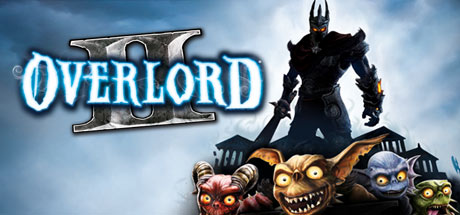
That same emotional alchemy flickers in the Overlord series—not because they share lore or stakes, but because they share tone architecture. Look at the description for Overlord™: “How corrupt you become depends on how you handle any given situation. Your actions impact the game world.” That sounds heavy—until you read the player review calling it “iconic” and “fantastic”—not for its gravitas, but for its playfulness within darkness. Jashin-chan can’t kill Yurine, and the Overlord can’t truly lose—he’s too powerful, too absurdly insulated by minions and narrative immunity. Both revel in the freedom that comes from removing real consequence: Jashin-chan regenerates; the Overlord laughs off betrayal. Their evil isn’t tragic—it’s bored, self-aware, almost bureaucratic. And that’s why Overlord™: Raising Hell fits so precisely: its description promises “how evil can you get?”, but the player review nails it—“the story the humor, it give off Strong Fable vibes…”. Not grimdark. Not satire. Fable: mythic, light-footed, morally slippery but emotionally grounded. Like Yurine using a cursed talisman to microwave frozen dumplings while Jashin-chan’s entrails dangle from the ceiling fan.
Then there’s Overlord II, whose description boasts “Bigger, badder and more beautifully destructive”, and whose player review calls it “a real treat” and “unique… haven’t had anything like them since their release.” That uniqueness? It lives in the same space as Dropkick on My Devil!’s refusal to choose between sincerity and silliness. The Overlord commands legions; Jashin-chan commands exactly zero coherent spells—but both wield power like a language they’re still learning to conjugate. Their worlds are saturated with magic, yet the most memorable moments aren’t battles—they’re the Overlord debating minion lunch options, or Jashin-chan trying (and failing) to fold laundry without spontaneously combusting the couch. It’s domestic grandeur: epic scale shrunk down to apartment-sized stakes, where apocalypse is just background noise to paying rent and forgetting to water the succulents.
This pairing isn’t for fans of “dark fantasy done right” or “comedy with heart.” It’s for the person who watches Jashin-chan get turned into origami by a rogue paper shredder—and then spends ten minutes reassembling herself with glue sticks and sheer spite—and thinks, Yes. This is how love actually looks when nobody’s watching. It’s for the player who chooses the “evil” dialogue option not to feel powerful, but because it’s funnier, because the world bends just enough to let you lean into the absurd without breaking. It’s for anyone who’s ever loved someone so intensely they’d happily regenerate from being turned into confetti just to keep bickering with them over grocery lists. That’s the core: immortal friction, affectionate annihilation, laughter that echoes in empty hellscapes. Not escapism—recognition.
🎮5 Games That Match the Vibe


Match Dimensions Explained
❓Frequently Asked Questions
Why does Overlord feel so similar to Dropkick on My Devil! despite being a fantasy game?
Because both lean hard into absurd, self-aware evil—like when Jashin-chan casually wrecks Tokyo with a tantrum, the Overlord gleefully commands minions to 'accidentally' drop boulders on villagers while delivering deadpan one-liners. The dark-fantasy parody tone, over-the-top corruption mechanics, and constant fourth-wall-winking humor (e.g., Overlord II’s ‘Glorious Evil’ meter vs. Yurine’s exasperated facepalms) hit the same comedic sweet spot.
Is there an anime or manga adaptation of Overlord that captures the Dropkick vibe?
No—Overlord’s anime is deadly serious about its lore and power fantasy, totally missing Dropkick’s chaotic comedy and slapstick energy. If you’re craving that same playful, irreverent take on evil, stick with the games: Overlord I, Raising Hell, and II all nail it through gameplay—like ordering minions to set a mayor on fire *just* to see his panicked dance, exactly how Jashin-chan might 'test' a new curse on poor Yurine.
How does Overlord II compare to Overlord: Raising Hell for Dropkick fans?
Raising Hell leans into campy, Fable-style satire (think Yurine’s flustered reactions to Jashin-chan’s nonsense), while Overlord II cranks up the spectacle and minion chaos—like sending 50 shrieking imps to swarm a Roman-esque legion while cackling from a floating throne, which feels *very* Jashin-chan summoning a demonic tornado in episode 7. Both score 60 and share Comedy & Parody + Dark Fantasy, but II’s bigger scale matches Dropkick’s escalating absurdity.
What’s the best Overlord game for someone who loves Dropkick’s ‘silly-but-stylish evil’ vibe?
Start with Overlord II—it’s the most visually bold and mechanically unhinged, with minions doing ridiculous things like forming a living catapult or turning enemies into squealing cupcakes. That ‘Glorious Evil’ meter and the way your choices make the world react (e.g., sparing a village just to watch them nervously bake you a cake) mirrors how Dropkick balances genuine menace with pure cartoonish charm—no grimdark brooding, just confident, glittery chaos.