
Evangelion: 3.0+1.0 Thrice Upon a Time
In the aftermath of the Fourth Impact, stranded without their Evangelions, Shinji, Asuka, and Rei find refuge in one of the rare pockets of humanity that still exist on the ruined planet Earth. There, each of them live a life far different from their days as an Evangelion pilot. However, the danger to the world is far from over. A new impact is looming on the horizon—one that will prove to be the true end of Evangelion. Finally, the Human Instrumentality Project is set in motion, and WILLE makes one last grueling stand to prevent the Final Impact.
Note: Exists in several versions, as denoted by the version number:
• 3.0+1.0: March 8, 2021 - Original theatrical release
• 3.0+1.01: June 12, 2021 - A second theatrical release which features updated cuts of various scenes while not changing the overall story of the film.
• 3.0+1.11: March 8, 2023 - A home media release scheduled for the film's two-year anniversary.
📺Anime Details
📝Editorial Analysis
The silence after the Third Impact wasn’t empty—it was thick, like breathing underwater. In Evangelion: 3.0+1.0 Thrice Upon a Time, it’s the quiet of Shinji kneeling in a sun-dappled field, hands buried in soil, planting carrots beside an old man who doesn’t know his name. No Eva roar. No alarm klaxon. Just wind rustling barley stalks and the faint creak of a wooden fence—reality rebuilt not with godlike power, but with calloused fingers and stubborn, daily repetition. That moment isn’t peace. It’s rehabilitation: tender, awkward, unbearably fragile.

What makes Evangelion: 3.0+1.0 Thrice Upon a Time ache so deeply isn’t its apocalyptic scale or metaphysical machinery—it’s how it treats time as scar tissue. The time skip isn’t narrative convenience; it’s psychological distance made physical. Characters don’t “move on”—they stumble forward, relearning how to hold a cup, make eye contact, say “thank you” without flinching. The world isn’t just post-apocalyptic—it’s post-identity, where gods have stepped down and left behind only weathered faces, half-remembered names, and the slow, unglamorous work of stitching selfhood back together. You don’t feel awe here—you feel tenderness, exhaustion, and the quiet, dizzying relief of being allowed to be ordinary again.
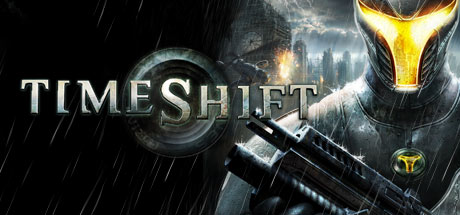
That same emotional gravity echoes in TimeShift™, where Dr. Aiden Krone’s reckless Time Jump across the space-time continuum fractures reality into something disturbing, alternate, and irrevocably personal. Like Shinji waking up in a world that erased his trauma—and then realizing the erasure itself is the wound—the game’s core tension lives in the dissonance between control and consequence. A player review calls it “a blast… but it takes a little work to get it into a playable state”—a perfect mirror of Evangelion: 3.0+1.0 Thrice Upon a Time’s own friction: beauty buried under technical fragility, meaning emerging only after you wrestle with its stubborn, imperfect systems. Both demand patience not as virtue—but as necessity.
Then there’s Chains, a match-3 arcade game disguised as lightness: “link adjacent bubbles… clear enough till you can proceed.” But read between the lines—the description calls it “relaxing,” yet the player review reveals its quiet insistence: “link 3 or more… hit the next stage.” It’s not about speed or spectacle. It’s about repetition as ritual, small acts accumulating toward something stable. Like Shinji tending crops, Asuka relearning how to pilot—not with fury, but with measured breaths and recalibrated reflexes—Chains mirrors the anime’s emotional architecture: healing isn’t a climax. It’s the click, the connection, the tiny, repeatable act of choosing continuity over collapse.
Even Valheim, with its “brutal exploration and survival… set in a procedurally-generated purgatory,” resonates—not through myth, but through labor. Its player review nails it: “40 minutes looking for the perfect tree, then a troll destroys your entire house.” That’s the rhythm of Evangelion: 3.0+1.0 Thrice Upon a Time: build a life, lose it, rebuild smaller, slower, quieter—until the act of rebuilding is the meaning. No grand prophecy, no chosen one. Just wood, stone, fire, and the stubborn refusal to stop trying. The “purgatory” isn’t punishment—it’s space, raw and uncurated, where identity isn’t declared but forged, again and again, in the doing.
This pairing won’t thrill someone chasing adrenaline or lore dumps. It’s for the viewer who cries when Rei waters flowers in silence. For the player who saves before every jump in TimeShift™, not out of fear—but reverence for the delicate, rewritable now. For the person who replays Chains not for high scores, but for the soft pop of alignment, the tiny dopamine hum of order restored. For anyone who’s ever rebuilt their life from scratch—not with fanfare, but with dirt under their nails, a cracked controller, and the quiet, unyielding belief that tenderness, too, is a kind of superpower.
🎮2 Games That Match the Vibe

Match Dimensions Explained
❓Frequently Asked Questions
Why does TimeShift™ feel like the closest match to Evangelion: 3.0+1.0’s time-bending climax?
Because both hinge on fractured timelines and desperate, physics-defying interventions—like Dr. Aiden Krone freezing time mid-explosion to dodge debris, mirroring Shinji’s final act of rewriting causality in the Wunder’s core. The game’s 4-hour runtime even mirrors the film’s tight, emotionally compressed structure, and players report that ‘getting it into a playable state’ (via community patches) feels oddly like syncing with Unit-01’s awakening sequence—clunky at first, then transcendent.
Is there a video game adaptation of Evangelion: 3.0+1.0 Thrice Upon a Time?
No official game adaptation exists—just fan mods and unofficial tools. But TimeShift™ (77 score) is the strongest spiritual cousin: its time-manipulation mechanics, sci-fi dread, and lone-scientist protagonist wrestling with reality collapse hit the same existential notes as Gendo’s Terminal Dogma or Mari’s final flight through fractured time-space.
How does Chains compare to Valheim if I’m looking for Evangelion’s emotional weight?
Chains won’t give you Evangelion’s emotional weight—it’s a chill, physics-driven match-3 game where you link colored bubbles like ‘connect 4 in a nutshell,’ per player reviews. Valheim, meanwhile, delivers raw, communal catharsis: think rebuilding after your longhouse gets wrecked by a troll, echoing Shinji’s slow, stubborn reassembly of trust—except with Norse runes instead of LCL.
What’s the best game like Evangelion: 3.0+1.0 for that lonely, awe-heavy ‘floating in space’ vibe?
TimeShift™ nails it—its time-jump mechanic makes zero-gravity corridors feel disorienting and sacred, like drifting past the ruined Wunder in orbit. You’re not just moving; you’re *unspooling* time around you, just as Shinji does when he walks through the frozen battlefield outside Instrumentality. And that 77 Metacritic score? It’s earned—not flashy, but deeply atmospheric.