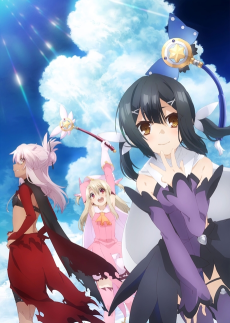
Fate/kaleid liner Prisma☆Illya 2wei! Herz!
📺Anime Details
📝Editorial Analysis
The scent of burnt sugar and ozone hangs in the air—Illya’s magic circle flares gold, her pink hair whipping as she braces against a collapsing tower, bow drawn, eyes locked on a spectral wyvern spiraling down from a rent in the sky. Her breath hitches—not from fear, but from the weight of holding space: for Miyu beside her, silent and steady; for Chloe’s laugh echoing from below, sharp and bright as shattering glass; for the teacup still balanced on the windowsill three floors up, untouched despite the tremor shaking the city. That’s the heart of Fate/kaleid liner Prisma☆Illya 2wei! Herz!: not just magic or mayhem, but tenderness under pressure, where every spell cast is also a promise kept, every explosion cushioned by the soft thud of a maid’s apron brushing stone as she rushes to clear debris.
This isn’t urban fantasy as backdrop—it’s urban fantasy as domestic ritual. The mahou shoujo sparkle doesn’t erase the grit of cracked pavement or the exhaustion in Illya’s shoulders after three consecutive battles before homework. Comedy lands because it’s rooted in real friction: the butler’s deadpan sigh as he polishes a sword while recalibrating a mana conduit; the absurd precision of archery practice interrupted by a stray cat stealing Illya’s snack. You don’t feel “escapism”—you feel recognition: the fierce, slightly messy love of girls who bicker over tea ratios but move as one body when danger blinks at the edge of perception. It’s warm, yes—but warmth that remembers cold. The magic isn’t infinite. Neither is time. Neither is safety. And yet—they keep making cookies.
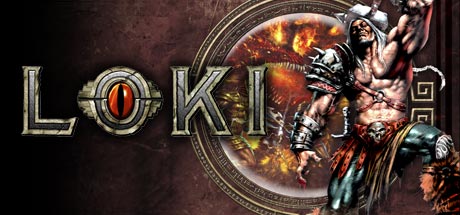
That same emotional architecture hums in Loki, where myth isn’t distant legend but lived consequence: four heroes drawn from living traditions, each carrying weight older than cities. The player review calls it “similar to Diablo… but filled with annoying glitches and game crashes”—and that dissonance matters. Like Illya’s spells sputtering mid-cast when mana runs thin, Loki’s technical flaws mirror the anime’s refusal to smooth over strain. Both ask you to care despite instability—to invest in characters whose power is real and fragile, whose victories are earned in stutters and restarts. The anticlimactic ending? Not a failure—it’s honest. Like Illya choosing quiet mornings over grand finales, Loki’s unresolved close feels less like absence and more like breath held, waiting for the next ordinary miracle.
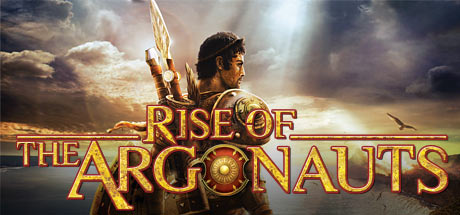
Rise of the Argonauts pulses with the same kind of grounded mythic yearning. Jason isn’t chasing abstract glory—he’s racing against decay, trying to stitch back what grief tore apart. The player review says: “If you love games based on ancient history this one does it right…”—and that “right” is key. It’s not about accuracy, but emotional fidelity: the ache of loss made tangible in crumbling temples, in loyal companions whose loyalty isn’t given—it’s tested, daily, in dust and decision. Illya doesn’t wield myth as spectacle; she inherits it as inheritance—burden, legacy, and lullaby all at once. When she fires an arrow infused with Norse runes (yes, they’re there, subtle but present), it’s not fan service—it’s kinship across centuries, same way Jason’s oar dips into water that’s carried Odysseus, Achilles, and now him.
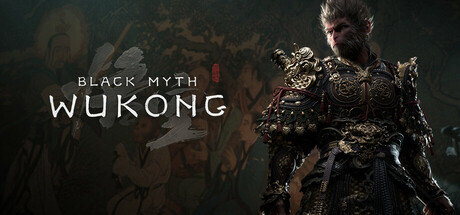
Even Black Myth: Wukong, with its lower score, shares that visceral, bodily reverence for myth—not as costume, but as muscle memory. The description hints at spectacle, but the anime’s DNA lives in how Wukong’s staff whistles through air thick with incense and rain, how his defiance isn’t loud, but coiled, like Illya’s fist tightening around her bowstring before release. Both understand that divinity isn’t polished—it’s scarred, stubborn, and deeply, deeply personal.
You’d love this pairing if you’ve ever cried over a character folding laundry after saving the world—if your favorite battle scene ends not with a roar, but with someone handing another a towel, steam rising off both of them. If you believe magic should smell like burnt sugar and old paper, and myth should feel like a hand on your shoulder—not lifting you up, but holding you here, exactly where you are.
🎮3 Games That Match the Vibe
Match Dimensions Explained
❓Frequently Asked Questions
Why is Rise of the Argonauts listed as similar to Fate/kaleid liner Prisma☆Illya 2wei! Herz! when it’s not anime-style?
Great question—it’s not about art style, but shared tonal energy and mythic wish-fulfillment. Like Illya’s magical girl battles where ordinary girls wield divine artifacts (like Illya’s Kaleidostick or Miyu’s Golem), Jason in Rise of the Argonauts gathers legendary relics (the Golden Fleece, Medea’s chalice) while balancing emotional stakes—his grief over his murdered fiancée mirrors Illya’s desperate, heartfelt drives to protect loved ones. Both lean hard into action-spectacle with cinematic set-pieces: think Jason’s Colchis temple showdown vs. Illya’s final duel against Kuro in the snow-covered cathedral.
Is there a visual novel adaptation of Fate/kaleid liner Prisma☆Illya 2wei! Herz!?
No official visual novel adaptation exists—but if you’re craving that same blend of magical girl charm, character-driven banter, and myth-infused stakes, Loki nails the vibe *as a game*, even if it’s not VN-formatted. Its four mythology-rooted heroes (like the Norse fighter who channels Mjölnir-like lightning strikes) echo Illya’s ensemble cast—each with distinct personalities and emotional arcs—and its branching dialogue choices during key myth encounters (e.g., negotiating with Hel in Niflheim) deliver that same intimate, choice-weighted storytelling feel fans love from the anime’s quieter café scenes or bathhouse talks.
How does Black Myth: Wukong compare to Fate/kaleid liner Prisma☆Illya 2wei! Herz! for magical girl fans?
Black Myth: Wukong isn’t a magical girl game—but it *does* channel Illya’s core magic: dazzling, physics-defying spectacle rooted in deep myth. Where Illya’s ‘Prisma Magic’ turns reality into glittering light-shows (like Miyu’s golem summoning or Chloe’s prismatic barriers), Wukong’s combat uses celestial techniques like Cloud Somersault and Seventy-Two Transformations to warp arenas mid-fight—think Illya’s ‘Rainbow Burst’ scene, but scaled to mountain-sized bosses. It’s less about cute aesthetics and more about that same euphoric, myth-powered awe—just swapped out for Chinese folklore instead of Japanese magical girl tropes.
What’s the best game like Fate/kaleid liner Prisma☆Illya 2wei! Herz! if I want something uplifting and full of friendship-driven action?
Rise of the Argonauts is your best bet—it’s got that rare combo of heartfelt camaraderie and mythic heroism Illya fans love. Jason’s bond with his crew (like the loyal, quick-witted Heracles or the fiercely protective Atalanta) mirrors Illya’s found-family dynamic with Miyu and Chloe, especially in cutscenes where they rally before big fights—like boarding the Argo together after a heartfelt pep talk, much like Illya and Miyu linking hands before their final spell. And unlike Loki’s glitchy crashes or Wukong’s darker tone, Argonauts keeps things earnest, hopeful, and visually warm—even in tragedy.