
Fire Force
Year 198 of the Solar Era in Tokyo, special fire brigades are fighting against a phenomenon called spontaneous human combustion where human beings are turned into living infernos called "Infernals.” While the Infernals are first-generation cases of spontaneous human combustion, later generations possess the ability to manipulate flames while retaining human form. Shinra Kusakabe, a youth who gained the nickname Devil’s Footprints for his ability to ignite his feet at will, joins the Special Fire Force Company 8 which composes of other flames users as they work to extinguish any Infernals they encounter. As a faction that is creating Infernals appears, Shinra begins to uncover the truth behind a mysterious fire that caused the death of his family twelve years ago.
(Source: Official Website)
📺Anime Details
📝Editorial Analysis
The acrid tang of burnt ozone hangs in the air as Shinra Kusakabe slams his heel into the pavement—crack—and rockets upward, blue flames licking his calves like living things. Below him, Tokyo’s neon-drenched skyline flickers through smoke, not from a wildfire, but from people: a woman mid-scream, her skin fracturing into glowing fissures; a child frozen mid-step, hair already curling into ember-tendrils. This isn’t disaster—it’s violation. The city breathes fire, and every spark feels like a wound torn open by something ancient, hungry, and deeply human.

What makes Fire Force’s atmosphere singular isn’t its pyrotechnics or its shōnen pacing—it’s the weight of sacred space collapsing. Churches double as cult strongholds. Fire stations aren’t just bases—they’re sanctuaries holding back entropy. Even the flames carry theology: holy, profane, inherited, stolen. You don’t just watch battles—you feel the dread of a world where salvation and damnation wear the same uniform, where “saving lives” means choosing which souls to pull from the blaze, and which to let burn for the sake of order. It’s exhausting, urgent, and strangely devout—a crisis of faith dressed in turnout gear.
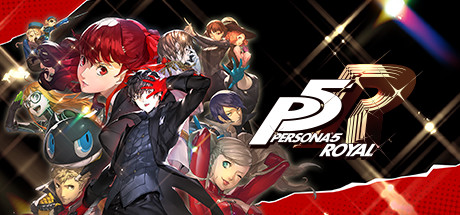
That emotional DNA pulses strongest in Persona 5 Royal, where Tokyo isn’t just a backdrop but a character shaped by systemic rot and quiet rebellion. Its description confirms it: “Lead the Phantom Thieves of Hearts… Explore Tokyo, build relations…” Like Shinra’s Company 8, the Phantom Thieves operate in the liminal hours—between school bells and midnight raids—fighting not demons with horns, but institutions that calcify human potential into ash. A player review nails the resonance: “The seamless transition between daily life…” That duality—the banal rhythm of ramen shops and train platforms coexisting with apocalyptic stakes—is pure Fire Force. Both make you ache for normalcy even as you sprint toward conflagration.
Then there’s Disco Elysium - The Final Cut, whose description calls it “a groundbreaking role playing game… Interrogate unforgettable characters…” and whose player review drops this line: “Capital has the ability to subsume all critiques into itself.” That’s the chilling echo of Fire Force’s conspiracy layer—not shadowy villains, but structures: the Holy Sol Temple, the White Clad, the very definition of “Infernal” weaponized by doctrine. In both, ideology is combustion. Truth doesn’t ignite—it spreads, consuming evidence, memory, even identity. You don’t defeat the enemy with a punch; you dissect their rhetoric, trace their funding, question the scripture they cite mid-battle. It’s intellectually claustrophobic, emotionally raw, and morally slippery—exactly how it feels to stand in front of a burning cathedral and wonder if the priest lighting the match believes he’s saving you.
Even Dragon Age: Origins, with its description framing “Determine your legacy and fight for Thedas…”, shares that bone-deep sense of consequence. Not just in combat—its pause-attack mechanic lets you strategize like a commander weighing lives—but in how every faction, every choice, carries theological gravity. A player review notes “the story is great and its pause attack mechanic is amazing… help a lot to strategist your tactic…” That tension—between tactical precision and spiritual uncertainty—is where Fire Force lives too. When Shinra hesitates before unleashing his flames on a possessed comrade, when Arthur questions whether mercy is weakness or worship—that’s the same weight as choosing to spare or execute Loghain. It’s legacy as liability, heroism as burden.
This pairing isn’t for fans of “cool powers” or “epic fights.” It’s for the ones who still feel the sting of smoke in their throat after watching Shinra kneel beside a charred photo of his mother. For players who replay Persona 5 Royal’s rainy rooftop scenes just to hear Ann’s voice crack on the word “hope.” For those who highlight lines in Disco Elysium about “the unbearable lightness of being wrong,” then sit quietly for ten minutes afterward. It’s for people who treat urban fantasy not as escapism—but as confession. Who see fire not as spectacle, but as testimony.
🎮15 Games That Match the Vibe
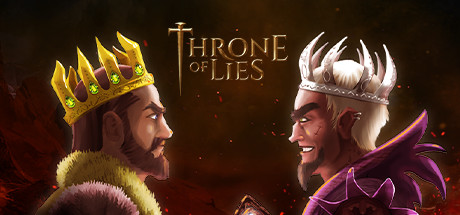
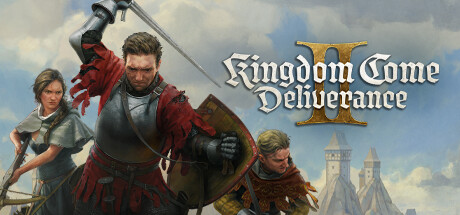
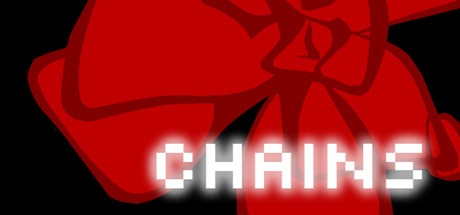


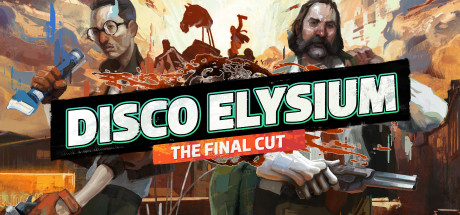



Match Dimensions Explained
❓Frequently Asked Questions
Why does Fire Force feel so different from Dragon Age: Origins even though both have emotional narratives?
Fire Force’s high-octane, anime-paced action and fiery pyrokinetic set-pieces (like Shinra’s first full ignition in the Tokyo Tower arc) clash with Dragon Age: Origins’ slower, tactical pause-and-plan combat—think freezing time mid-battle to position your dwarf warrior or mage before unleashing a fireball. While both deliver deep emotional stakes (Origins’ Grey Warden sacrifice vs. Fire Force’s Church of Truth revelations), Origins leans into grim medieval worldbuilding and party banter, not explosive superhuman spectacle.
Is there a Fire Force anime game adaptation I can actually play?
No official Fire Force anime tie-in game exists—but if you're craving that same blend of intense character-driven drama and stylized action, Persona 5 Royal nails it: Joker’s Phantom Thieves heists mirror Fire Force’s mission-based raids (like storming the Evangelist’s base), complete with slick UI, killer soundtrack drops during combat, and deep relationship-building that shapes story outcomes—just swap pyrokinesis for Persona summoning.
How does Chains compare to Fire Force in terms of pacing and tone?
Chains is *nothing* like Fire Force—it’s a chill, physics-based match-3 arcade game where you link colored bubbles to clear stages, totally swapping apocalyptic infernos for zen-like bubble popping. Think ‘connect 4 meets marble run’ instead of Shinra’s blazing sprint down collapsing stairwells; it’s got zero combat, no characters, and zero urgency—so if you loved Fire Force’s intensity, Chains is basically its calming, caffeine-free cousin.
What’s the best game like Fire Force if I want that same ‘morally gray team-up with flawed heroes’ vibe?
Disco Elysium — The Final Cut is your best bet: it’s all about assembling an unstable, deeply human ‘team’ (even if it’s just your own fractured psyche) while navigating political tension, ideological clashes, and devastating personal revelations—like Fire Force’s conflict between the Special Fire Force and the Holy Sol Temple. Your choices constantly reshape alliances and consequences, much like how Arthur’s loyalty or Maki’s internal conflict reshapes Fire Force’s moral landscape.