
FLCL
Naota is a detached sixth grader afflicted by the pangs of puberty. He's fooling around with his brother's ex-girlfriend when a crazed girl on a motor scooter runs him over, brains him with a bass guitar, and moves into his house. This pink-haired girl, Haruko - who claims she's an alien - hurls Naota into the middle of a mega-corporation's secret agenda. Oh, and now giant battling robots shoot from his skull. Mix in mind-bending animation and tunes that echo through your cerebellum to top off the trip that will have you falling hard for FLCL.
(Source: Funimation)
📺Anime Details
📝Editorial Analysis
The bass guitar hits first—not the sound, but the impact: a pink-haired blur on a scooter, Naota’s ribs cracking against asphalt, then the sickening thunk of fiberglass against temple. He’s not knocked out—he’s unhinged. Blood trickles, his vision swims, and in that split second before blackness, he sees Haruko’s grin: all teeth, no apology, zero gravity. That’s not an opening scene—it’s a neural tap. A synaptic short-circuit dressed as slapstick.

What makes FLCL vibrate isn’t its mecha or aliens—it’s how it weaponizes disorientation as emotional honesty. It doesn’t simulate puberty; it recreates its physiology: the sudden lurch of voice cracks, the nausea of unwanted attention, the way your own skull feels like rented real estate when hormones flood your cortex. The animation doesn’t smooth transitions—it shatters them: cel-shaded sweat droplets freeze mid-air, backgrounds invert into negative space, time stutters so hard you taste copper. You don’t watch it—you recoil, then lean in, because that panic is familiar. It’s not surreal for effect—it’s surreal because adolescence is a glitch in the operating system of self. You feel unmoored, exposed, ridiculously alive—all at once, with no warning.
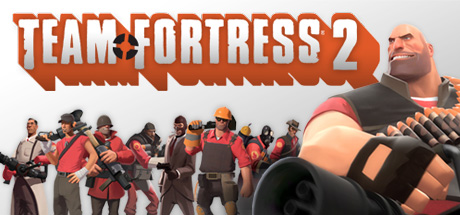
That same electric instability lives in Team Fortress 2. Not in its classes or hats—but in its chaos-as-grammar. The game runs “great even on a laptop,” yes, but what sticks is how its nine classes don’t just fight—they collide: the Heavy’s roar drowns the Spy’s whisper, the Pyro’s flamethrower ignites the Engineer’s sentry and the medic’s laugh, all while the map tilts sideways for a taunt. Player reviews call the community “gay, racist, sexist, gay, artistic, gay, furries, and love men”—not as contradiction, but as layered, contradictory truth. Like FLCL, TF2 refuses coherence. Its humor isn’t punchline-first—it’s collision-first: ego, absurdity, vulnerability, and aggression detonating in the same 3-second firefight. Both treat identity as something you stumble into, not declare.
Then there’s Space Quest™ Collection, where you “could pretty much do anything you , weather or not there were consequences….” That typo—“you , weather”—is perfect. It’s the stutter of a mind trying to parse cause and effect while half-asleep, half-terrified, half-horny. Like Naota staring at Haruko’s boot heel as she leans over him post-impact, wondering if she’ll kiss him or kick him in the jaw (she does both, eventually). Space Quest’s comedy isn’t in jokes—it’s in permission: permission to type “lick vending machine,” permission to misread “warp core” as “warp cork,” permission to fail so spectacularly your character dies via interpretive dance. Its sci-fi isn’t about galactic stakes—it’s about the delirium of choice when your brain hasn’t finished wiring itself. Just like FLCL, it treats logic as optional, consequence as negotiable, and narrative as something you trip over while sprinting toward your next weird, urgent, unavoidable feeling.
Who loves this pairing? Not “fans of anime and games.” Specific: the kid who rewound the bass guitar hit scene five times not to study animation, but to feel that impact again—the one who still flinches at sudden loud noises, who laughs too hard at inappropriate moments, who keeps a notebook full of half-sentences and doodles of robots with human eyes. The player who types “use toaster on alien” in Space Quest just to see if the universe allows it—and feels a jolt when it does. The TF2 player who spends more time watching the Scout’s victory dance than capturing the intelligence, because the joy is in the uncontrolled, ungovernable release. These aren’t stories about growing up. They’re neurological events disguised as entertainment—raw, unfiltered, gloriously unstable. And if your heart ever raced for no reason, if your thoughts ever scattered like dropped marbles, if you’ve ever laughed while crying—that’s the frequency they’re broadcasting on. Turn it up. Let it crack your skull open.
🎮2 Games That Match the Vibe

Match Dimensions Explained
❓Frequently Asked Questions
Why does Team Fortress 2 keep coming up in FLCL game recommendations?
Because both lean hard into absurdist, character-driven chaos—like FLCL’s sudden robot rampages and surreal non-sequiturs, TF2’s Scout yelling 'I’m a little teapot!' mid-battle or Heavy’s dramatic slow-mo sandwich chomps hit that same manic, tonally unhinged energy. The nine wildly distinct classes (Pyro’s flamethrower + gasmask delusions, Spy’s fake mustache + backstabbing theatrics) mirror FLCL’s cast of emotionally volatile, visually exaggerated personalities.
Is there a Space Quest game adaptation of FLCL?
No—Space Quest isn’t an FLCL adaptation; it’s a *parallel vibe match*: both are deeply silly, fourth-wall-breaking parodies where tone whiplashes constantly (e.g., Space Quest IV’s 'Rogues' Gallery' sequence—where you literally walk through a comic book panel—feels like FLCL’s anime-to-live-action cuts). The 'do anything, consequences optional' freedom in Space Quest mirrors how FLCL’s plot lurches sideways on pure emotional impulse, not logic.
Team Fortress 2 vs. Space Quest Collection—which is closer to FLCL’s energy?
TF2 nails FLCL’s *visual and performative* chaos—the explosive slapstick, over-the-top class animations (Medic’s Übercharge scream, Soldier’s rocket-jump flailing), and constant hat-based identity shifts echo Haruko’s unpredictable costume changes and Canti’s abrupt transformations. Space Quest wins for *narrative irreverence*, though: its 'you can lick the space whale' absurdity and deadpan sci-fi parody (like Roger Wilco accidentally becoming president via vending machine) channel FLCL’s refusal to take its own stakes seriously.
What’s the best FLCL-like game if I just want that hyperactive, emotionally messy, laugh-then-cry feeling?
Go with Team Fortress 2—it’s got that raw, unfiltered teenage id energy: the way Scout’s frantic voice lines and ragdoll physics mimic Naota’s flustered panic, or how Pyro’s mysterious, muffled screams feel like wordless emotional outbursts straight from FLCL’s soundtrack swells. Even the community’s chaotic, self-aware, deeply weird culture (see: 'gay, artistic, furries, and love men' review) mirrors FLCL’s celebration of gloriously uncontainable humanity.